
The Frustration of Friction: Why Smooth Drawer Operation Matters
There is a specific, tactile satisfaction in a drawer that glides shut with a whisper. Conversely, few things in a modern home are as subtly aggravating as drawer slides not closing smoothly. Whether it’s a kitchen drawer that bounces back open, a dresser drawer that requires a shoulder lean to shut, or a high-end soft-close mechanism that has suddenly turned "stubborn," the loss of fluid motion is more than a minor nuisance—it is a symptom of mechanical failure or structural misalignment.
In the world of custom cabinetry and high-end furniture, the drawer slide is the unsung hero. It is the mechanical interface between a static box and a moving component. When a drawer won't close all the way, it disrupts the "reveal" (the uniform gap between drawer fronts) and compromises the ergonomics of the space. From a professional perspective, a drawer that resists closing is often under immense internal stress. This stress, if left unaddressed, doesn't just make your life harder; it actively degrades the integrity of the cabinet carcass and the drawer box itself.
Historically, drawers relied on simple wood-on-wood runners, which required seasonal waxing to combat humidity-induced swelling. Today, we utilize sophisticated ball-bearing systems, hydraulic dampeners, and synchronized under-mount tracks. While these advancements have made our furniture more capable of handling heavy loads, they have also introduced more points of failure. A single grain of grit in a ball-bearing race or a 1/32-inch deviation in the cabinet’s squareness can turn a premium kitchen into a source of daily frustration.
Understanding why your drawer slides are failing requires moving beyond superficial observation. We must look at the physics of the slide: the distribution of weight, the coefficient of friction, and the precision of the installation. This guide is designed to take you from a state of frustration to a state of mastery, providing the technical insights and practical methodologies required to restore—or upgrade—your cabinetry to peak performance.
The Critical Problem: An Expert Analysis of Slide Failure
When we analyze why drawer slides are not closing smoothly, we have to categorize the failure into three primary domains: Mechanical Obstruction, Structural Deviation, and Component Fatigue.
1. Mechanical Obstruction and Contamination
The most common, yet overlooked, reason a drawer won't close all the way is simple contamination. Modern ball-bearing slides are precision-engineered. They rely on a series of small steel balls housed in a carriage (the "race"). Over time, kitchen grease, household dust, and debris can infiltrate these races. This creates a "sludge" that increases friction. In some cases, a single loose screw or a stray utensil caught behind the drawer box acts as a hard stop, preventing the slide from reaching its fully closed position.
2. Structural Deviation (The "Squareness" Factor)
Furniture is not static. Houses settle, floors shift, and wood expands and contracts with the seasons. If a cabinet box is even slightly out of square (trapezoidal rather than rectangular), the two parallel slides will no longer be parallel. This causes "binding." As the drawer moves toward the closed position, the distance between the tracks narrows or widens, forcing the ball bearings to grind against the rail walls. This is why a drawer might move easily for the first six inches but become nearly impossible to close in the final two.
3. Component Fatigue and Overloading
Every drawer slide has a weight rating—typically 75 lbs, 100 lbs, or for heavy-duty applications, 200 lbs+. When a drawer is consistently overloaded (common in "junk" drawers or pot-and-pan pull-outs), the metal rails can actually bow. This deformation changes the track’s profile. Furthermore, in soft-close systems, the internal tension spring or the hydraulic piston can lose its "prime." If the piston leaks its fluid or the spring snaps, the mechanism will fail to pull the drawer into its seated position, leaving it frustratingly ajar.
4. Lateral vs. Vertical Stress
Finally, we must consider the "side-to-side" play. If the drawer box was built too narrow for the cabinet opening, the slides must be shimmed. If the shims are uneven, the drawer will "crab" (move diagonally), leading to a catastrophic failure of the nylon or plastic components within the slide assembly.
Methodology & Core Guide: Restoring the Glide
To fix a drawer that isn't closing correctly, you must follow a systematic diagnostic process. Do not simply spray lubricant and hope for the best; this often attracts more dust and worsens the problem.
Step 1: The Clean Sweep & Inspection
Remove the drawer entirely. Most modern slides have a release lever (usually a black plastic trigger) on the side. Push one up and the other down to pull the drawer box out.
- The Inspection: Look at the tracks inside the cabinet. Are there visible metal shavings? This indicates grinding. Is there a buildup of dark, sticky residue? This is contaminated grease.
- The Cleaning: Use a vacuum with a crevice tool to remove loose debris. Follow up with a lint-free cloth dampened with isopropyl alcohol to strip away old, gunky lubricant.
Step 2: Checking for "Square" and "Level"
Use a machinist’s square or a high-quality level to check the cabinet box and the slides themselves.
- Parallelism: Measure the distance between the two cabinet-side tracks at the front and the back. These measurements must be identical within a 1/16-inch margin.
- The Fix: If the back is wider than the front, you may need to add a thin veneer shim behind the rear mounting bracket to bring the tracks back into a parallel state.
Step 3: Addressing the "Drawer Won't Close All The Way" (Soft-Close Reset)
If you have soft-close drawers and they are stopping short, the "engagement pin" is likely out of sync.
- The Reset: Look at the slide inside the cabinet. There is a small plastic carriage that is spring-loaded. If it is tripped (moved toward the front) while the drawer is out, it won't "catch" the drawer. Manually pull the carriage back toward the rear of the cabinet until it clicks into the "cocked" position. Reinsert the drawer.
Step 4: Lubrication – The Professional Way
Never use WD-40 (the original formula) on drawer slides; it is a degreaser, not a long-term lubricant.
- The Product: Use a dry silicone spray or a white lithium grease.
- The Application: Apply a small amount to the ball-bearing races. Cycle the drawer several times to distribute the lubricant. Wipe away any excess to prevent it from attracting future dust.
Step 5: Structural Reinforcement
Check the mounting screws. Over time, screws in particle board or MDF can strip and loosen. A loose screw head can catch on the slide’s moving parts, causing a "hitch" in the motion.
- The Fix: If a screw hole is stripped, remove the screw, jam a toothpick dipped in wood glue into the hole, snap it off, and re-drive the screw. This provides fresh "bite" for the threads.
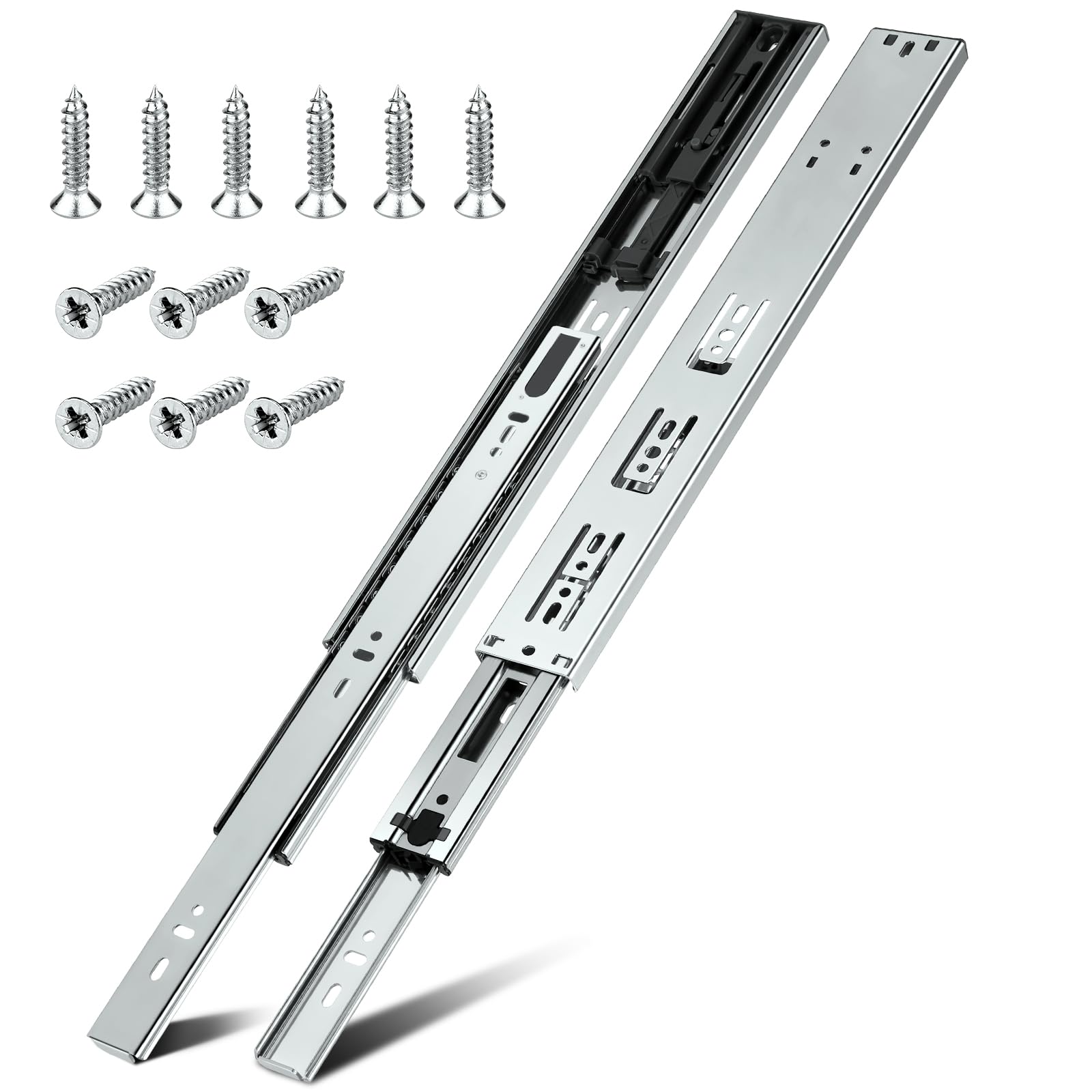
10 Pairs | Soft Close Drawer Slides 22 inch, HBL’ Heavy Duty Cabinet Drawer Slides Replacement – Bal
- High-quality product
- Customer favorite
- Best value option
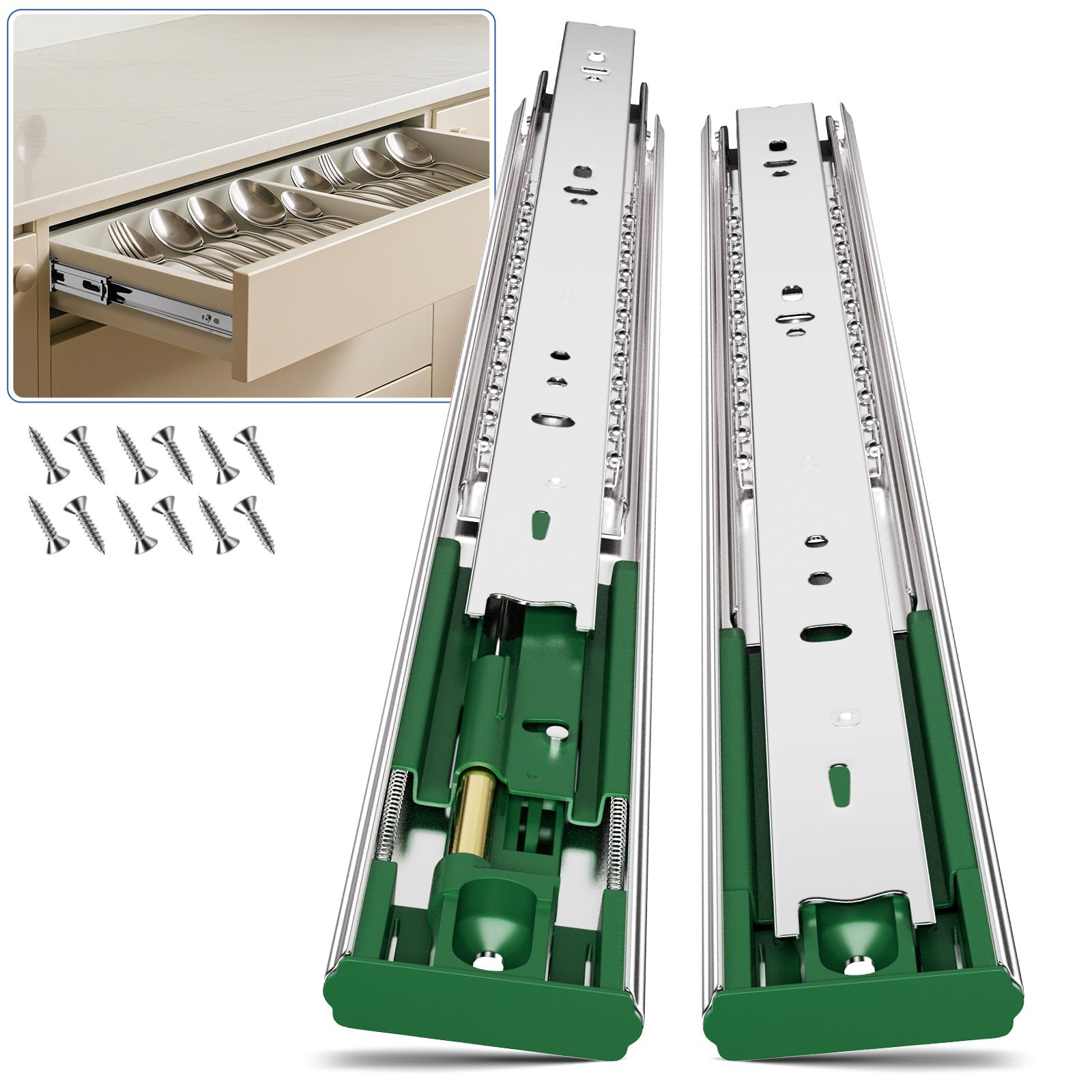
6 Pairs Soft Close Drawer Slides 20 Inch, Full Extension Heavy Duty Ball Bearing Cabinet Rails, Quie
- High-quality product
- Customer favorite
- Best value option
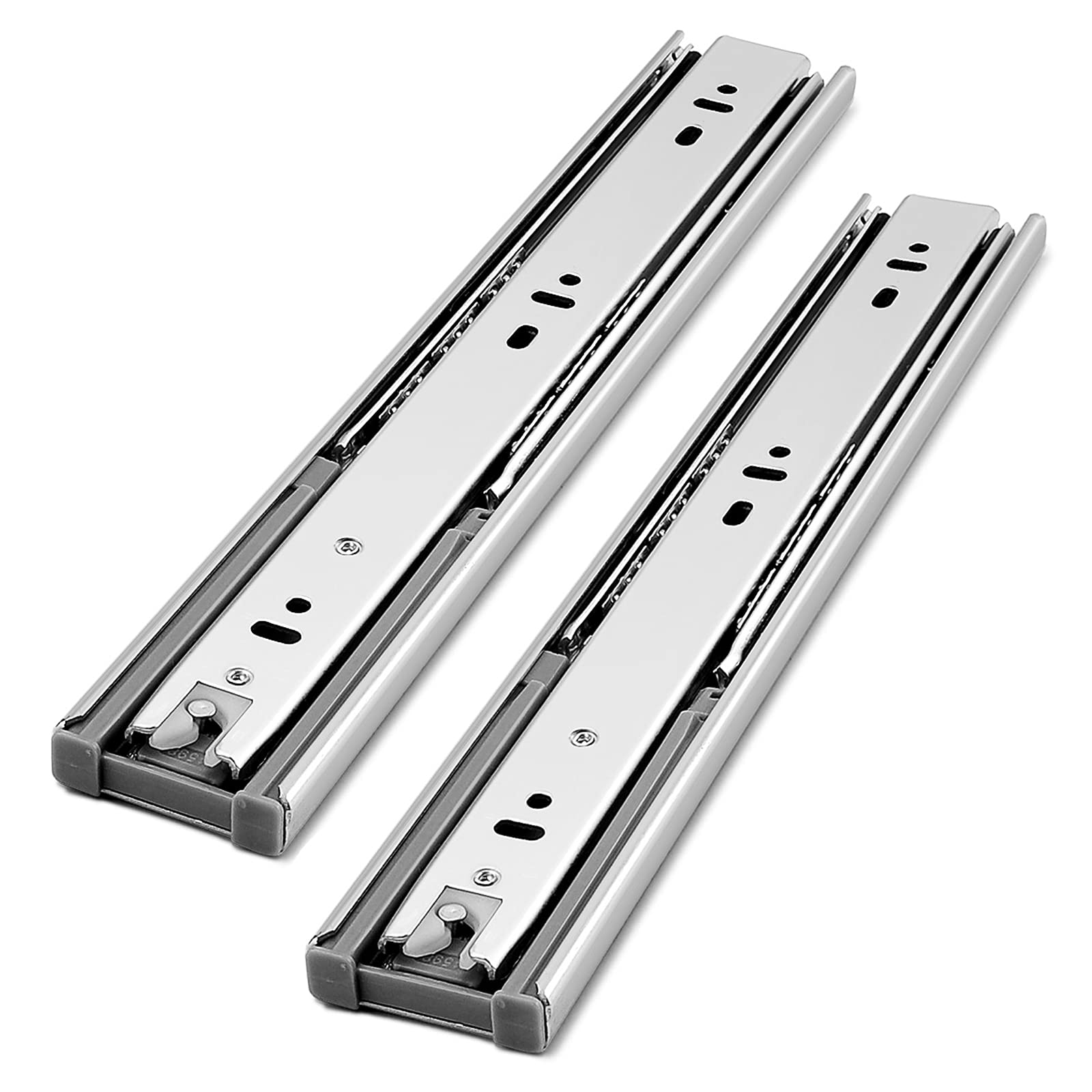
Gobrico Drawer Hardware 16-inch Hydraulic Soft Self Close Drawer Slides Full Extension Ball Bearing
- High-quality product
- Customer favorite
- Best value option
Expert Hacks & Maintenance (Advanced)
Once you’ve mastered the basics, you can apply advanced techniques used by professional cabinet makers to ensure your drawers stay "buttery smooth" for decades.
The Digital Caliper Method
If you are replacing slides, do not rely on a tape measure. Use a digital caliper to measure the gap between the drawer box and the cabinet side. Most side-mount slides require exactly 12.7mm (1/2 inch) of clearance. If your gap is 13.5mm, the slide will be under tension. Use plastic shims (available in 0.5mm increments) to achieve the exact tolerance.
The "Over-Extension" Prevention
One of the fastest ways to ruin ball-bearing slides is to pull the drawer out too forcefully against the stops. This can "pop" the bearings out of their race. If you have heavy drawers, consider installing a small rubber bumper at the very back of the cabinet. This provides a soft stop for the drawer box and prevents the metal-on-metal impact that eventually misaligns the rails.
Humidity Management
In solid wood cabinetry, drawers that stick in the summer but glide in the winter are victims of wood expansion. If you have wood-on-wood runners, don't sand them down immediately. Instead, apply a dedicated "Slip-It" lubricant or a high-paraffin canning wax. If you must sand, do so in the peak of summer (when the wood is most swollen) to ensure they never bind again.
Periodic Torque Checks
Every six months, take five minutes to open your high-use drawers (kitchen, tool chest) and check the mounting screws. Thermal cycles (hot stoves, cold nights) cause wood and metal to expand at different rates, which naturally loosens screws. A quick quarter-turn with a screwdriver can prevent a catastrophic slide failure.
Mega FAQ: Expert Solutions for Every Scenario
1. Why does my drawer close halfway and then stop?
This is usually a sign of "binding" caused by the cabinet being out of square. The tracks are likely narrower at the back than the front. Check the parallelism of your tracks.
2. Can I use WD-40 on my drawer slides?
No. Standard WD-40 is a solvent, not a lubricant. It will remove the factory grease and eventually attract more dust. Use a dry silicone spray or white lithium grease instead.
3. My soft-close drawer won't "catch" anymore. Is it broken?
Likely not. The engagement pin on the slide is probably tripped. Pull the plastic reset carriage toward the front of the drawer until it clicks into place.
4. Why is my drawer sagging when I open it?
This indicates that the screws mounting the slide to the cabinet have loosened or the metal rail itself has bent due to overloading. Tighten the screws or replace the slides with a higher weight rating.
5. How do I know what size replacement slides to buy?
Measure the length of the drawer box itself, not including the drawer front. Slides are sold in 2-inch increments (e.g., 18", 20", 22"). Always round down if you are between sizes.
6. One side of my drawer closes further than the other. Why?
The drawer box is likely "racking" because the slides are not mounted at the same depth. Ensure both cabinet-side tracks are the exact same distance from the front edge of the cabinet face frame.
7. Are ball-bearing slides better than roller slides?
Generally, yes. Ball-bearing slides offer full extension and higher weight capacities, whereas roller slides (nylon wheels) are usually limited to 3/4 extension and lower weights.
8. My drawer makes a grinding noise. What should I do?
Stop using it immediately. Grinding means metal is rubbing on metal or a bearing has failed. Clean the tracks thoroughly; if the noise persists, the slide must be replaced.
9. Why does my drawer slide open by itself?
The cabinet is leaning forward. You need to level the cabinet or slightly tilt the slides back by shimming the front mounting screw.
10. Can I add soft-close to my old drawers?
Yes! You can buy "soft-close adapters" that mount to the side of the cabinet, or you can replace your existing slides with full soft-close versions.
11. What is "Full Extension"?
Full extension means the drawer opens completely, allowing you to see and reach the very back of the drawer box. Standard slides often leave the last 4-6 inches hidden.
12. How much weight can a standard drawer slide hold?
Most residential-grade slides are rated for 75 to 100 lbs. For heavy pots or toolboxes, look for "heavy-duty" ratings of 150-250 lbs.
Closing Thoughts
A drawer that functions flawlessly is the hallmark of a well-maintained home. While drawer slides not closing smoothly can feel like a complex mechanical mystery, it almost always boils down to three factors: cleanliness, squareness, and lubrication. By following the systematic approach of cleaning the races, resetting the soft-close mechanisms, and ensuring that your tracks are perfectly parallel, you can eliminate 95% of drawer-related headaches.
If your slides are physically bent or the ball bearings have escaped their housing, do not hesitate to replace them. Modern hardware is remarkably affordable, and the upgrade from a standard roller slide to a high-quality, heavy-duty soft-close system is one of the most cost-effective "quality of life" improvements you can make in your home. Take the time to calibrate your cabinetry today; your future self—and your kitchen—will thank you.