
The Silent Saboteur: When Your Air Fryer Refuses to Heat
You’ve just prepped a golden batch of crispy fries, loaded them into your trusty air fryer, set the timer, and hit start—only to watch in dismay as the basket sits cold, the interior dark, and your dinner plans crumble. The dreaded “air fryer not heating” scenario strikes fear into the hearts of home cooks everywhere. It’s not just an inconvenience; it’s a disruption to your routine, a waste of ingredients, and often a sign that something fundamental has gone awry with one of the most versatile kitchen appliances of the 21st century.
Air fryers have revolutionized home cooking by delivering deep-fried texture and flavor with minimal oil, all through rapid hot air circulation. At their core, they’re essentially compact convection ovens powered by a heating element and a high-speed fan. But like any electromechanical device, they’re susceptible to wear, misuse, or component failure. When the heating function fails—while the fan may still spin or the display may light up—you’re left with a glorified food warmer, not a cooking appliance.
This isn’t just a user error issue. While improper loading or incorrect settings can mimic heating problems, true non-heating faults often stem from internal electrical or thermal failures. Modern air fryers pack sophisticated circuitry: thermal fuses, temperature sensors, relays, and control boards—all working in concert. A single failed component can halt the entire heating process, even if the unit appears otherwise functional. And unlike older appliances with easily replaceable parts, many contemporary air fryers are sealed units designed for replacement rather than repair, making diagnosis both critical and time-sensitive.
The frustration is compounded by the fact that air fryers are often treated as “set it and forget it” devices. Users rarely perform routine maintenance, assume they’re maintenance-free, and only notice issues when performance degrades or fails outright. But heating problems rarely appear without warning. Subtle signs—longer preheat times, uneven cooking, or intermittent heat—often precede total failure. Recognizing these early symptoms can save you from a full breakdown.
Moreover, the market is flooded with models ranging from budget-friendly basics to smart, app-connected powerhouses. While features multiply, reliability doesn’t always keep pace. Some units suffer from poor thermal design, undersized heating elements, or flimsy internal wiring that degrades under repeated thermal cycling. Others are plagued by software glitches that misread sensor data or fail to engage the heater at all. Understanding whether your issue is mechanical, electrical, or digital is the first step toward a solution.
This guide cuts through the noise. We’ll dissect the seven most common causes of air fryer heating failure—from simple user oversights to complex internal faults—and provide actionable, expert-backed solutions. Whether you’re troubleshooting a $50 countertop model or a premium smart fryer, the principles remain the same: isolate the problem, verify the fix, and prevent recurrence. Because when your air fryer won’t heat up, you shouldn’t have to choose between takeout and take-apart.
The Critical Problem: Why Your Air Fryer Won’t Heat Up
When an air fryer fails to generate heat, the root cause almost always lies within its thermal management system—a tightly integrated network of components responsible for generating, regulating, and distributing heat. Unlike conventional ovens, air fryers rely on precise coordination between a high-wattage heating element (typically 1,200–1,800 watts), a powerful centrifugal fan, and a feedback loop controlled by temperature sensors and a main control board. If any link in this chain breaks, the result is a cold cavity, even if the unit powers on.
The heating element itself is the most obvious suspect. Usually a coiled Nichrome wire encased in a metal sheath, it’s designed to glow red-hot when energized. Over time, repeated thermal expansion and contraction can cause micro-fractures in the coil, leading to open circuits. In cheaper models, poor-quality insulation or undersized wiring can accelerate this degradation. A visual inspection might reveal discoloration, warping, or a broken coil—but often, the failure is internal and invisible. Multimeter testing is required to confirm continuity; if the element shows infinite resistance, it’s dead.
Equally critical is the thermal fuse—a one-time safety device mounted near the heating element. Designed to blow if temperatures exceed safe limits (usually around 300°F–360°F), it protects against fire hazards. However, it can fail prematurely due to power surges, blocked airflow, or manufacturing defects. Once blown, it creates an open circuit that prevents current from reaching the heater, regardless of settings. Unlike resettable fuses, thermal fuses cannot be reused; they must be replaced. Unfortunately, many users mistake this for a control board issue, wasting time and money on unnecessary repairs.
Temperature sensors—typically thermistors or RTDs—are another common failure point. These components provide real-time feedback to the control board, allowing it to modulate power and maintain set temperatures. If a sensor drifts out of calibration or fails open/short, the board may interpret the cavity as already hot (preventing heater activation) or dangerously cold (triggering a safety lockout). Sensor failures are often intermittent, making them tricky to diagnose. A multimeter reading that doesn’t change with temperature or shows erratic values confirms a faulty sensor.
The control board is the brain of the operation, but it’s also vulnerable. Power surges, moisture ingress, or component aging can corrupt its logic. In digital models, firmware bugs may cause the heater relay to remain open even when heating is requested. Analog units with mechanical timers and thermostats can suffer from worn contacts or stuck switches. Testing the board requires checking output voltages to the heater and fan—if power isn’t reaching the element despite correct input signals, the board is likely at fault.
Airflow obstruction is a frequently overlooked mechanical cause. The fan must spin freely to circulate hot air; if it’s jammed by grease buildup, food debris, or a misaligned blade, the control board may detect insufficient airflow and disable heating as a safety measure. Some models include airflow sensors that trigger shutdowns if RPM drops below a threshold. Similarly, blocked vents—on the sides, back, or bottom—restrict convection, causing overheating that blows the thermal fuse or trips thermal cutoffs.
Finally, power delivery issues can masquerade as heating failures. Loose wiring inside the unit, a failing power cord, or a faulty outlet can deliver insufficient voltage to the heating element. A multimeter reading below 110V (in North America) at the element terminals indicates a supply problem, not an internal fault. Always verify outlet functionality with another appliance before assuming the air fryer is defective.
Understanding these failure modes empowers users to move beyond guesswork. The key is systematic elimination: start with the simplest checks (power, settings, obstructions), then progress to component-level diagnostics. Most “air fryer won’t heat up” issues are resolvable—if you know where to look.
Methodology & Core Guide: Diagnosing and Fixing Heating Failures
Diagnosing an air fryer that won’t heat requires a methodical, safety-first approach. Never open the unit while plugged in, and always discharge capacitors by unplugging and waiting 10 minutes. Use a digital multimeter (DMM) set to continuity or ohms (Ω) for resistance checks. Refer to your model’s service manual if available—many manufacturers publish schematics online.
Step 1: Verify Basic Conditions
Ensure the air fryer is plugged into a working outlet. Test the outlet with another device. Confirm the basket is properly seated—many models have interlock switches that disable heating if the basket is missing or misaligned. Check that the timer is set and the start button is engaged. For digital models, verify the display shows the correct temperature and time. If the unit powers on but doesn’t heat, proceed to internal checks.
Step 2: Inspect for Obstructions
Remove the basket and inspect the heating element chamber. Look for food debris, grease buildup, or foreign objects blocking the fan or heating coil. Clean thoroughly with a soft brush and mild detergent. Ensure all ventilation ports are clear—use a toothbrush or compressed air to remove dust. A blocked airflow path can trigger thermal protection circuits.
Step 3: Test the Heating Element
Unplug the unit and locate the heating element (usually a U-shaped or spiral coil behind the fan). Disconnect its wires. Set your DMM to ohms (Ω). Touch the probes to the element terminals. A functional element will show low resistance (typically 10–30Ω, depending on wattage). Infinite resistance (OL) indicates a broken coil—replace the element if accessible, or consider unit replacement if sealed.
Step 4: Check the Thermal Fuse
Locate the thermal fuse—a small, disc-shaped component near the heating element, often with two wires. Disconnect it and test for continuity. If the DMM shows no beep or infinite resistance, the fuse is blown. Replace it with an identical-rated fuse (e.g., 320°F, 10A). Never bypass a thermal fuse—it’s a critical safety device.
Step 5: Test the Temperature Sensor
Find the thermistor or RTD sensor (usually a small bead or probe near the element). Disconnect it and measure resistance at room temperature. Compare to the manufacturer’s specification (often 10kΩ at 77°F). Heat the sensor gently with a hair dryer; resistance should decrease smoothly. Erratic or static readings indicate failure—replace the sensor.
Step 6: Evaluate the Control Board
With the unit unplugged, locate the main control board. Reconnect all components except the heating element. Plug in the unit, set a cooking cycle, and use the DMM to check for voltage at the heater terminals. If voltage is present but the element doesn’t heat, the element is faulty. If no voltage appears, the board or its relays are defective. Inspect for burnt traces, swollen capacitors, or discolored components. Replacement boards are model-specific and often costly—sometimes exceeding half the unit’s value.
Step 7: Assess Power Delivery
Measure voltage at the inlet cord while the unit is plugged in and attempting to heat. Readings below 110V suggest outlet or wiring issues. Check the power cord for fraying or loose connections at the strain relief. Internal wiring harnesses can loosen over time—reseat all connectors.
If all components test functional but the unit still won’t heat, consider firmware issues (in smart models) or hidden faults like cracked solder joints. At this point, professional repair or replacement may be more economical.
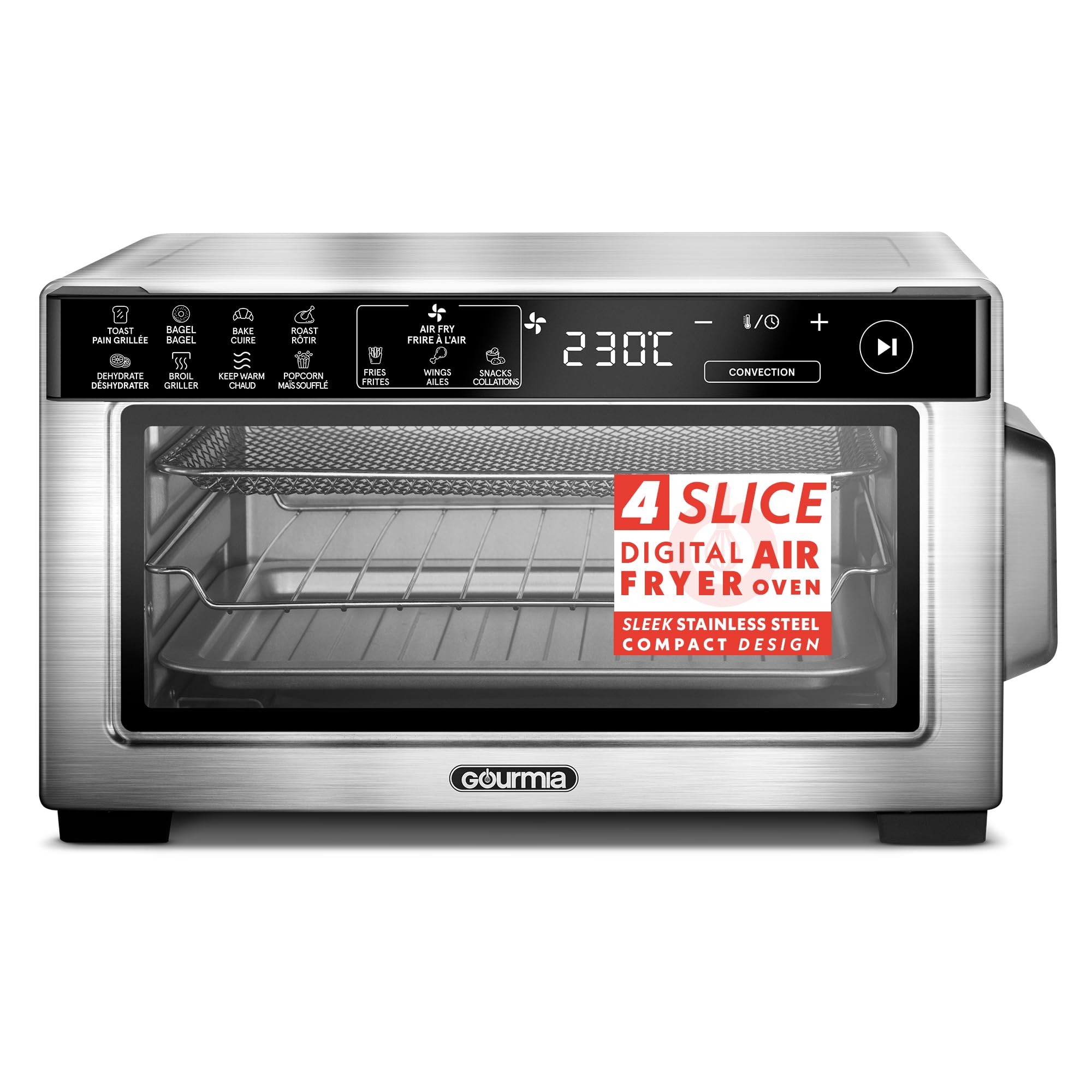
Gourmia Toaster Oven Digital Air Fryer – Convection Mode with 4 Slice Capacity, 3 Rack Positions, 12
- High-quality product
- Customer favorite
- Best value option
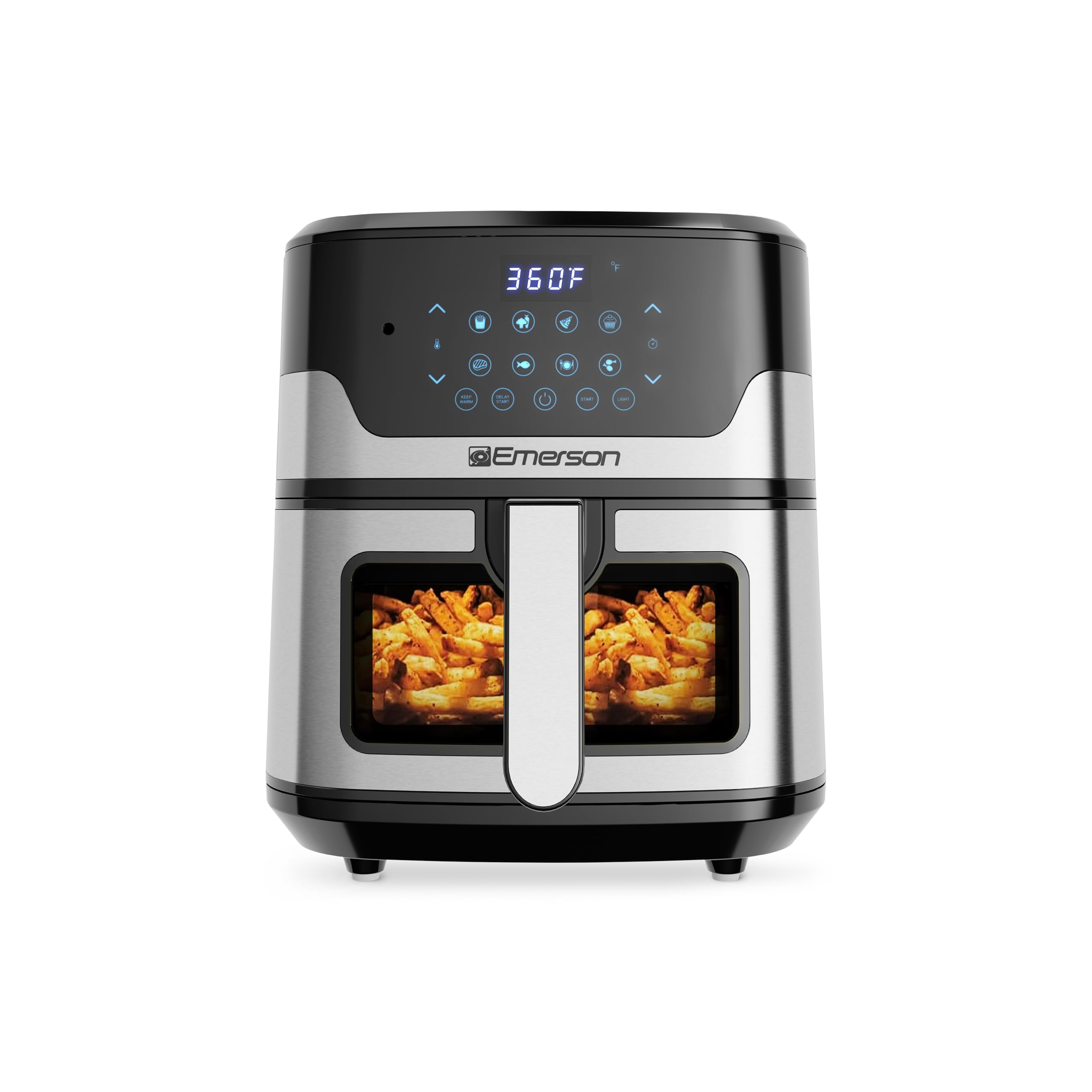
Emerson SmartVoice 5.3QT 6-in-1 Air Fryer, 1000+ Voice Control Commands, 100+ Recognized Food, No AP
- High-quality product
- Customer favorite
- Best value option

Cosori 9-in-1 TurboBlaze Air Fryer 6 Qt, Premium Ceramic Coating, 90°–450°F, Precise Heating for Eve
- High-quality product
- Customer favorite
- Best value option
Expert Hacks & Maintenance
Prevention beats repair. Clean your air fryer after every use—residual grease insulates the heating element, reducing efficiency and increasing fire risk. Soak the basket and tray in soapy water; wipe the interior with a damp cloth (never immerse the main unit). Monthly, deep-clean the fan and heating chamber with a degreaser.
Avoid overloading—crowding blocks airflow, causing hot spots that blow fuses. Never operate the unit without the basket inserted; the interlock switch ensures safe operation. Use oven mitts when handling hot components during cleaning.
For smart models, keep firmware updated via the manufacturer’s app. Outdated software can cause erratic behavior, including heating failures. If your unit has a reset button (rare), press it after power surges.
Store the air fryer in a dry, cool place. Humidity corrodes electrical contacts. If you notice a burning smell during operation, unplug immediately—it likely indicates a failing component.
Mega FAQ
Q1: Why does my air fryer turn on but not heat?
A: Likely a blown thermal fuse, faulty heating element, or sensor failure. Test components with a multimeter.
Q2: Can I replace the heating element myself?
A: Only if it’s user-accessible. Many modern units have sealed chambers—replacement requires disassembly and may void warranty.
Q3: My air fryer heats intermittently. What’s wrong?
A: Loose wiring, a drifting temperature sensor, or a failing relay on the control board.
Q4: Is it safe to bypass a blown thermal fuse?
A: Absolutely not. It’s a critical fire-prevention device. Always replace it with an identical-rated fuse.
Q5: Why won’t my digital air fryer heat past 200°F?
A: The temperature sensor may be misreporting, or the control board is limiting output due to a perceived fault.
Q6: Can a power surge damage the heating system?
A: Yes. Surges can fry the control board or blow the thermal fuse. Use a surge protector.
Q7: My air fryer makes a buzzing noise but doesn’t heat. Why?
A: The fan is running, but the heater circuit is open—check the element and fuse.
Q8: How often should I clean my air fryer to prevent heating issues?
A: After every use for the basket/tray; monthly for the interior and fan.
Q9: Will using oil cause heating problems?
A: Excess oil can smoke and coat sensors, leading to false readings. Use sparingly and clean thoroughly.
Q10: Can I test the heating element while the unit is plugged in?
A: No. Always unplug and discharge capacitors before testing.
Q11: My air fryer heats slowly. Is this normal?
A: Slightly longer preheat times are normal in cold environments, but significant delays suggest element degradation or voltage issues.
Q12: Should I repair or replace a non-heating air fryer?
A: If repair costs exceed 50% of a new unit’s price, replacement is more economical—especially for models under 2 years old with warranty coverage.
Closing Thoughts
An air fryer that won’t heat up is more than a malfunction—it’s a call to action. By understanding the interplay of thermal, electrical, and mechanical systems, you transform from a frustrated user into an informed troubleshooter. Most issues are diagnosable with basic tools and patience. And when repair isn’t viable, choosing a reliable replacement—like the expert-vetted models above—ensures your next air fryer delivers consistent, crispy results for years. Don’t let a cold cavity cool your culinary confidence. Diagnose wisely, maintain diligently, and cook on.