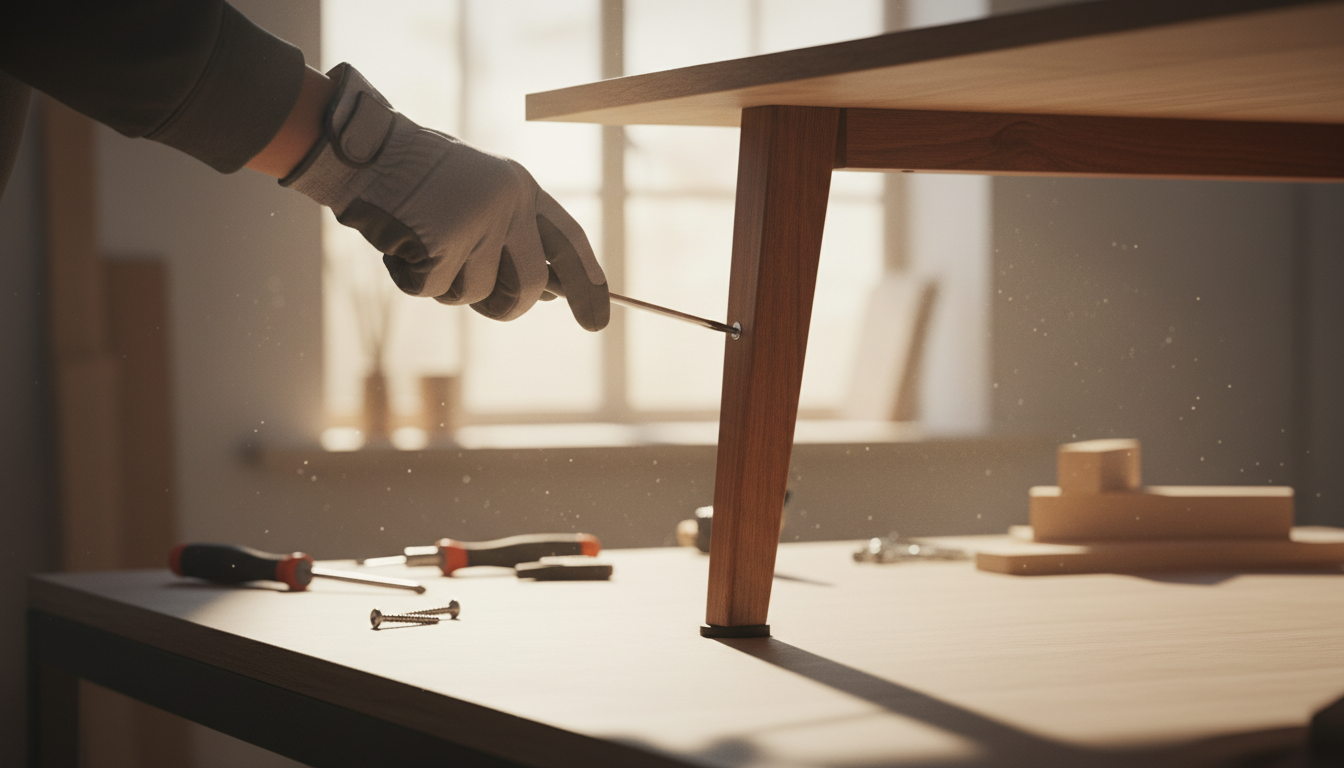
The Anatomy of a Wobble: Why Stability Matters
Few things in the domestic sphere are as subtly infuriating as a wobbly table. Whether it is a high-end mahogany dining centerpiece or a utilitarian workstation in a home office, that rhythmic thump-thump every time you apply pressure is more than a minor annoyance—it is a symptom of structural failure. When you are trying to enjoy a quiet dinner, the last thing you want is a glass of Cabernet Sauvignon performing a precarious dance. When you are typing an important report, a shifting desk surface disrupts your focus and ruins your ergonomic alignment.
Learning how to fix wobbly table legs is a foundational skill for any homeowner or DIY enthusiast. It transforms a piece of furniture from a source of frustration into a reliable asset. But before we reach for the toolbox, we must understand the "why" behind the wobble. Furniture is subject to constant stressors: the expansion and contraction of wood fibers due to humidity, the vibrational impact of daily use, and the inevitable settling of the floors beneath them.
A wobbly table isn't just "annoying"; it is a progressive issue. A small amount of play in a leg joint acts as a lever, slowly prying apart the joinery with every tilt. What starts as a millimeter of movement can eventually lead to a catastrophic failure of the table’s apron or the stripping of internal screw threads. To stabilize wobbly table surfaces effectively, you must approach the problem with a blend of physics and craftsmanship. You aren't just stuffing a napkin under a leg; you are restoring the mechanical integrity of a load-bearing structure.
In this guide, we will move beyond the superficial "quick fixes" and dive into professional-grade solutions that ensure your furniture remains rock-solid for years to come. We will explore the mechanics of leveling, the chemistry of wood bonding, and the hardware upgrades that can turn a cheap flat-pack desk into a sturdy workstation. If you value your peace of mind and your floor's finish, mastering these five solutions is non-negotiable.
The Critical Problem: An Expert Analysis of Furniture Instability
To fix a problem permanently, you must diagnose its root cause with surgical precision. Most people assume a wobbly table is caused by one leg being shorter than the others. While "short leg syndrome" is a common culprit, it is only one of three primary structural failures.
1. The Geometry of the Floor vs. The Geometry of the Frame
Most floors, especially in older homes or those with hardwood and tile, are not perfectly level. Subfloors settle over decades, and joists can bow. When a rigid four-legged object is placed on a non-planar surface, physics dictates that only three points will make solid contact at any given time. This creates a "rocking" axis. If you move the table six inches to the left, the wobble might vanish or intensify. This is a spatial conflict, not a furniture defect.
2. Loose Joinery and "Racking"
This is the most dangerous form of instability. "Racking" occurs when the lateral forces applied to the table cause the legs to tilt while the tabletop remains horizontal. This usually stems from loose bolts in the apron (the wooden frame under the top) or the degradation of wood glue in mortise-and-tenon joints. In modern RTA (Ready-to-Assemble) furniture, this is often caused by cam-locks that have vibrated loose over time. If the legs move independently of the frame when you shake them, your problem is internal, not external.
3. Material Fatigue and Compression
Wood is an organic material. Over years of supporting weight, the fibers at the base of a table leg can compress, or the "feet" (glides) can wear down unevenly. If a table has been dragged across a floor rather than lifted, the torque applied to the legs can slightly bend the mounting hardware or strip the wood surrounding the hanger bolts. This creates "play" in the system—a tiny gap that allows movement.
Ignoring these issues leads to "stress creep." As the table wobbles, the weight is distributed unevenly across the remaining joints. This creates a feedback loop: the more it wobbles, the looser the joints get; the looser the joints get, the more it wobbles. By the time a table feels "dangerously" loose, the internal wood fibers may already be crushed beyond simple repair. Understanding this allows us to choose the right methodology—whether we need to bridge a gap, tighten a fastener, or reinforce the entire skeleton of the piece.
Methodology & Core Guide: 5 Simple Solutions to Restore Stability
Restoring a table requires a systematic approach. Start with the least invasive method and work your way up to structural interventions. Here is how to fix wobbly table legs using professional methodologies.
Solution 1: The Precision Shim (The Gap-Filling Method)
If you have determined that the table's frame is tight but the floor is uneven, shimming is the most effective solution. However, we aren't talking about folded sugar packets. To stabilize wobbly table legs professionally, you need non-compressible materials.
- The Process: Identify the "floating" leg. Have an assistant lift the table slightly while you slide a shim underneath.
- Why it works: It creates a solid bridge between the leg and the floor, transferring the load directly into the subfloor without allowing for the "rocking" motion.
- Pro Tip: Use clear plastic or rubber shims that can be trimmed flush with the leg so they remain invisible.
Solution 2: Mechanical Tightening and Hardware Reset
Before adding any material, you must ensure the existing hardware is doing its job. 90% of "modern" table wobbles are caused by loose fasteners.
- The Process: Flip the table onto a soft surface (like a rug). Inspect the corner brackets where the legs meet the apron. If the table uses "hanger bolts" (a bolt that screws into the leg and has a nut on the other side), use a wrench to tighten the nut.
- Caution: Do not over-tighten, as you can strip the wood or crack the corner bracket. If the screw holes are stripped, remove the screw, glue a few toothpicks into the hole, trim them flush, and re-drive the screw.
Solution 3: Installing Adjustable Furniture Levelers
If your floor is significantly uneven, a static shim isn't enough. You need a dynamic solution. Adjustable levelers (also known as T-nuts and glides) allow you to "lengthen" or "shorten" a leg with a simple twist.
- The Process: Drill a pilot hole into the center of the bottom of each leg. Tap in a T-nut (a threaded metal sleeve). Screw in a threaded glide.
- The Benefit: This allows you to compensate for floor variances up to an inch or more. It also lifts the wood off the floor, protecting it from moisture during mopping.
Solution 4: The Glue and Clamp Reinforcement
For antique furniture or pieces with traditional joinery, the wobble often comes from dried-out hide glue.
- The Process: If a joint is loose, you must clean out the old, brittle glue. Inject high-quality PVA wood glue into the joint. Use a "ratchet strap" or large bar clamps to pull the legs tight against the apron.
- The Secret: Ensure the table is on a perfectly flat surface while the glue cures (24 hours). If you glue it while it’s crooked, it will stay crooked forever.
Solution 5: Adding Corner Blocks or Bracing
If the table design is inherently weak (common in "minimalist" modern furniture), you may need to add structural support.
- The Process: Cut triangular blocks of hardwood. Glue and screw these into the interior corners of the table apron where the leg attaches.
- The Physics: This creates a much larger surface area for the joint and prevents "racking." It forces the leg to stay at a strict 90-degree angle to the frame.
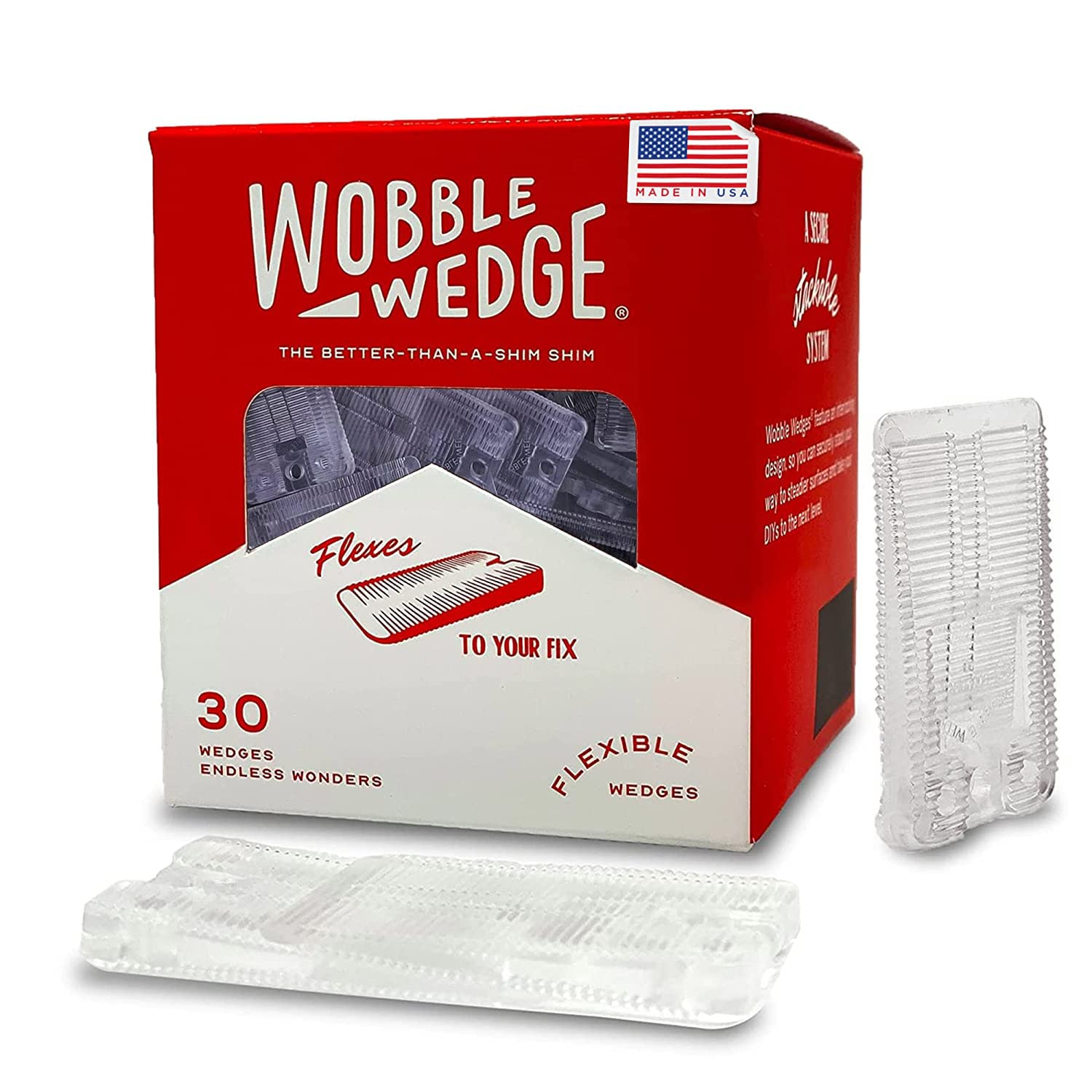
Wobble Wedges Flexible Plastic Shims – Leveling Shims for Home Improvement, Furniture Levelers, Tabl
- High-quality product
- Customer favorite
- Best value option
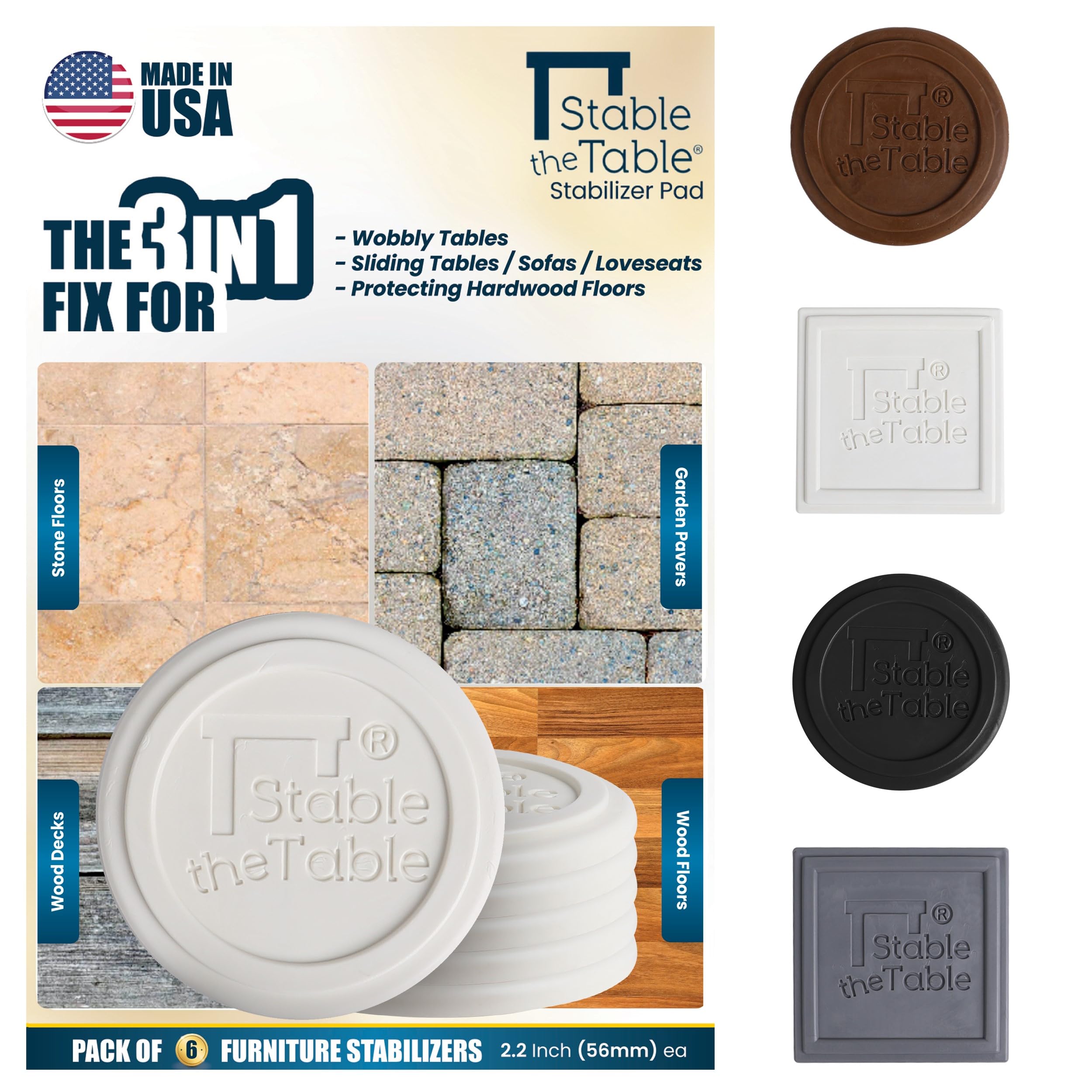
Stable the Table-6 Pack-White Round, Furniture Leveler & Riser, Anti-Slip Sofa Gripper for Hardwood
- High-quality product
- Customer favorite
- Best value option
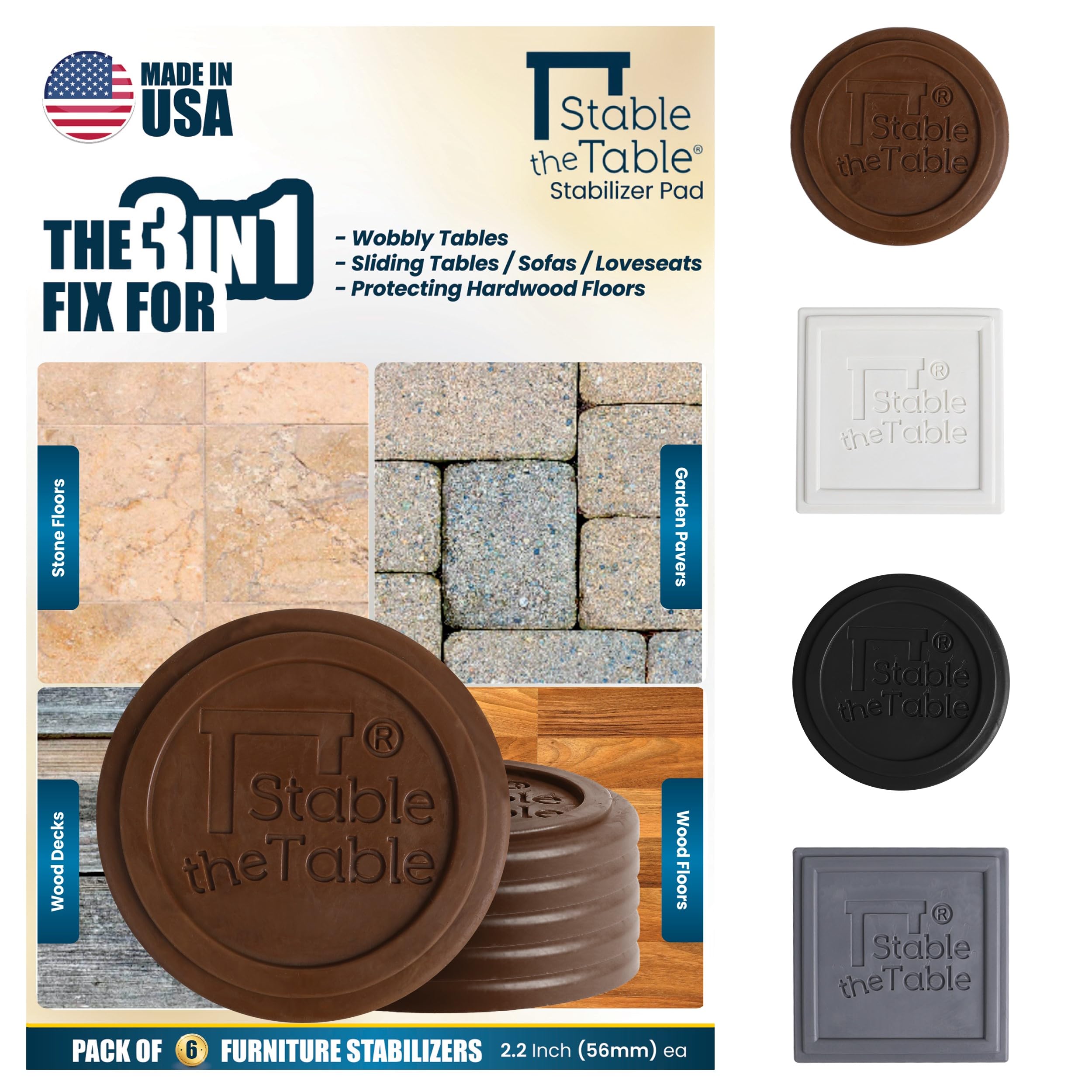
Stable the Table-6 Pack-Walnut Round, Furniture Leveler & Riser, Anti-Slip Sofa Gripper for Hardwood
- High-quality product
- Customer favorite
- Best value option
Expert Hacks & Maintenance: Proactive Stability Management
Once you have successfully learned how to fix wobbly table issues, your goal should be prevention. Professional furniture makers use a few "trade secrets" to ensure a table remains stable for decades.
The Humidity Factor
Wood is hygroscopic; it breathes. In the winter, dry air causes wood to shrink, which can loosen joints. In the summer, high humidity causes wood to swell. To stabilize wobbly table joints long-term, maintain a consistent indoor humidity level (between 40% and 55%). This prevents the cyclical expansion and contraction that destroys glue bonds.
Never Drag, Always Lift
The fastest way to ruin a stable table is to drag it across a floor. This applies massive lateral torque to the leg joints—a force they were never designed to handle. If you must move a heavy table frequently, install high-quality casters or heavy-duty felt sliders.
The "Scribe" Method for Perfectionists
If you have one leg that is legitimately too long and you don't want to use shims, you can "scribe" it. Place the table on a known flat surface. Use a small block of wood and a pencil to draw a line around the bottom of the long leg that is exactly parallel to the floor. Carefully sand or saw down to that line. This ensures the leg makes 100% surface contact with the floor.
Mega FAQ: Expert Answers to Your Stability Questions
1. Why does my table only wobble on certain parts of the floor?
This indicates your floor is uneven. Hardwood floors and tiles often have slight dips. Use the shim method or adjustable levelers to compensate for these "low spots."
2. Can I use hot glue to fix a loose table leg?
Absolutely not. Hot glue is flexible and has low shear strength. It will fail under the weight of the table. Use high-quality PVA wood glue (like Titebond II or III) for structural repairs.
3. How do I fix a wobbly table with metal legs?
Metal legs usually wobble because the mounting plate is loose or the floor is uneven. Check the screws connecting the metal to the wood. If they are tight, use threaded adjustable feet, which are common for metal furniture.
4. What is the best shim material for a heavy dining table?
Hard plastic or dense rubber. Avoid cardboard or folded paper, as they compress over time and lose their effectiveness.
5. My table is wobbly but the legs are tight. What’s wrong?
The "wobble" might actually be "flex" in the tabletop itself or the apron. If the wood is too thin for the span of the table, it will bounce. You may need to add a "stretcher" (a horizontal support bar) between the legs.
6. Is it worth fixing a cheap IKEA-style table?
Yes. Often, these tables just need the cam-locks tightened or a bit of wood glue in the dowel holes to become significantly more rigid.
7. How tight should I turn the bolts on my table legs?
Snug, plus a quarter turn. You want to compress the wood slightly but not crush the fibers or strip the metal threads.
8. Will felt pads fix a wobbly table?
Felt pads are great for protecting floors, but they are too soft to fix a significant wobble. They will compress under weight and the wobble will return.
9. Can I use epoxy to fill a gap in a loose joint?
Yes. Epoxy is excellent for "loose" joints where the wood has been stripped away, as it is gap-filling and incredibly strong once cured.
10. Why do my table legs keep coming loose every few months?
This usually happens if the table is moved frequently or if the wood is expanding/contracting significantly. Use a drop of "Threadlocker" (like Loctite) on the bolts to prevent them from vibrating loose.
11. How do I know if a leg is actually shorter or if the floor is just crooked?
Rotate the table 90 degrees. If the wobble stays with the leg, the leg is short. If the wobble stays in the same spot on the floor, the floor is uneven.
12. Can a wobbly table damage my flooring?
Yes. The constant micro-movements act like sandpaper, grinding away the finish on hardwood or cracking the grout in tile.
Closing Thoughts: The Value of a Solid Foundation
Mastering the art of how to fix wobbly table legs is about more than just home maintenance; it is about respecting the objects we live with. A stable table provides a sense of permanent security. It allows us to work without distraction and host without embarrassment. By applying the expert methodologies outlined above—from the simple precision of a shim to the structural reinforcement of corner blocks—you ensure that your furniture serves its purpose with silent, sturdy reliability. Don't settle for a "temporary" fix. Invest the time to stabilize your environment, and your furniture will reward you with a lifetime of service.