
The Anatomy of Frustration: Why Your Cuisinart Lid Is Defying You
You are in the middle of preparing a mirepoix for a five-hour bolognese, or perhaps you’re trying to emulsify a delicate hollandaise. You place the work bowl on the base, drop in the blade, and attempt to slide the lid into place. Nothing. It resists. You push harder, fearing you might snap the high-grade polycarbonate, but the "click" that signals safety and readiness never comes. For over four decades, Cuisinart has been the undisputed titan of the home kitchen, popularized by culinary legends like Julia Child and James Beard. However, with that professional-grade power comes a sophisticated, and often temperamental, safety interlock system.
When your cuisinart lid won't close, it isn't just a mechanical nuisance; it is a full stop to your culinary workflow. The Cuisinart food processor is designed with a "fail-safe" philosophy. Unlike a blender, which might run with a loose top (and spray your ceiling with smoothie), a Cuisinart is engineered to be a sealed vault. If the lid does not lock with mathematical precision, the internal switch—the "dead man's switch" of the kitchen—will not engage the motor. This is a protection against the 1.5-horsepower motor that could otherwise turn a stray finger into a statistic.
Understanding why the cuisinart food processor lid stuck or won't engage requires a shift in perspective. You must stop viewing it as a simple plastic cover and start viewing it as a critical component of an electrical circuit. From the DLC-7 Super Pro models of the 1980s to the modern Elemental and Custom 14 series, the locking mechanism has evolved, but the core problem remains the same: alignment, debris, or component fatigue. This guide is designed to move beyond the "jiggle it" advice found in basic manuals. We are going deep into the mechanical tolerances, the physics of the actuator arm, and the specific troubleshooting steps that separate the home cook from the culinary technician. By the end of this deep dive, you will not only have a locked lid but a fundamental understanding of how to maintain your machine for the next twenty years of service.
The Critical Problem: Expert Analysis of the Interlock Failure
To solve the mystery of why your cuisinart lid won't close, we must first perform a post-mortem on the interlock system itself. Most users assume the locking mechanism is located solely where the lid meets the bowl. In reality, the "lock" is a three-stage sequence.
First, there is the bowl-to-base connection. On most Cuisinart models (like the DFP-14 or the Custom 11), the bowl must be rotated clockwise until it clicks. This movement moves a small plastic tab at the bottom of the bowl into a slot on the motor base. If the bowl is off by even two millimeters, the lid will never lock because the "stack height" of the safety components is misaligned.
Second, we have the actuator arm. This is the most common point of failure and the primary reason for a cuisinart food processor lid stuck situation. The actuator arm is a vertical plastic rod, often hidden within the handle of the work bowl or the rear of the lid. When you rotate the lid into the locked position, a tab on the lid pushes down on this arm. The arm then travels down through the bowl handle and presses a microswitch inside the motor base. This completes the electrical circuit. If this arm is chipped, warped by dishwasher heat, or blocked by a single grain of dried pesto, the motor remains dead.
The third stage, which is unique to Cuisinart’s larger models, is the "Large Pusher" requirement. This is the "hidden" reason many lids won't engage. On models with a wide-mouth feed tube, the machine features a secondary interlock. The lid may be physically locked onto the bowl, but the motor will not start unless the large white or clear pusher is inserted into the feed tube to a specific depth. This prevents users from reaching their hands down into the spinning blades through the wide opening.
Furthermore, we must consider material science. Cuisinart bowls and lids are primarily made of Tritan or Lexan—high-impact polycarbonates. While incredibly durable, these materials are susceptible to "creep" and thermal expansion. If you consistently wash your work bowl in a high-heat dishwasher cycle, the plastic can subtly warp over time. A deviation of just 0.5% in the circumference of the lid can make the locking tabs feel "tight" or impossible to turn. This is not a defect; it is the result of the tight tolerances required to ensure the machine is airtight and safe. Understanding these three stages—the base, the actuator, and the pusher—is the key to diagnosing why your machine has suddenly become a very expensive paperweight.
Methodology: The Definitive Core Guide to Fixing the Lock
Follow these steps in exact order. Do not skip the cleaning phase, as 90% of "broken" Cuisinarts are simply "dirty" Cuisinarts.
Step 1: The Zero-Reset (Empty the Bowl)
Before diagnosing the lid, remove everything. Take out the blade, the dough hook, or the slicing disc. Often, the cuisinart lid won't close because the center hub of the blade isn't seated fully on the motor shaft. If the blade is sitting 1/8th of an inch too high, it will physically block the lid from rotating into the locked position. Clean the inside of the blade's "sheath" to ensure no dried food is preventing it from dropping onto the shaft.
Step 2: The Bowl Seating Protocol
Place the empty work bowl on the base. Do not just drop it on; ensure the handle is at the "7 o'clock" position (for most models) and rotate it firmly to "6 o'clock" until you hear a sharp, audible click. If the bowl doesn't click, the lid cannot lock. Inspect the tabs at the bottom of the bowl for any cracks. Even a hairline fracture can cause the bowl to "flex" rather than lock, throwing off the alignment for the lid.
Step 3: Inspecting the Actuator Path
Look at the rear of your lid. You will see a protruding plastic tab—this is the "finger" that triggers the safety switch. Now, look at the corresponding slot on the work bowl handle. Use a flashlight or your phone's LED. Is there a piece of dried cheese in there? A crumb of bread? Use a wooden skewer or a Q-tip dipped in rubbing alcohol to clear this channel. If the cuisinart food processor lid stuck during your last use, it’s likely that food particles were forced into this locking channel and have now hardened like concrete.
Step 4: The "Pusher" Calibration
If your lid is on, but the machine won't start, focus on the feed tube. Many Cuisinart models have a "Max Fill" line on the large pusher. If you are trying to process a large block of cheese and the pusher cannot slide down far enough, the interlock won't engage. Conversely, if the pusher is missing the small "tab" on its side, it won't be able to trigger the lid's internal sensor. Ensure the pusher moves freely within the feed tube.
Step 5: Thermal Expansion Correction
If the lid feels physically too tight to turn, try this professional hack: Run the lid under cold water for 60 seconds, then wipe it dry. Occasionally, if the bowl was recently used for hot ingredients or taken out of a warm dishwasher, the plastic has expanded. Cooling the lid slightly can provide the fractional clearance needed to slide the locking tabs into their grooves.
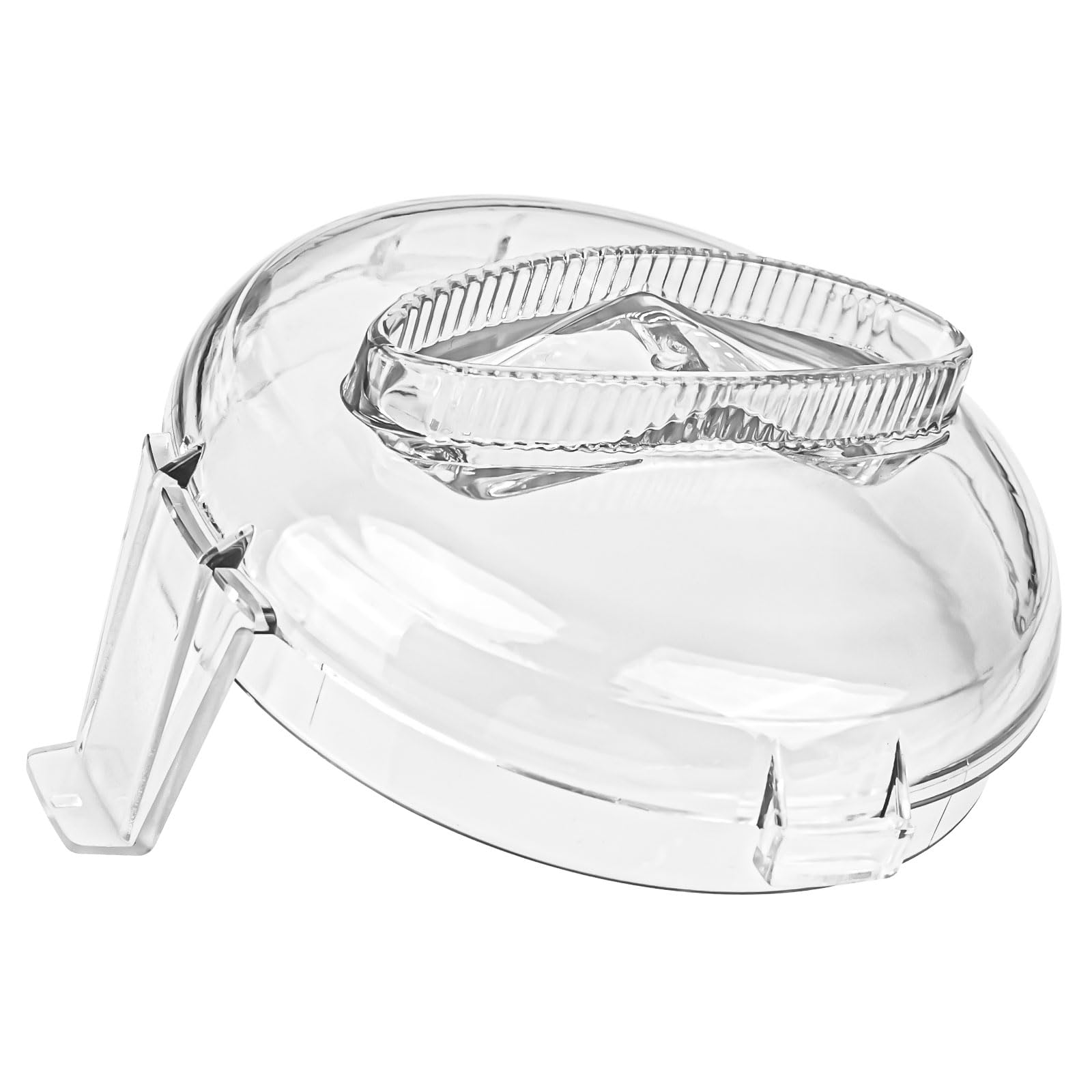
DLC-2AWBC-1 Food Processor lid Replacement for Cuisinart DLC-2A Mini Prep Plus Food Processor 3 Cup,
- High-quality product
- Customer favorite
- Best value option
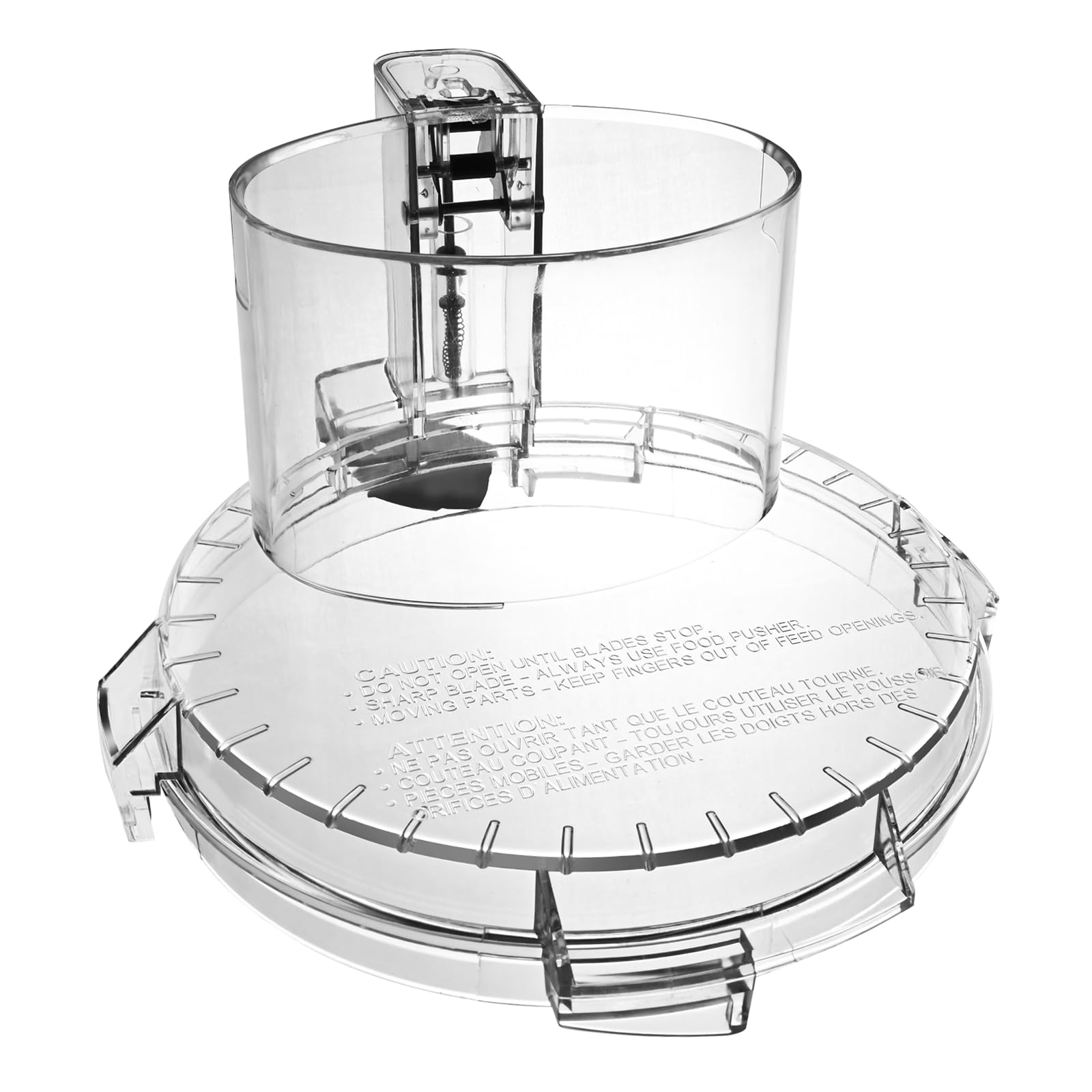
4 Locking Tabs DFP-14NWBCT1 Clear Food Processor Work Bowl Cover Compatible with Cuisinart Tritan On
- High-quality product
- Customer favorite
- Best value option
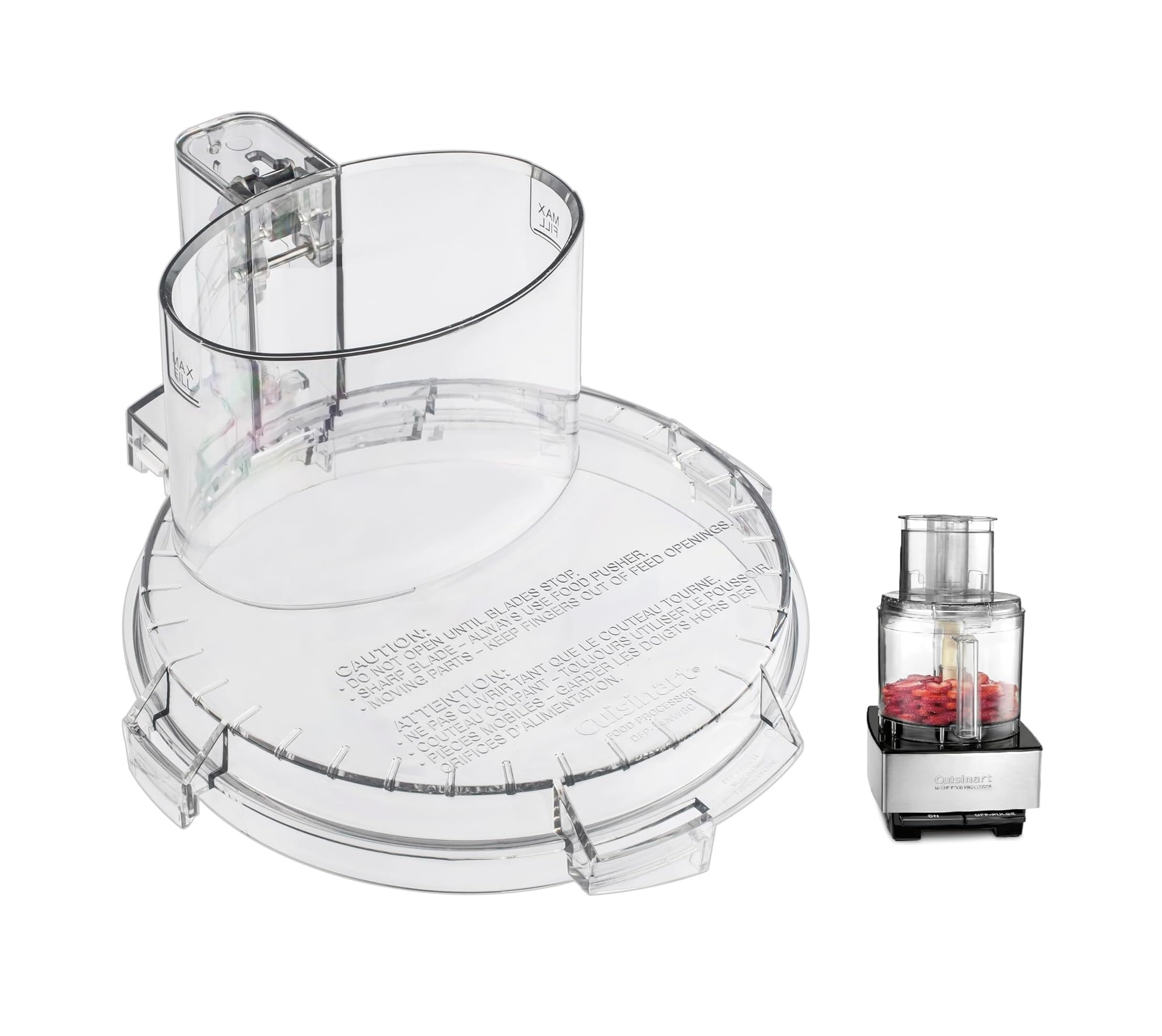
Cuisinart DFP-14NWBCT1 Replacement Clear Food Processor Work Bowl Cover, Tritan, Compatible Only wit
- High-quality product
- Customer favorite
- Best value option
Expert Hacks & Advanced Maintenance
Once you have resolved the immediate crisis of a cuisinart lid won't close, you should implement a maintenance regimen that prevents recurrence. As a top-tier authority on kitchen equipment, I recommend the "Dry Lube" technique.
The Mineral Oil Hack
If your locking mechanism feels "gritty" or requires excessive force, do not use WD-40 or standard lubricants. Instead, apply a microscopic amount of food-grade mineral oil (butcher block oil) to a paper towel and wipe it along the rim of the work bowl where the lid makes contact. This reduces friction between the polycarbonate surfaces without contaminating your food.
The "Sleeve" Alignment
On older DLC models, the work bowl has a "sleeve" around the center post. If this sleeve becomes loose, it can vibrate upward during use, causing the lid to jam when you try to remove it. Ensure the center post is clean and that the blade drops all the way down with a "thud" rather than a "squish."
Dishwasher Discipline
While Cuisinart marks their components as "dishwasher safe," professional chefs rarely put them in the machine. The aggressive detergents and high-heat drying cycles leach the plasticizers from the Tritan, making it brittle and more prone to warping. Hand-washing your bowl and lid in lukewarm soapy water will extend the life of the interlock tabs by decades.
Mega FAQ: Expert Troubleshooting
1. Why does my Cuisinart lid only lock when the bowl is empty?
This usually indicates that your blade or disc is not seated correctly. When food is under the blade, it can lift the assembly by a fraction of an inch, preventing the lid from clearing the top of the center post.
2. The lid is locked, but the motor won't turn on. What now?
Check the pusher. On most 11 and 14-cup models, the large pusher must be engaged in the feed tube to complete the circuit. If that's not it, the actuator arm in the handle may be stuck or broken.
3. My cuisinart food processor lid stuck and I can't get it off. Help!
This is often caused by a vacuum seal or food getting into the locking tabs. Try tapping the side of the lid gently with a rubber mallet or the heel of your hand while turning. Do not use a screwdriver to pry it, or you will crack the bowl.
4. Can I bypass the safety lock?
Absolutely not. The motor is powerful enough to cause severe injury. If your locking mechanism is broken, replace the lid or bowl immediately.
5. How do I know if I need a new lid or a new bowl?
Inspect the tabs. If the tabs on the lid are rounded off or chipped, replace the lid. If the "ramps" on the bowl where the lid slides in are cracked, replace the bowl.
6. Why is there a clicking sound but no motor movement?
The clicking is likely the microswitch engaging, but the motor may be in "thermal overload" protection. Let the unit sit unplugged for 30 minutes.
7. Does the "Custom 14" have a different locking system?
Yes, the Custom 14 uses a rear-mounted actuator. Ensure the rear "tongue" of the lid is perfectly aligned with the slot at the back of the base.
8. Is it normal for the lid to be hard to turn when new?
Yes. The tolerances are very tight. It will "break in" over the first 20-30 uses. Use the mineral oil hack mentioned above to help.
9. What if the actuator arm is missing?
Some models have a removable actuator for cleaning. If it's gone, the machine will not run. You can find replacement actuator kits online.
10. Can I put the lid in the freezer to fix warping?
No. Extreme cold makes the plastic brittle. Room temperature or slightly cool water is best for adjusting tolerances.
11. Why does my lid vibrate and unlock itself?
This indicates the locking tabs are worn down or the bowl isn't fully locked onto the base. The vibration of the motor is "walking" the lid out of position.
12. Does the "Mini-Prep" have these same issues?
The Mini-Prep uses a simplified version, but the principle is the same: the lid must be rotated to depress a small pin on the motor body.
13. My lid is clouding. Does this affect the lock?
Clouding is usually "crazing" from the dishwasher. It doesn't affect the lock initially, but it's a sign that the plastic is becoming brittle and may soon snap.
Final Thoughts: The Zen of the Click
A Cuisinart food processor is a masterpiece of American-French engineering, but like any precision instrument, it demands respect for its mechanics. When you encounter a situation where the cuisinart lid won't close, remember that it is the machine's way of communicating a misalignment. It is not an adversary to be conquered with force, but a puzzle to be solved with cleanliness and logic. By maintaining the actuator path, respecting the thermal limits of the plastic, and ensuring the "safety stack" of the base, bowl, and blade are perfectly synchronized, you ensure that your Cuisinart remains the heartbeat of your kitchen for a generation. Stop fighting the lid, start inspecting the tabs, and let the precision of the "click" guide your cooking.