The Invisible Guardian: Why Roomba Filter Maintenance is Non-Negotiable
The modern home is a battlefield of microscopic debris. From pet dander and pollen to dust mites and fine particulates, the air we breathe is constantly being filtered through our floors. When you invested in an iRobot Roomba, you weren’t just buying a vacuum; you were investing in an autonomous air-quality management system. However, the most common mistake Roomba owners make is subscribing to the "set it and forget it" myth. While the robot navigates your home with sophisticated SLAM (Simultaneous Localization and Mapping) technology, its actual cleaning power is entirely dependent on one humble, often-overlooked component: the filter.
Learning how to clean roomba filter units properly is the difference between a robot that thrives for a decade and one that burns out in two years. The filter serves as the final gateway before air is exhausted back into your living space. If that gateway is blocked, the entire system fails. A clogged filter doesn't just leave dust on your rugs; it forces the vacuum's high-efficiency motor to work at double the intended RPMs to achieve the same suction. This leads to overheating, catastrophic battery drain, and eventual hardware failure.
In this mega guide, we are moving beyond basic surface-level tips. We are diving into the engineering-grade maintenance required to keep your Roomba operating at peak "out-of-the-box" performance. Whether you own the latest s9+ or a legacy 600-series workhorse, the principles of roomba filter cleaning remain the same: precision, frequency, and the right technique. By the end of this manual, you will understand the physics of robotic suction and the exact methodology required to ensure your Roomba remains a powerful ally in your home’s hygiene, rather than a dusty paperweight. We will explore the nuances of HEPA-style filtration, the dangers of moisture, and the professional hacks that extend the life of your consumables.
The Critical Problem: The Physics of Clogged Filtration
To understand why roomba filter cleaning is so vital, one must understand the relationship between airflow and static pressure. A vacuum cleaner is, at its core, an air-pump. It creates a pressure differential that allows atmospheric pressure to push dirt into the bin. The filter is positioned at the end of this airflow path to catch fine particles before the air exits the machine.
When you neglect to clean the filter, a phenomenon known as "filter loading" occurs. Dust particles don't just sit on the surface; they become embedded within the pleated fibers of the filter media. As these gaps close, the "Resistance to Airflow" (RTF) increases exponentially. This creates three critical points of failure that most users don't realize are happening until it's too late.
First, there is the Thermal Stress Factor. Modern Roombas use high-performance brushless motors. These motors rely on the very air they are vacuuming to stay cool. When the filter is clogged, the airflow drops significantly, causing the motor temperature to spike. Over time, this heat degrades the motor's internal bearings and compromises the copper windings, leading to a loud, grinding noise or a "Bin Error" that won't go away.
Second, we have Battery Depletion. A Roomba with a clean filter can easily finish a 1,000-square-foot floor plan on a single charge. However, when the motor has to fight against a clogged filter, it draws significantly more current from the Lithium-Ion battery. This doesn't just mean shorter cleaning cycles; it means more "deep discharge" cycles for the battery, which drastically shortens its overall lifespan. You might find yourself replacing a $100 battery every year simply because you didn't spend two minutes cleaning a $5 filter.
Third, and perhaps most importantly, is Secondary Pollution. If you don't know how to clean roomba filter components correctly, your robot actually becomes a dust spreader. When the filter is full, the back-pressure can cause dust to leak through the seals of the bin or, worse, blow the finest, most allergenic particles straight through the saturated filter media and back into your breathing zone. This defeats the entire purpose of having a HEPA-rated vacuum. To maintain a truly clean home, the filter must be porous enough to let air pass but dense enough to trap 99% of allergens. Maintaining that balance is an art form.
Methodology: The Definitive Guide to Roomba Filter Cleaning
Cleaning your filter is not a suggestion; it is a core maintenance requirement that should be performed every 2-3 cycles, or more frequently if you have shedding pets. Follow this professional methodology to ensure you are doing it correctly without damaging the delicate filter media.
Step 1: The Safe Extraction
Before touching the filter, ensure your Roomba is powered down. For most "i," "j," "e," and "s" series models, press the bin release button to slide the dust bin out of the rear of the unit. For older 600/700/800 series models, the bin may release from the bottom or rear. Once the bin is out, locate the filter door or the filter pull-tab.
Expert Tip: Always perform this over a secondary trash can or, preferably, outside. The moment you pull that filter, a cloud of fine particulate matter will be released.
Step 2: The "Tap and Clear" Technique
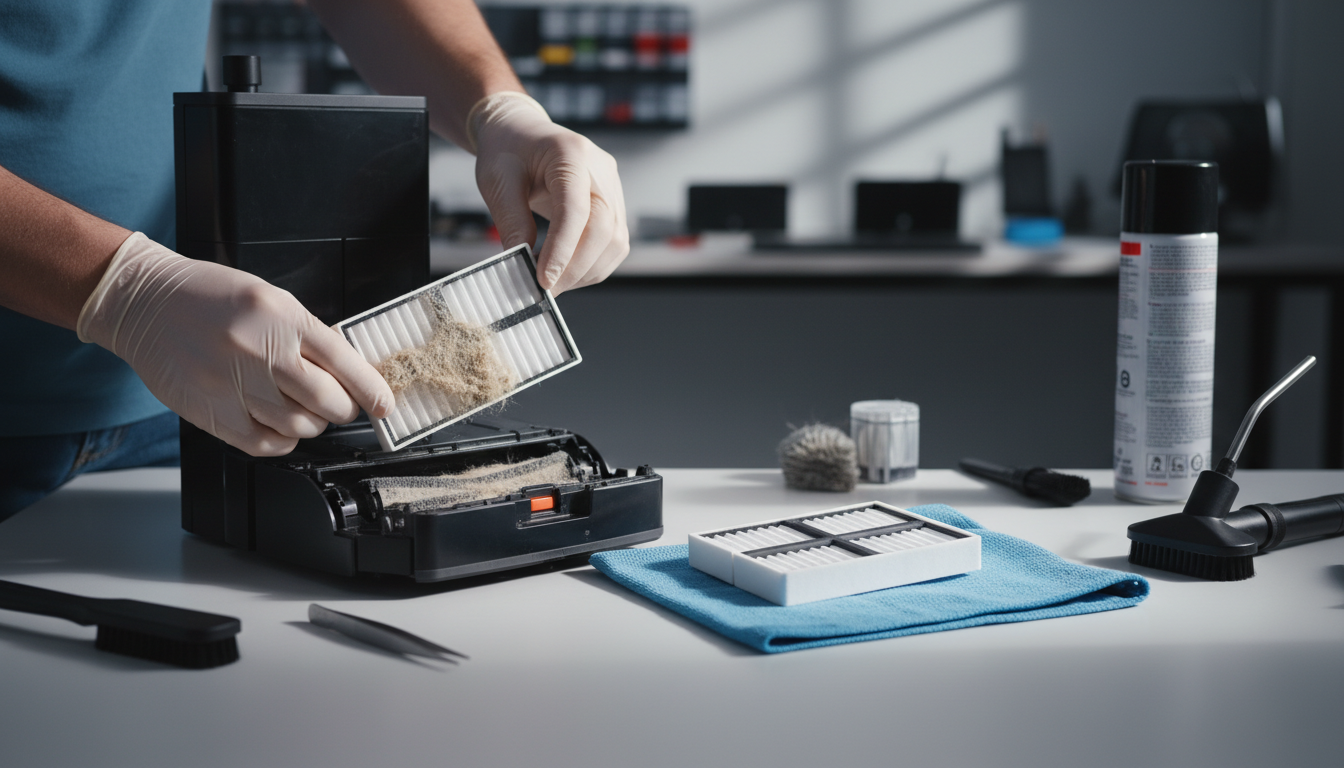
Most Roomba filters are made of a pleated paper-like material (High-Efficiency Filter). These are not washable. Never submerge them in water. To clean them, hold the filter firmly and tap it against the inside of your trash can. Tap all four sides. You will be shocked at the amount of "brick dust" that falls out of the pleats. This fine dust is what actually kills suction, not the large hairballs.
Step 3: Deep Cleaning with a Secondary Vacuum (The Pro Move)
If you want to truly master how to clean roomba filter units, use your upright vacuum’s hose attachment to suck the dust out of the Roomba filter pleats. This reverses the airflow and pulls the deeply embedded dander out of the fibers. This single step can extend the life of a filter from two months to six months.
Step 4: Inspecting the Gaskets
While the filter is out, look at the rubber gaskets around the filter housing. If these are coated in dust, wipe them down with a slightly damp (not dripping) microfiber cloth. A poor seal around the filter allows "bypass air," which means the dust is going around the filter and into the motor.

Replacement Parts for iRobot Roomba i2 i3 i3+ i4 i4+ i6 i6+ i7 i7+ i8 i8+/Plus E5 E6 E7, Robot Vacuu
- High-quality product
- Customer favorite
- Best value option
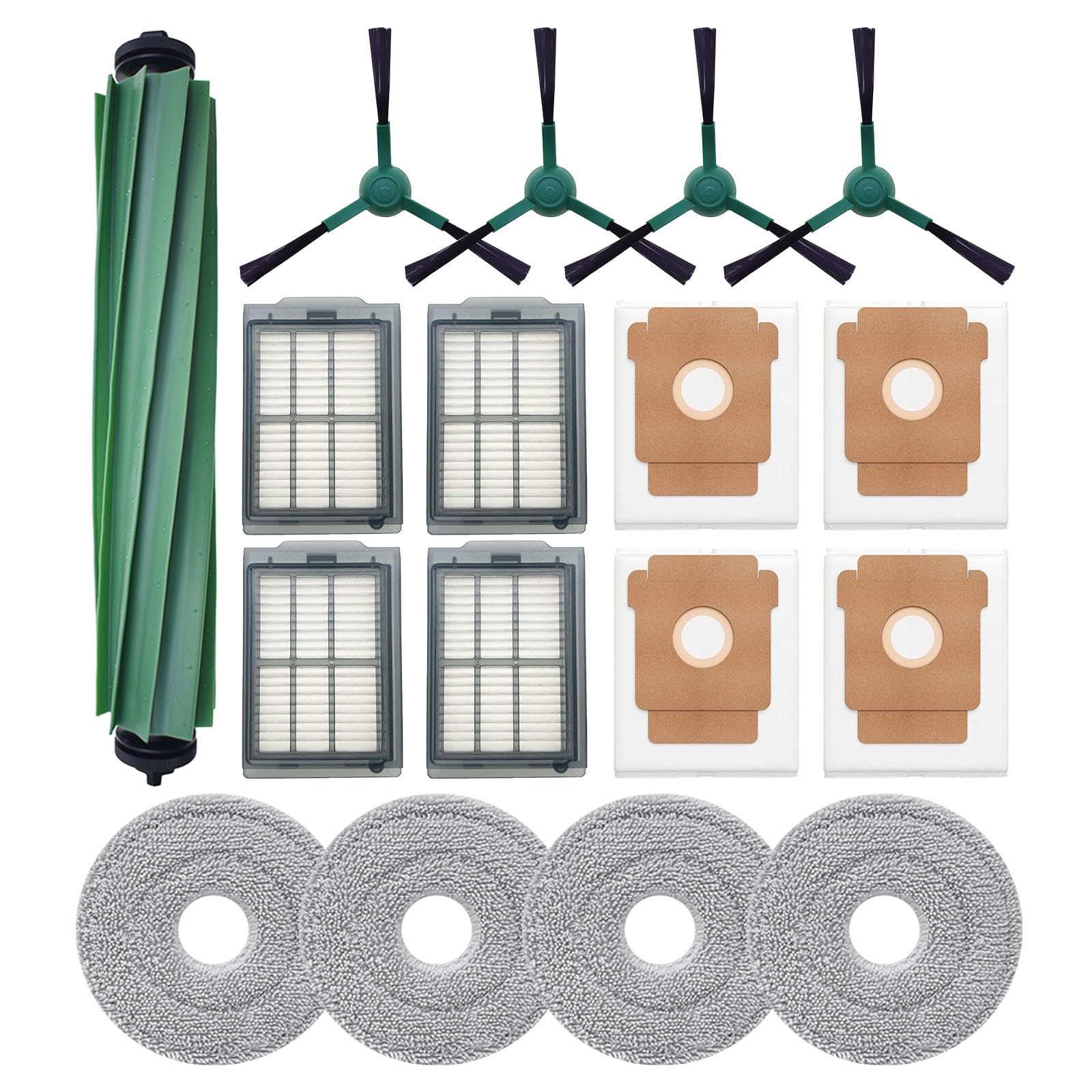
Neutop Replacement Parts Compatible with iRobot Roomba Plus 405/505 Combo Robot Vacuum Accessories w
- High-quality product
- Customer favorite
- Best value option

LOTIN 12 Pack HEPA Filter Filters for Roomba 800 900 Series 860 870 871 880 960 980 Vacuum Cleaning
- High-quality product
- Customer favorite
- Best value option
Step 5: Bin Maintenance
Since you already have the bin out, this is the time to wash it. Note: Only wash the bin if your model allows it (most e, i, j, and s series bins are washable once the filter is removed). If your bin has a motor built into it (older models), do not use water. Use a damp cloth to clean the interior sensors and the "bin full" optical ports.
Expert Hacks & Advanced Maintenance
For those who want to push their Roomba to the limit, these advanced hacks will ensure your roomba filter cleaning routine is world-class.
- The Compressed Air Blast: If you have access to an air compressor or canned air, use short bursts from the clean side of the filter (the side facing the motor) to blow dust out through the dirty side. This is the most effective way to clear the microscopic pores of the HEPA material.
- The Pre-Filter Hack: Some users in high-dust environments (like woodshops or homes with 3+ dogs) use a single ply of a facial tissue or a specialized mesh over the filter. While this can catch large hair, it often increases air resistance, so use it with caution and monitor the robot for overheating.
- Rotation Strategy: Buy filters in bulk. Keep two filters on hand. While one is in the Roomba, the other is being deep-cleaned or aired out. This ensures you never run the robot with a damp or dusty filter.
- Odor Elimination: If your Roomba smells like "wet dog," do not spray the filter with Febreze. The liquid will collapse the pleats. Instead, place a single drop of essential oil on the plastic frame of the filter, or better yet, replace the filter entirely.
Mega FAQ: Expert Answers to Your Roomba Filter Questions
1. Can I wash my Roomba filter with water?
No. Standard Roomba filters are made of a pleated composite material that loses its structural integrity and filtration efficiency when wet. Water causes the dust to turn into "mud," which permanently clogs the pores. Only wash the plastic dust bin, never the filter.
2. How often should I replace the filter vs. cleaning it?
You should tap out the filter every 2-3 cleanings. However, a filter should be completely replaced every 2 months if you have pets, or every 4-6 months in a pet-free home. Even with cleaning, the fibers eventually become "blinded" by micro-dust.
3. Why is my Roomba saying "Empty the Bin" when it's already empty?
This is usually caused by a dirty filter or dirty sensors. If the filter is so clogged that air can't pass, the internal sensors interpret this as a full bin. Clean the filter and wipe the internal optical sensors with a dry microfiber cloth.
4. Are third-party filters as good as official iRobot filters?
Many high-quality third-party filters (like those in our grid above) offer identical performance at a fraction of the cost. Look for "HEPA-rated" or "High-Efficiency" labels. Avoid the ultra-cheap, flimsy ones that lack a proper rubber seal.
5. What happens if I run my Roomba without a filter?
Never do this. Running without a filter allows dust and debris to fly directly into the vacuum motor. This will cause the motor to seize or burn out within minutes, leading to an expensive repair.
6. Does a dirty filter affect the Roomba’s battery life?
Yes, significantly. A clogged filter increases motor strain, which draws more power. Keeping your filter clean can extend your daily run time by up to 20%.
7. Why does my Roomba leave clumps of hair on the carpet?
This is a sign of "Low Suction Volume." When the filter is clogged, the air can't pull the hair into the bin, so the brushes just roll it into "cigars" and drop them back on the floor.
8. How do I know if my filter is "HEPA"?
iRobot calls them "High-Efficiency Filters." They are designed to trap 99% of particles as small as 10 microns. If the filter has many fine pleats, it is likely a high-efficiency model.
9. Can I use a hair dryer to clean the filter?
Only if it has a "cool" setting. Heat can warp the plastic frame or melt the synthetic fibers of the filter media. Compressed air is a much safer and more effective alternative.
10. Does the Roomba s9+ have a different filter than the i7?
Yes. Different series use different shapes. Always check your model number before purchasing replacements. The s9+ has a larger, rectangular filter, while the "i" and "e" series use a smaller, square-ish design.
11. My filter looks clean, but the suction is low. Why?
Micro-dust is invisible. After 3-4 months, the filter may look gray but not "dirty," yet the pores are blocked by fine particles like skin cells and pollen. If suction is low, replace it.
12. Can I vacuum the filter with another vacuum?
Yes! This is actually the best way to clean it without using water. Use a brush attachment on a high-powered upright vacuum to pull dust out of the pleats.
Closing Thoughts: The Path to a Longer-Lasting Robot
Your Roomba is a sophisticated piece of robotics, but it is still bound by the laws of fluid dynamics. Suction is the lifeblood of the machine, and the filter is the heart's valve. By mastering how to clean roomba filter components and committing to a regular roomba filter cleaning schedule, you aren't just cleaning your floors—you're protecting a significant investment.
A well-maintained filter ensures that your Roomba runs quieter, cleans deeper, and lasts years longer than a neglected one. Don't wait for the "Bin Error" light to blink or for your carpets to look dingy. Take five minutes this weekend to tap out that dust, vacuum those pleats, and ensure your robot is breathing as clearly as you are. A clean filter is the secret to a clean home.