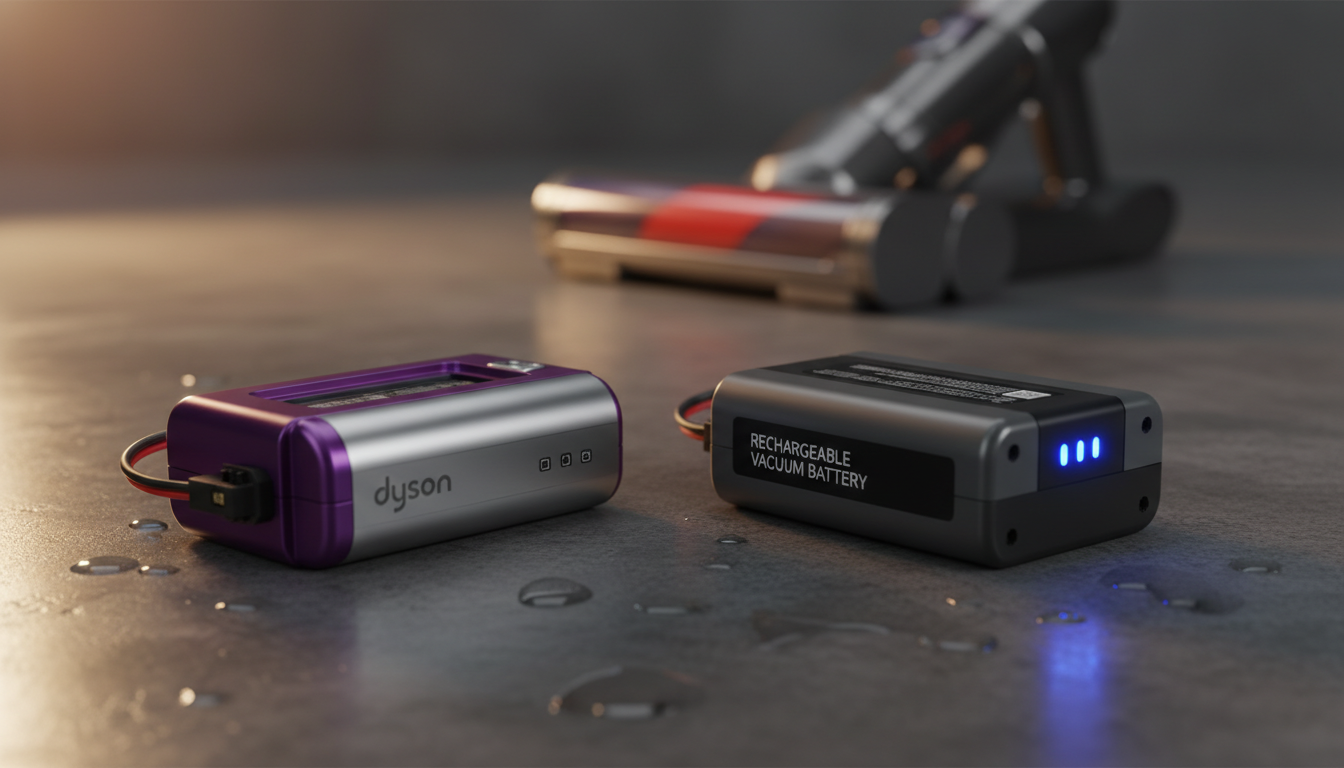
The Battery Bottleneck: Why Your Dyson Eventually Fails
The Dyson cordless vacuum is a masterclass in engineering, a device that fundamentally changed how we perceive domestic maintenance. However, every Dyson owner eventually hits the same frustrating wall: the "Pulse of Death" or the flashing red LED. Since Dyson transitioned to its high-torque digital motors—spanning from the V6 to the V15 Detect—the bottleneck has never been the suction or the filtration; it is the lithium-ion power cell.
Dyson uses high-discharge, high-density cells designed to provide consistent power until the very last second of the charge. But chemistry has its limits. After 300 to 500 charge cycles, the internal resistance of the original equipment manufacturer (OEM) battery increases, leading to significantly reduced runtimes and eventually, a total refusal to charge. This is where the consumer faces a polarizing dilemma: do you spend $100–$150 on an official Dyson replacement, or do you venture into the wild west of aftermarket dyson batteries?
The market for a generic dyson battery is massive, driven by the sticker shock of OEM parts. For many, paying nearly 30% of the vacuum’s original price for a replacement battery feels like a "Dyson tax." This has birthed a secondary industry of third-party manufacturers claiming to offer double the capacity at half the price. But as any electrical engineer will tell you, when dealing with high-current lithium-ion packs, "value" is a multi-faceted metric that includes safety, thermal management, and circuit communication. In this guide, we strip away the marketing fluff to compare OEM vs. Generic, helping you decide if you're buying a bargain or a fire hazard.
The Critical Problem: The Engineering Gap Between OEM and Generic
When you disassemble a genuine Dyson battery, you find more than just lithium cells. You find a sophisticated Battery Management System (BMS) that communicates directly with the vacuum's microprocessor. This "handshake" ensures that the motor doesn't pull more current than the cells can safely provide. The critical problem with many aftermarket dyson batteries isn't just the cells—it’s the lack of sophisticated logic in the BMS.
The "mAh" Marketing Lie
The most prevalent issue in the generic dyson battery market is capacity inflation. You will frequently see aftermarket packs for the V8 or V10 advertised as "6000mAh" or "7000mAh." To put this in perspective, the standard Dyson V8 battery is typically 2800mAh. Because of the physical constraints of the battery housing (which uses 18650 or 21700 form-factor cells), it is physically impossible to fit 7000mAh of capacity into that footprint using current lithium-ion technology. These manufacturers are often using "B-grade" cells that may actually have less runtime than a healthy OEM battery, despite the inflated numbers on the sticker.
Thermal Runaway and High-Discharge Demands
Dyson vacuums, especially in "Max" or "Boost" mode, are incredibly demanding. They require a high continuous discharge rate. OEM batteries use premium cells from manufacturers like Sony (Murata), Samsung, or LG, specifically rated for high-amp draws. Cheap aftermarket alternatives often use generic cells intended for low-draw devices like flashlights. When these cells are pushed to power a Dyson motor, they overheat. If the BMS isn't calibrated to shut down during a thermal event, the risk of thermal runaway—a self-sustaining fire—becomes a statistical reality rather than a theoretical fear.
The Handshake Conflict
Modern Dyson models (V10, V11, V15) are "smarter" than their predecessors. They monitor cell voltage balance in real-time. Many generic batteries use a simplified circuit that "fakes" this data to the vacuum. Over time, as cells naturally drift in voltage, the generic BMS fails to balance them. This leads to a premature "flashing red light" error, not because the cells are dead, but because the vacuum has detected a safety imbalance that the cheap BMS cannot correct.
Methodology: How We Evaluate Aftermarket Dyson Batteries
To provide a definitive guide, we don't just look at the price tag. We evaluate aftermarket dyson batteries based on four critical pillars of performance:
- Cell Provenance: Does the manufacturer disclose the cell brand? High-tier aftermarket brands will often boast about using Samsung or LG cells. If the listing is silent on the cell source, assume it’s a generic Chinese cell with a shorter lifespan.
- BMS Sophistication: We look for features like over-charge protection, over-discharge protection, and, most importantly, thermal cut-off. An "authority-approved" battery must have a thermistor that actually functions.
- Fit and Finish: Dyson housings are built to tight tolerances. A generic dyson battery that requires force to click into place or leaves a gap in the V11 "Click-In" interface is a failure. Poor fitment can lead to arcing at the power terminals.
- Real-World Runtime vs. Advertised: We ignore the label and look at "Minutes of Suction." A high-quality aftermarket battery should match or slightly exceed the OEM runtime (typically 30–40 mins on standard, 6–10 mins on Max) without getting dangerously hot.
When shopping, you must also distinguish between the three main Dyson battery generations:
- The V6/V7/V8 Generation: These use 18650 cells and are held in by screws. They are the most common targets for aftermarket replacements.
- The V10 Generation: A radical shift to a linear "in-line" configuration. These batteries are harder to manufacture and require better thermal management.
- The V11/V12/V15 Generation: These introduced the "Click-In" battery mechanism. They include an LCD screen handshake that makes aftermarket compatibility much more difficult to achieve without triggering firmware errors.
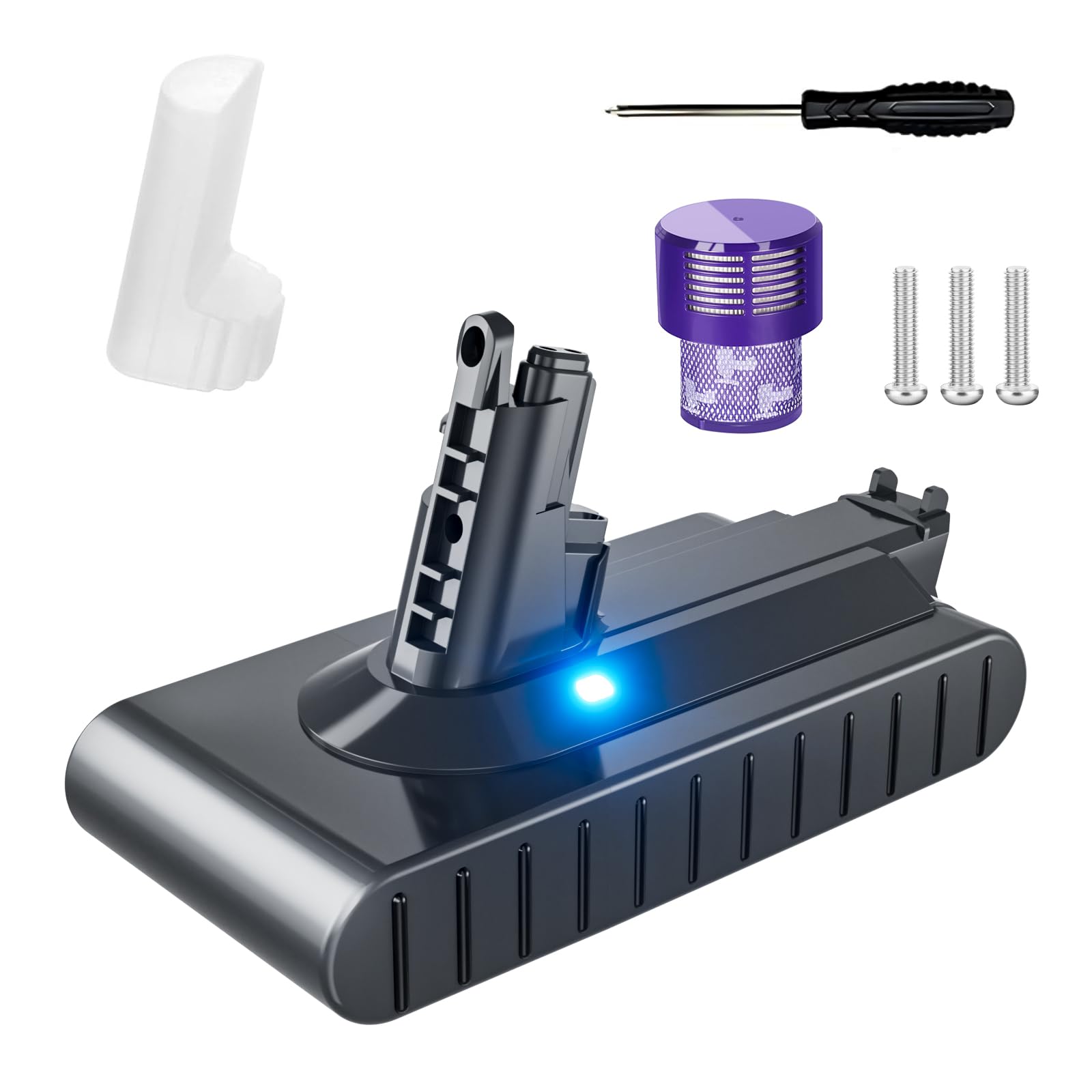
Upgraded 7000mAh V11 SV14 Battery for Dyson V11 25.2V Li-ion Battery Compatible for V11 Animal/Absol
- High-quality product
- Customer favorite
- Best value option
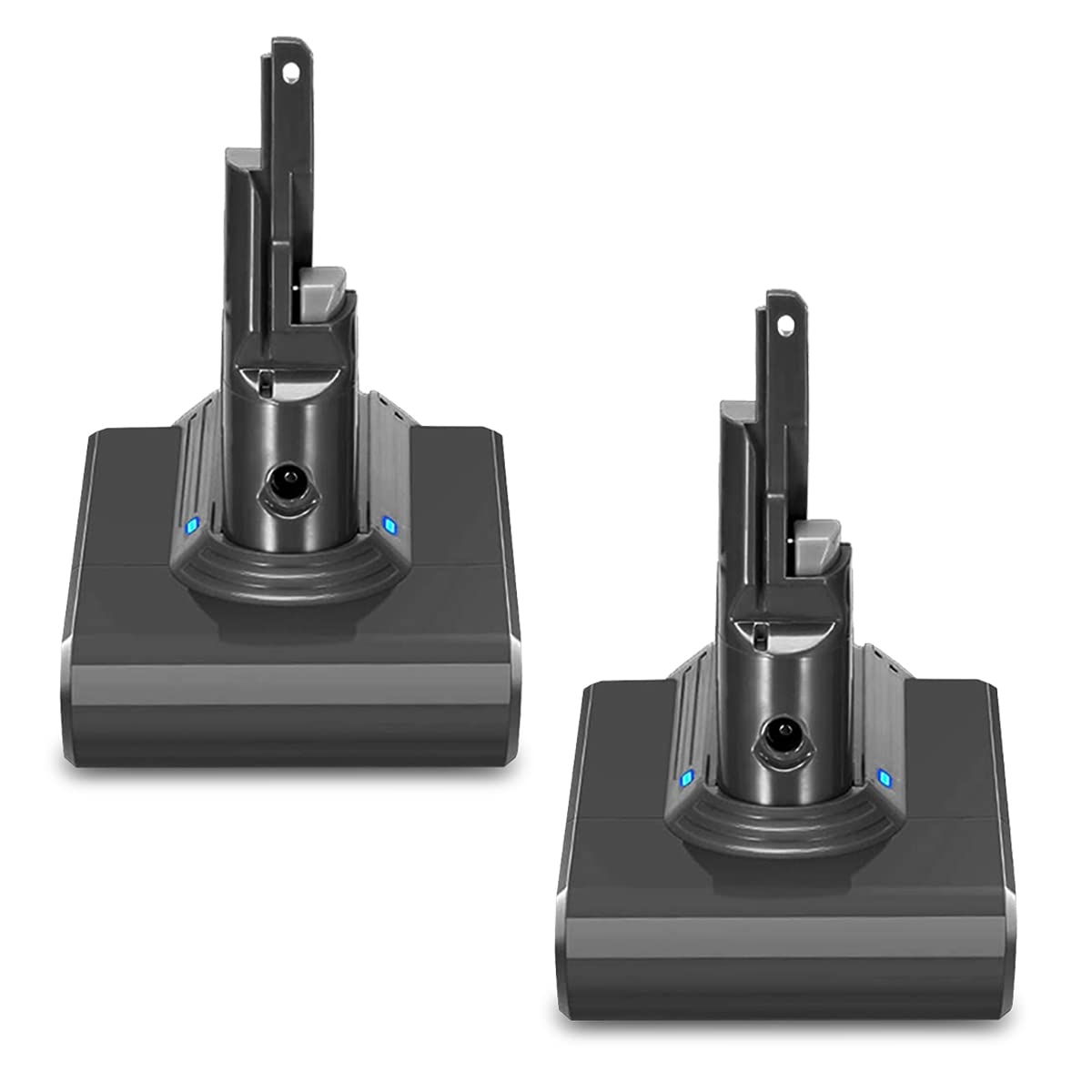
BatPower 2 Pack 21.6V 6500mAh 140Wh Battery Replacement for Dyson V7 Vacuum Battery Motorhead Animal
- High-quality product
- Customer favorite
- Best value option
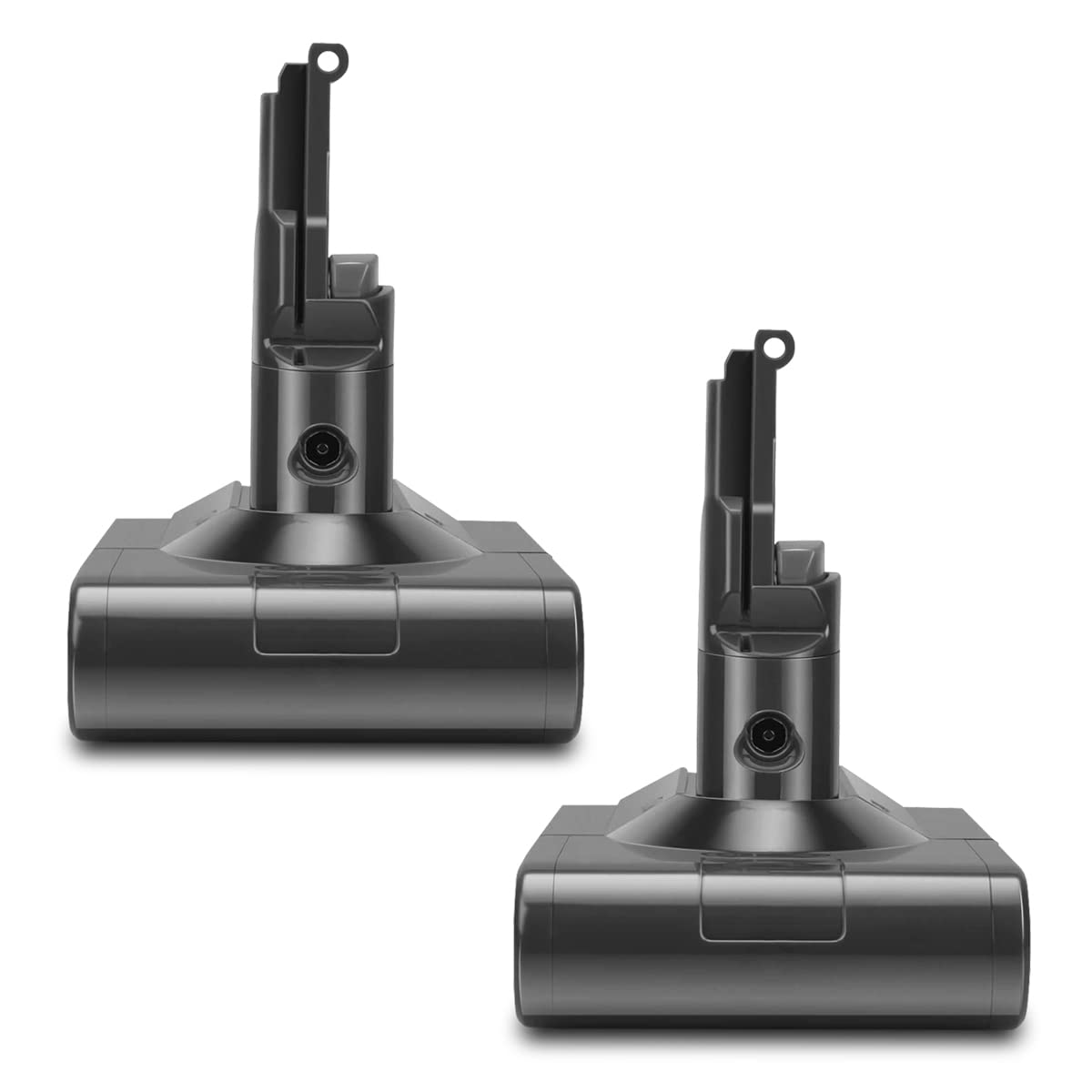
BatPower 2 Pack 21.6V 6500mAh 140Wh Lithium Battery Replacement for Dyson V8 Vacuum Battery Absolute
- High-quality product
- Customer favorite
- Best value option
Expert Hacks & Maintenance: Extending the Life of Any Dyson Battery
Whether you choose an OEM or a generic dyson battery, how you treat the pack determines its lifespan. Most users unknowingly "kill" their batteries through poor habits. Here is the advanced protocol for battery longevity:
1. The "Max Mode" Trap
The single greatest killer of Dyson batteries is Max/Boost mode. In this mode, the current draw is so high that the internal temperature of the cells spikes instantly. Frequent use of Max mode causes "micro-fractures" in the cell chemistry. Expert Hack: Only use Max mode for 30-second bursts when tackling stubborn debris. For 95% of cleaning, the "Normal" or "Auto" mode is more than sufficient and will triple your battery's cycle life.
2. The Cool-Down Rule
Never plug your Dyson into the charger immediately after a long cleaning session. The cells are hot, and charging a hot lithium-ion battery is a recipe for accelerated degradation. Wait 15–20 minutes for the pack to reach room temperature before docking it.
3. Storage Temperatures
If you store your Dyson in a garage or a utility closet that gets very hot in summer or freezing in winter, you are destroying the battery. Lithium-ion batteries prefer the same temperature range as humans (60°F – 80°F). Extreme cold increases internal resistance, while extreme heat degrades the electrolyte.
4. The Deep Discharge Myth
Unlike old Nickel-Cadmium batteries, Lithium-ion has no "memory effect." You do not need to run it down to 0% before charging. In fact, deep discharges are stressful for the cells. If you can, try to keep the battery between 20% and 80% charge for maximum longevity.
Mega FAQ: Everything You Need to Know About Aftermarket Dyson Batteries
1. Will using an aftermarket battery void my Dyson warranty?
Technically, yes. If Dyson determines that a third-party battery caused a failure in the motor or mainboard, they can deny warranty claims. However, if your vacuum is already out of its 2-year warranty period, there is no "warranty" left to void.
2. Why is my generic battery flashing a red light?
A flashing red light usually indicates a cell imbalance or a BMS failure. On generic batteries, this often happens because one of the six or seven internal cells has dropped below a voltage threshold that the cheap charger/BMS cannot recover.
3. Can I upgrade my V7 to a V8 battery?
No. While they look similar, the physical mounting points and the electrical connectors are different. You must buy the battery specific to your model (V6, V7, V8, V10, V11, etc.).
4. Are 6000mAh batteries for the V8 real?
No. A high-quality V8 battery is typically around 2800mAh to 3000mAh. Anything claiming over 4000mAh in the standard V8 form factor is almost certainly using fraudulent labeling.
5. Why does my Dyson pulse on and off?
This is often mistaken for a bad battery, but it’s usually a block sensor. If the vacuum detects a clog in the wand or filter, it pulses to protect the motor. Check for blockages before replacing the battery.
6. How long should a replacement battery last?
A high-quality aftermarket dyson batteries should last 12 to 24 months with regular use. An OEM battery typically lasts 2 to 4 years.
7. Is it safe to leave the Dyson on the charger all the time?
Yes, Dyson’s (and most reputable aftermarket) BMS circuits are designed to stop charging once 100% is reached. However, for long-term storage (weeks), it is better to leave it at 50% charge.
8. What is the difference between "Screw-In" and "Click-In"?
V11 and V15 models come in two versions. "Screw-In" requires removing screws to swap the battery. "Click-In" has a red release button for instant swapping. You must identify which one you have before ordering.
9. Can I use a V10 battery in a V11?
No. The V10 and V11 have different physical shapes and different voltage requirements.
10. Does a higher mAh battery make the suction stronger?
No. Suction power is determined by the voltage and the motor controller. Higher mAh only increases the runtime (how long you can vacuum).
11. My battery smells like chemicals/smoke. What do I do?
Unplug it immediately and move the vacuum/battery to a non-flammable surface (like a concrete garage floor) away from the house. This is a sign of a failing cell and is a fire risk.
12. Why does the OEM battery cost so much more?
You are paying for high-bin cells (the top 5% of production), extensive safety certifications (UL listing), and the research and development of the BMS software.
Closing Thoughts: The Verdict on Aftermarket vs. OEM
The decision between an OEM and a generic dyson battery ultimately comes down to your risk tolerance and the age of your machine. If you own a brand-new Dyson V15, we strongly recommend sticking with OEM batteries to protect your $700 investment and maintain your warranty. The sophisticated electronics in the newer models are simply too sensitive for most aftermarket boards.
However, if you have a "workhorse" V6, V7, or V8 that is several years old, a high-quality aftermarket dyson batteries is a brilliant way to extend the life of the machine without overspending. Look for reputable brands that offer at least a 1-year warranty and avoid any listing that makes "too good to be true" capacity claims. By following the maintenance hacks provided—specifically avoiding Max mode—you can make even a budget-friendly battery last for years, keeping your Dyson out of the landfill and your floors impeccably clean.