
The Anatomy of Airflow: Why Your Shark Vacuum Lost Suction
It is one of the most frustrating moments in modern housekeeping: you have carved out an hour to deep-clean your home, you lug your trusted Shark vacuum out of the closet, and as you push it across the carpet, you realize it is doing nothing more than grooming the fibers. The motor is roaring, the lights are on, but the debris remains stubbornly on the floor. When a shark vacuum no suction issue occurs, it often feels like the machine has reached the end of its lifespan. However, as a seasoned expert in appliance repair and maintenance, I can tell you that in 95% of cases, your Shark hasn't died; it’s simply suffering from a mechanical bottleneck or a maintenance oversight.
Shark has built a massive reputation on their "Never Loses Suction" marketing campaigns. This technology relies on advanced cyclonic action that spins dust away from the filters to keep the airway clear. But even the most sophisticated cyclonic system is subject to the laws of physics. Air must move in a continuous, unobstructed loop from the floor nozzle, through the wand, into the dust cup, through the filters, and out the exhaust. If any single point in this loop is compromised, the vacuum loses its ability to lift dirt.
Understanding the "why" behind the loss of power is the first step toward a permanent fix. Most homeowners assume the motor is "weakening." In reality, modern electric motors rarely lose power gradually; they either work or they don't. If the motor is spinning but the suction is gone, you aren't dealing with a motor failure—you are dealing with an airflow failure. This guide is designed to take you through the technical nuances of these machines, from the Navigator and Rotator series to the Apex and Vertex models. We will dissect the common failure points that lead to a shark vacuum lost suction scenario and provide professional-grade solutions that will save you the cost of a replacement and the headache of a professional repair bill.
The Critical Problem: The Physics of Obstructed Airflow
To understand why your Shark is failing, we must analyze the "Critical Problem" of vacuum dynamics. A vacuum cleaner is essentially a pressure-differential machine. The motor spins a fan (the impeller), which pushes air out of the exhaust, creating a low-pressure zone inside the machine. Because nature abhors a vacuum, higher-pressure atmospheric air rushes in through the floor nozzle to fill the void, carrying dirt and debris with it.
When you experience a shark vacuum no suction event, the pressure differential has been equalized or blocked. There are three primary "Critical Failure Zones" in a Shark vacuum:
- The Intake Zone: This includes the brushroll, the nozzle neck, and the lower duct hose. This is where large objects (socks, coins, pet hair clumps) create physical blockages.
- The Filtration Zone: Shark vacuums utilize a multi-stage filtration system, usually consisting of a foam pre-motor filter, a felt filter, and a post-motor HEPA filter. If these become saturated with "micro-dust"—the invisible particles that cyclonic action can't always catch—they become as airtight as a brick. Even if the vacuum looks clean, the microscopic pores in the filters might be sealed.
- The Seal Integrity Zone: Shark vacuums are known for their "Complete Seal Technology." This means the air is forced through the filters rather than leaking out of the sides. If a gasket is misaligned, a hose is cracked, or the dust cup isn't clicked into place perfectly, the vacuum will pull air through the leak rather than through the floor nozzle. This is the "straw with a hole in it" effect.
Expert analysis shows that most users neglect the HEPA filter because it is often hidden behind a grill near the floor. While the foam filters catch the big stuff, the HEPA filter catches the allergens. Over time, this filter develops a "dust cake" that significantly reduces the motor's ability to exhaust air. If the air can't get out, new air can't get in. This results in the motor running hotter and louder, often leading to a thermal cutoff where the vacuum shuts down entirely to prevent a fire. By identifying which zone is failing, you can apply the specific fix required to restore that "factory-fresh" pull.
Methodology: 12 Common Causes and Fixes for Shark Vacuum Suction Loss
Restoring your vacuum requires a systematic approach. Follow these 12 expert-verified steps to diagnose and repair your machine.
1. The Overfilled Dust Cup
It sounds elementary, but Shark vacuums are highly sensitive to the "Max Fill" line. Once debris reaches this line, the cyclonic cone inside the cup can no longer spin air efficiently. This causes debris to be pushed upward into the foam filters.
- The Fix: Empty the dust cup after every use. If you have pet hair, empty it when it is only half full to maintain maximum velocity.
2. Clogged Pre-Motor Foam and Felt Filters
Located directly under the dust cup, these are the first line of defense. If they are brown or grey, they are blocking airflow.
- The Fix: Wash these filters every month with lukewarm water only. Do not use soap, as it can leave a residue that attracts more dust. Crucial: Let them air dry for at least 24 hours. Placing damp filters in a Shark is the #1 cause of motor failure and "musty" smells.
3. The Hidden HEPA Filter
Most Shark models (like the Navigator or Rotator) have a HEPA filter behind a door on the front of the vacuum. This is often ignored for years.
- The Fix: Remove the cover and tap the HEPA filter over a trash can. If it remains dark grey, replace it. Shark recommends replacing the HEPA filter every 12 months to maintain "Complete Seal" performance.
4. Obstructions in the Lower Duct Hose
The small, corrugated hose near the floor nozzle is a magnet for clogs. Because it bends when you tilt the vacuum, objects like toothpicks or hairpins get stuck here and start a "snowball effect" of debris.
- The Fix: Disconnect the main body from the floor nozzle. Use a flashlight to peer into the short hose. Use a blunt object (like a crochet hook) to pull out any blockages.
5. Wand and Extension Tube Blockages
Sometimes the clog isn't in the vacuum; it’s in the pipe.
- The Fix: Drop a heavy coin (like a quarter) through the top of the wand. If it doesn't fall out the bottom, you have a clog. Use a broom handle to gently push the obstruction through.
6. The Suction Control Slider
Many Shark models feature a "Suction Control" slide on the handle. This is designed for cleaning rugs or curtains so the vacuum doesn't "stick" to the fabric.
- The Fix: Ensure the slider is closed. If it is open, the shark vacuum lost suction at the floor because air is being bled off at the handle.
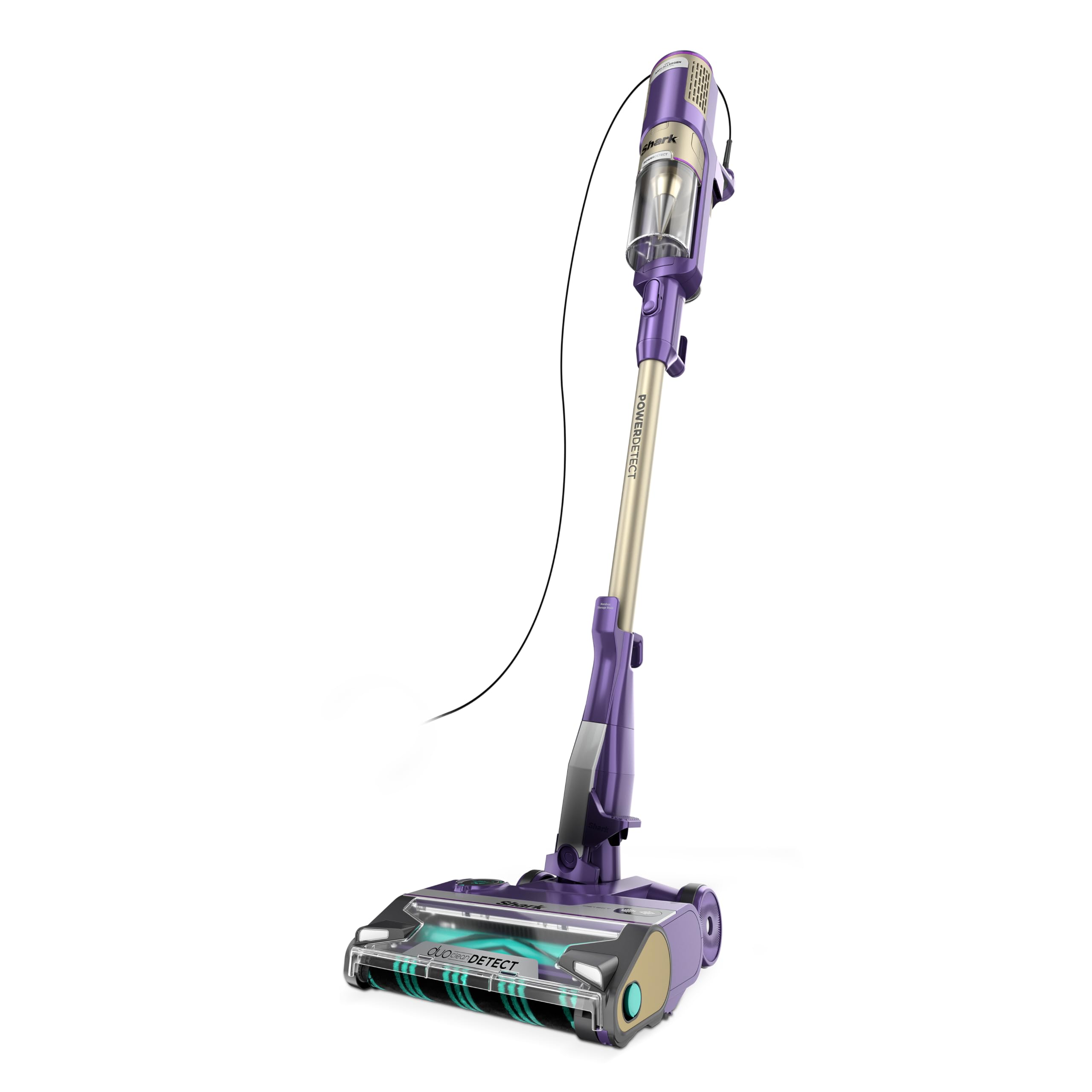
Shark POWERDETECT Ultra-Light Corded Stick Vacuum with DuoClean Technology, Self-Cleaning Brushroll
- High-quality product
- Customer favorite
- Best value option
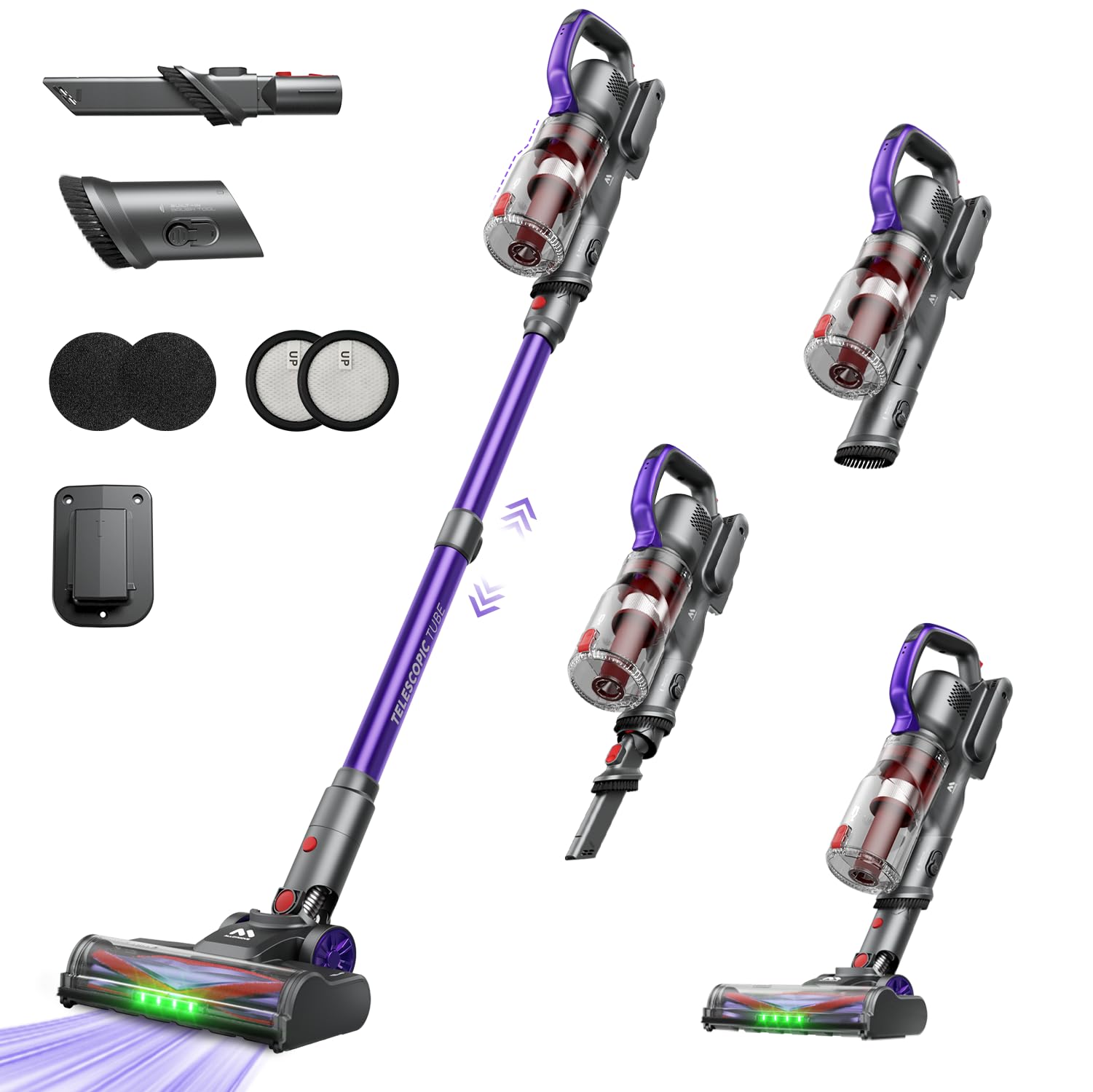
AlloyMove Cordless Vacuum Cleaner 45KPA, Up to 60mins Runtime Lightweight Powerful Suction Vacuum Cl
- High-quality product
- Customer favorite
- Best value option
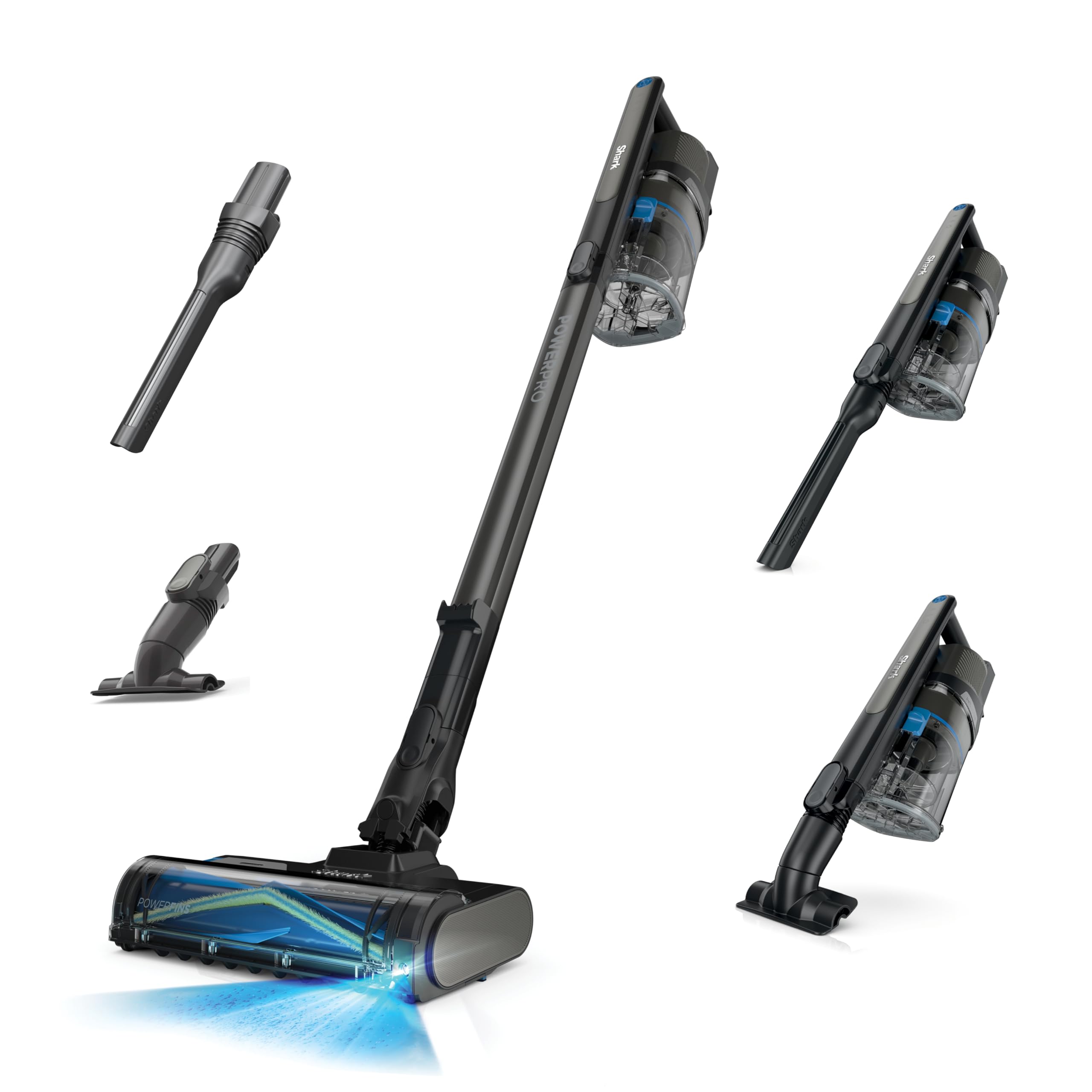
Shark PowerPro Reveal Plus Cordless Vacuum, FloorDetect & Dirt-Reveal Technology, HEPA Filter, Carpe
- High-quality product
- Customer favorite
- Best value option
7. Hair-Wrapped Brushroll
While many newer Shark models feature "Zero-M" or "Self-Cleaning" brushrolls, older models (and even new ones with extreme pet hair) can become tangled. If the brushroll can't spin, the vacuum can't agitate dirt into the airflow.
- The Fix: Use a pair of scissors to cut along the groove of the brushroll, removing hair and thread. Check the end caps for hair "donuts" that create friction.
8. Cracked Main Hose
Over time, the flexible hose that connects the handle to the base can develop small cracks or pinholes. This causes a massive drop in suction because the vacuum is pulling air through the crack instead of the nozzle.
- The Fix: Stretch the hose out and inspect it under a bright light. If you find a crack, you can temporarily fix it with electrical tape, but the hose should be replaced for a permanent solution.
9. Improper Dust Cup Seating
If you recently emptied the dust cup and suddenly the vacuum has no suction, the cup likely isn't seated correctly.
- The Fix: Remove the cup and check for any debris on the rubber gaskets at the bottom or top. Press it firmly into place until you hear a distinct "click."
10. The Nozzle "Elbow" Clog
Right where the hose meets the floor nozzle, there is a plastic elbow joint. This is a common spot for large debris to get stuck.
- The Fix: Many Shark models allow you to remove a small access plate on the bottom of the nozzle or disconnect the hose entirely to clear this area.
11. Thermal Overload Activation
If your vacuum was running and suddenly died, the motor likely overheated due to a clog.
- The Fix: Turn the vacuum off and unplug it. Clear all filters and clogs. Wait 45–60 minutes for the thermal fuse to reset. The vacuum will not turn back on until it has cooled completely.
12. Damaged Base Gaskets
The rubber seals where the dust cup meets the motor housing can degrade or become unseated. If these don't form an airtight seal, suction is lost.
- The Fix: Clean the gaskets with a damp cloth to remove grit. If they are torn, they must be replaced or the vacuum will never reach full power.
Expert Hacks & Advanced Maintenance
Beyond the standard fixes, there are several "pro-tips" that can keep a Shark vacuum running at peak performance for a decade.
- The Flashlight Test: To find a "ghost clog," turn off the lights and shine a bright flashlight into one end of the hose. If you don't see a clear circle of light at the other end, there is a partial obstruction.
- Compressor Air Cleaning: If your HEPA filter isn't due for replacement but is looking dusty, use a can of compressed air (or an air compressor) to blow air through it from the clean side to the dirty side. This can extend its life by a few months.
- Vinegar Soak for the Dust Cup: If your vacuum smells like "wet dog," the cyclonic chamber in the dust cup may have a film of bacteria. Wash the plastic cup with a mixture of water and white vinegar. Ensure it is bone dry before reattaching.
- The "O-Ring" Check: On the wand connections, there are often small black O-rings. If these are missing or dry, the vacuum will whistle. A tiny dab of silicone grease can restore the seal.
Mega FAQ: Expert Answers to Your Shark Suction Questions
Why does my Shark vacuum whistle when I use it?
A whistling sound usually indicates a small air leak. Check the hose for pinholes or ensure the suction control slider on the handle is fully closed. It can also mean a filter is misaligned.
How often should I actually wash the foam filters?
Shark recommends every 3 months, but if you have pets or high traffic, I recommend every 30 days. It is the cheapest way to prevent motor burnout.
Can I use my Shark without the HEPA filter?
No. Operating the vacuum without any of its filters allows dust to enter the motor, which will cause it to seize or catch fire within minutes.
Why is my brushroll light red?
A solid red light means the brushroll is jammed. A flashing red light means the nozzle is overheating. Turn it off immediately and clear any hair or clogs.
Does a Shark vacuum lose suction as the battery dies (Cordless models)?
Most modern Shark cordless vacuums use Lithium-Ion batteries that provide "fade-free" power. The suction should remain consistent until the battery is nearly depleted, at which point it will shut off.
Is it worth replacing the motor on a Shark?
Generally, no. Shark vacuums are designed as "modular" units. If the motor fails, the cost of the part and labor often exceeds 60-70% of the cost of a new unit. Focus on maintenance to avoid this.
Why is my vacuum pushing dirt around instead of picking it up?
This is a classic sign of a clogged lower duct or a brushroll that isn't spinning. The air isn't reaching the floor, so the brush is just acting like a manual broom.
Can I wash the HEPA filter?
Unless it is specifically labeled "Washable HEPA," do not wash it. Most Shark HEPA filters are paper-based and will be ruined if they get wet.
How do I know if my hose is clogged or the motor is bad?
Disconnect the hose from the handle. Put your hand over the hole where the hose connects to the vacuum body. If the suction is strong there, the motor is fine and the clog is in the hose or wand.
Why does my vacuum smell like it’s burning?
This is usually a sign that the brushroll is jammed and the belt (on older models) or the motor is straining. It can also be caused by a heavily clogged filter forcing the motor to work too hard.
What should I do if my Shark vacuum is spitting out dust?
This indicates a leak in the filtration system. Check if the filters are seated correctly or if the dust cup gasket is torn.
Is the "DuoClean" nozzle more prone to clogs?
Because DuoClean nozzles have two rollers, they have a more complex internal path. They are excellent for debris but require more frequent checks of the "neck" area for blockages.
Closing Thoughts: The Secret to Longevity
A shark vacuum no suction problem is rarely a death sentence for the machine. By following a systematic approach—checking the filters, clearing the airways, and ensuring seal integrity—you can restore your vacuum to its original power. The secret to Shark longevity isn't in how you use it, but in how you maintain it. Treat your filters as the lungs of the machine; if they can't breathe, the motor can't work. By performing a "deep clear" every six months, you can ensure your home stays clean and your appliance stays out of the landfill. Remember, suction is a cycle—keep the cycle open, and your Shark will never let you down.