The Invisible War: Why Your Vacuum Filter Dictates Your Indoor Air Quality
When you push your vacuum across a carpet, you are participating in a fundamental act of home maintenance that most people believe is simple: you are removing dirt. However, as any indoor environmental specialist will tell you, the reality is far more complex. Vacuuming is not just about what you pick up; it is about what the machine fails to hold onto. This is the core of the hepa filter vs regular debate. For decades, the standard vacuum was little more than a "dust redistributor." It would inhale large debris from the floor and promptly exhaust a fine, invisible mist of allergens, skin cells, and microscopic pathogens back into your breathing zone. This is why many people experience sneezing or a "dusty" smell while cleaning.
The introduction of High-Efficiency Particulate Air (HEPA) technology transformed the industry. Originally developed during the Manhattan Project to prevent the spread of airborne radioactive contaminants, HEPA filtration has become the gold standard for anyone concerned about respiratory health. But is it a marketing gimmick for the average homeowner? To understand the hepa filter benefits, we must first look at the environment of the modern home. Our homes are tighter and more energy-efficient than ever before, which means they trap pollutants inside. Indoor air can be two to five times more polluted than outdoor air, according to the EPA.
A regular vacuum filter—typically made of foam, felt, or simple synthetic cloth—is designed to protect the vacuum’s motor from large debris. It is a mechanical sieve. If a particle is smaller than the holes in the sieve, it passes through. In contrast, a HEPA filter is a dense labyrinth of randomly arranged glass fibers. It doesn't just catch particles; it uses complex physics to trap them. When we ask if HEPA is worth it, we are really asking if we value the removal of the 99.97% of particles that are 0.3 microns or larger. These are the particles that bypass your body's natural defenses and lodge deep in the lungs. In this guide, we will dissect the mechanical, biological, and economic realities of vacuum filtration to determine if the HEPA upgrade is a luxury or a necessity for your household.
The Critical Problem: The "Dust Redistribution" Phenomenon
The most significant problem with regular vacuum filtration is the "exhaust bypass." Most consumers focus on suction power—the ability of the vacuum to pull dirt off the rug. However, suction is only half of the equation. Once that air enters the machine, it must exit. If the filtration system is porous, the vacuum acts as a high-powered aerosolization chamber. It takes settled dust (which was relatively harmless on the floor) and launches it into the air you breathe.
The Micron Crisis
To understand why regular filters fail, we must speak in microns. A human hair is about 70 microns in diameter. Most people can see particles down to about 40 microns. However, the most dangerous pollutants—pet dander, mold spores, dust mite feces, and fine combustion particles—range from 0.1 to 10 microns. A regular vacuum filter often struggles with anything below 10 microns. This means that while you are picking up visible crumbs, you are pumping a concentrated cloud of allergens back into the room. This is the "Critical Problem": the vacuum creates a false sense of cleanliness while actually degrading the air quality of the home.
The MPPS (Most Penetrating Particle Size)
Expert-level analysis of filtration reveals a counterintuitive truth: it is actually easier to catch very small particles (0.1 microns) and large particles (over 1 micron) than it is to catch those in the middle. The "Most Penetrating Particle Size" is approximately 0.3 microns. Because of the way physics works—specifically the transition between Brownian motion and inertial impaction—0.3 microns is the "sweet spot" where particles are most likely to slip through a filter. HEPA filters are specifically tested and rated based on their ability to stop these 0.3-micron particles. Regular filters are almost never tested for this, and their efficiency at this level is often near zero.
System Leakage: The Dirty Secret
Even if a vacuum has a HEPA filter, it may still fail the "Critical Problem" test if it is not a "Sealed System." Many budget vacuums feature a HEPA filter but have poor gaskets and seals around the housing. Air takes the path of least resistance. If the air can leak out of a gap in the plastic casing before it reaches the filter, the HEPA rating becomes irrelevant. This is why top-tier authority on the subject emphasizes "Whole Machine HEPA Filtration." Without a sealed system, the vacuum is still leaking "dirty" air into your environment.
Methodology & Core Guide: HEPA vs. Regular
To choose the right vacuum, you must understand the mechanical differences between these two filtration paths. This isn't just about "better" or "worse"; it's about the physics of air movement and the specific needs of your living environment.
1. The Anatomy of a HEPA Filter
A True HEPA filter is not a simple screen. It is a mat of fibers, usually fiberglass, ranging in diameter from 0.5 to 2.0 micrometers. These fibers are arranged like a dense thicket of briars. As air passes through, particles are trapped via three primary mechanisms:
- Interception: Small particles following the airstream come within one-particle-radius of a fiber and stick to it.
- Impaction: Larger particles, due to their inertia, cannot navigate the quick turns of the air path and slam directly into the fibers.
- Diffusion: The smallest particles (under 0.1 microns) collide with gas molecules and move erratically (Brownian motion), making them much more likely to hit and stick to a fiber.
2. Regular Filters: The Baseline
Regular filters usually consist of washable foam or pleated paper. Their primary goal is motor protection.
- Pros: They allow for higher airflow (better raw suction) because they are less dense. They are also significantly cheaper to replace and often washable.
- Cons: They offer minimal protection against allergens. For a healthy individual in a home without pets or allergies, a regular filter might suffice for basic cleanliness. However, they do nothing to mitigate the "dusty" smell of vacuuming.
3. Comparing HEPA Filter Benefits
When comparing hepa filter vs regular, the benefits of HEPA extend beyond just "cleaner air."
- Allergy Mitigation: For sufferers of hay fever or asthma, HEPA is non-negotiable. It captures the proteins in pet dander and the waste products of dust mites that trigger attacks.
- Longevity of Interior Surfaces: Because HEPA vacuums don't blow fine dust back out, your furniture, electronics, and curtains stay cleaner for longer. You are effectively removing dust from the ecosystem of your home rather than just moving it around.
- Odors: Many HEPA filters are paired with activated carbon layers. While the HEPA part stops the particles, the carbon absorbs VOCs and odors, leading to a truly "fresh" smelling home.
4. The Cost Factor
There is no denying that HEPA filtration increases the "Total Cost of Ownership." HEPA filters are denser, meaning the vacuum motor has to work harder, which can lead to higher energy consumption. Furthermore, the filters themselves are more expensive. A regular foam filter might cost $5, whereas a True HEPA replacement can range from $30 to $80. However, when weighed against the cost of allergy medication or the long-term health impacts of poor indoor air quality, many experts consider this a "health insurance" premium.
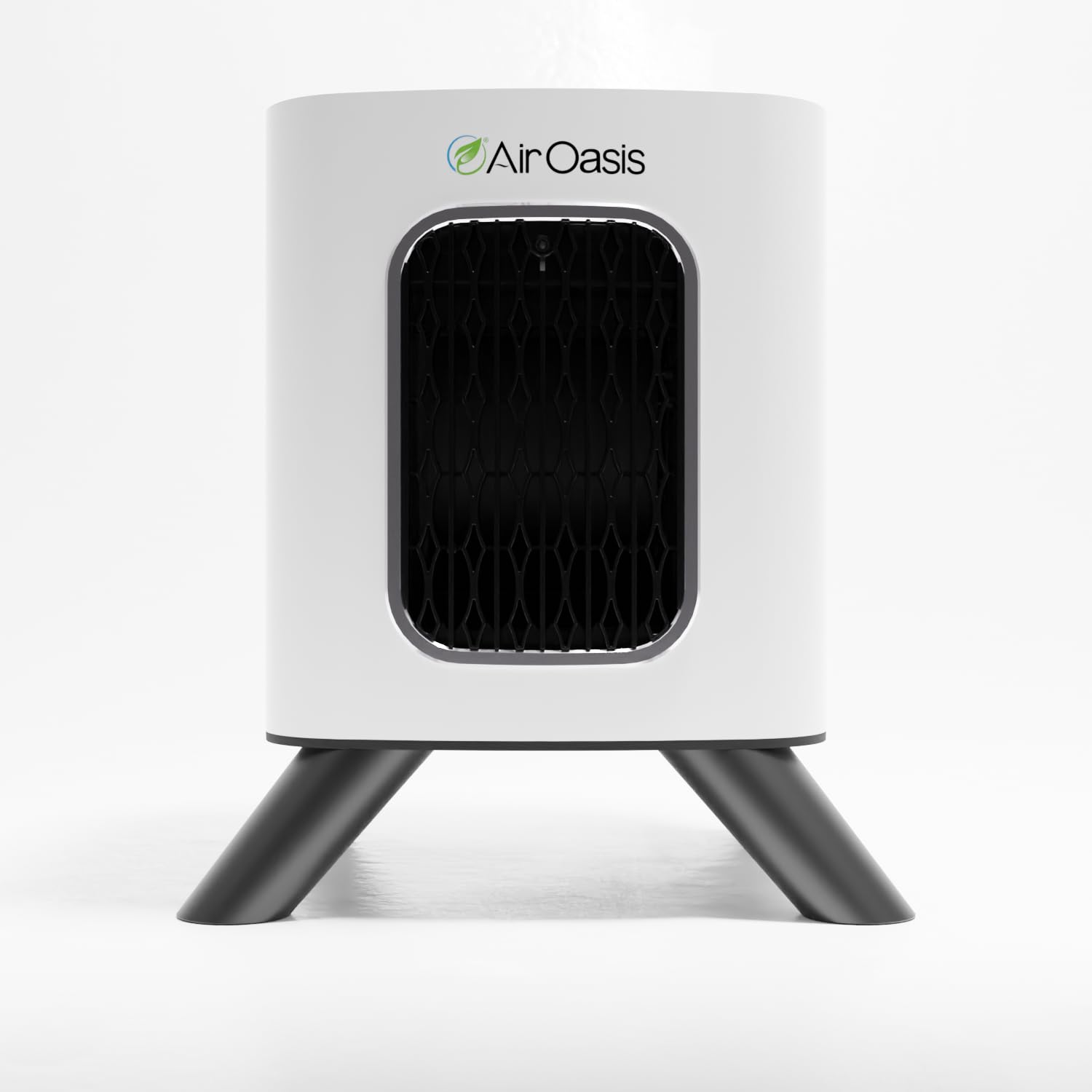
Air Oasis iAdaptAir 2.0 H13 HEPA Filter Air Purifier Reduces 99% of Viruses, Mold, Dust, Smoke, Poll
- High-quality product
- Customer favorite
- Best value option
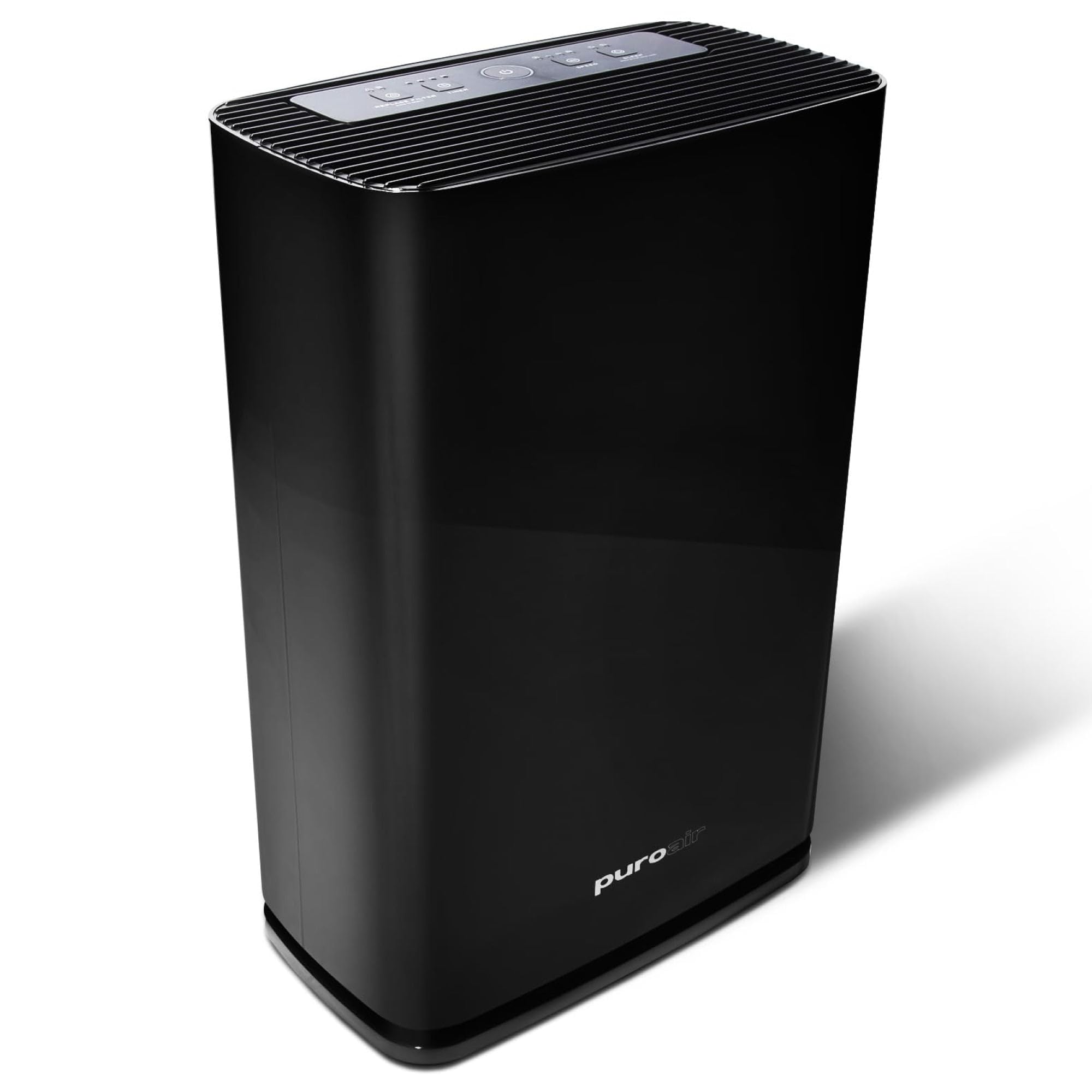
PuroAir 400 HEPA Air Purifier for Home Large Rooms – Covers 2,000 Sq Ft – Filters Up To 99.9% of Pol
- High-quality product
- Customer favorite
- Best value option
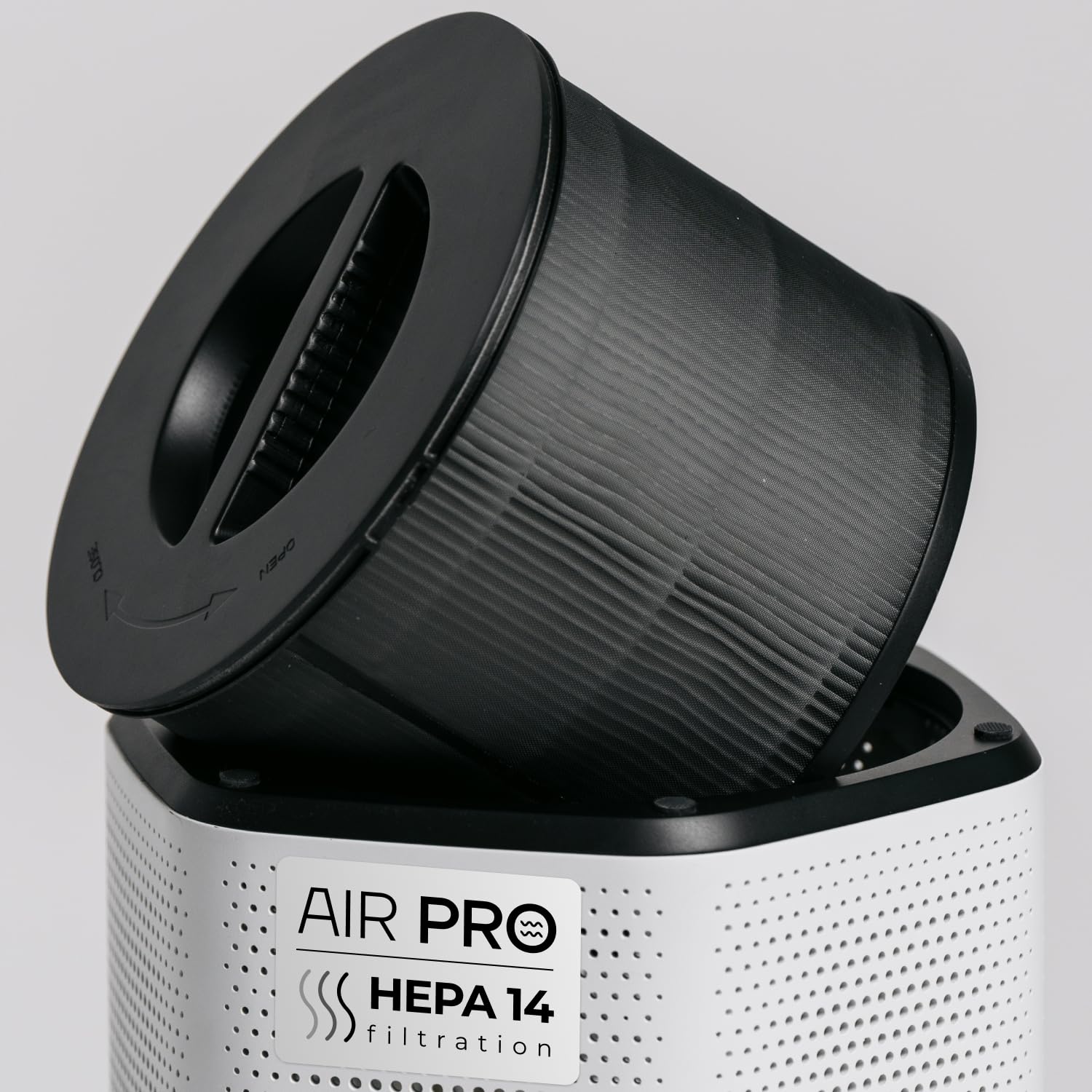
AirPro Replacement Filters Compatible with AirPro Purifier | HEPA and Carbon Filters for Dust, Aller
- High-quality product
- Customer favorite
- Best value option
Expert Hacks & Maintenance: Maximizing Your Filtration
Owning a HEPA vacuum is only half the battle. To maintain true authority over your indoor environment, you must manage the filtration system with precision.
The "Pre-Filter" Strategy
Never rely solely on your HEPA filter. Expert setups always include a primary stage (the bag or cyclone) and a secondary stage (a foam pre-filter). The goal is to ensure that the expensive HEPA filter only ever sees the finest particles. If your HEPA filter is getting visibly "dirty" or gray quickly, your pre-filter is failing or needs cleaning. By washing your pre-filter every 30 days, you can extend the life of a HEPA filter from six months to two years.
The Flashlight Test
To check if your vacuum is a "Sealed System," take the machine into a dark room and turn it on while shining a powerful LED flashlight across the body of the vacuum (especially near the exhaust and the joints). If you see a "glitter" of dust particles dancing in the light beam, your vacuum is leaking. This means the air is bypassing the HEPA filter. In such cases, using a HEPA filter is essentially useless. You can often fix minor leaks with silicone-based gaskets or by ensuring the filter housing is properly seated.
Washable vs. Non-Washable
This is a point of contention among experts. Some HEPA filters are marketed as "washable." While you can rinse off the surface dust, the microscopic particles trapped deep within the fiber matrix via diffusion can never be fully washed out. In fact, water can cause the delicate glass fibers to clump, creating "micro-tears" in the filter that allow larger particles through. For maximum protection, always choose replacement over washing for HEPA-grade media.
Mega FAQ: Expert Insights into HEPA Technology
1. Does a HEPA filter reduce vacuum suction?
Yes, inherently. Because the media is much denser than a regular filter, it creates more "static pressure" or resistance. High-end vacuums compensate for this with more powerful, bypass-cooled motors. A cheap vacuum with a HEPA filter often has poor suction because the motor isn't strong enough to pull air through the dense material.
2. Can HEPA filters catch viruses?
True HEPA filters are rated to 0.3 microns at 99.97% efficiency. Many viruses, including SARS-CoV-2, are smaller (around 0.1 microns). However, viruses usually travel on larger respiratory droplets or "nuclei" which are easily caught. Furthermore, the diffusion mechanism of HEPA filters is actually very effective at catching individual 0.1-micron particles.
3. What is the difference between "True HEPA" and "HEPA-type"?
"HEPA-type" or "HEPA-like" are marketing terms with no legal standard. They may only capture 85-90% of particles. "True HEPA" or "Certified HEPA" must meet the strict 99.97% standard. Always look for the specific percentage and micron rating on the packaging.
4. How often should I replace my HEPA filter?
For the average household, every 6 to 12 months. If you have multiple pets or heavy carpeting, every 6 months is recommended. If the vacuum starts to smell or the suction drops significantly after cleaning the pre-filters, it's time for a change.
5. Does HEPA help with smoke odors?
HEPA filters catch the particles of smoke (the soot and ash), but they do not catch the gasses or VOCs that carry the smell. For smoke, you need a HEPA filter combined with a thick layer of activated carbon.
6. Are all bagged vacuums HEPA?
No. While bags themselves act as a filter, many standard paper bags have very high porosity. You must use "HEPA-rated bags" and a post-motor HEPA filter to achieve the gold standard of filtration.
7. Is H13 HEPA better than standard HEPA?
H13 is a medical-grade classification (often called "HEPA" in Europe under the EN1822 standard). It filters 99.95% to 99.99% of particles. While technically better than the US standard True HEPA (99.97%), the practical difference in a home vacuum setting is negligible compared to the importance of a sealed system.
8. Can I use a HEPA filter in a vacuum not designed for it?
Generally, no. If you try to retrofit a dense HEPA filter into a vacuum designed for a high-flow foam filter, you will likely overheat the motor and significantly reduce suction power.
9. Does HEPA filtration help with mold?
Yes. Mold spores are typically 3 to 40 microns in size. A HEPA filter will easily capture 100% of mold spores that enter the vacuum, preventing them from being redistributed and colonizing other areas of the home.
10. Why does my HEPA vacuum still smell?
If your vacuum has a HEPA filter but still smells "dirty," the smell is likely coming from the hose, the brush roll, or the dust bin itself. It could also mean the HEPA filter is "loaded" with organic material that is decaying. It’s time for a deep clean and a filter swap.
11. Is HEPA necessary for hardwood floors?
While hardwood doesn't trap dust like carpet, the act of vacuuming still kicks up fine dust. HEPA is less "critical" for hardwood than for deep-pile carpet, but it is still highly recommended for maintaining overall air quality.
12. Are HEPA filters environmentally friendly?
Most HEPA filters are made of synthetic fibers or glass and are not biodegradable. However, by reducing the amount of dust in your home, they can prolong the life of your HVAC filters and other appliances, potentially reducing your overall environmental footprint.
Final Verdict: Is HEPA Worth It?
After analyzing the hepa filter vs regular dynamics, the conclusion for any authority on home health is clear: HEPA is not just "worth it"; it is a foundational component of modern hygiene. The hepa filter benefits—ranging from the immediate relief of allergy symptoms to the long-term reduction of fine particulate matter in the lungs—far outweigh the increased cost of replacement filters.
However, the caveat remains: a HEPA filter is only as good as the vacuum it is housed in. A $50 vacuum with a "HEPA" sticker is often a waste of money because the air will leak out of the cracks before it ever touches the filter. If you are going to invest in HEPA, invest in a "Certified Sealed System." This ensures that every cubic centimeter of air that enters the nozzle is scrubbed clean before it returns to your living room. In the battle for a truly clean home, the invisible particles are the ones that matter most. Don't just clean for your eyes; clean for your lungs.