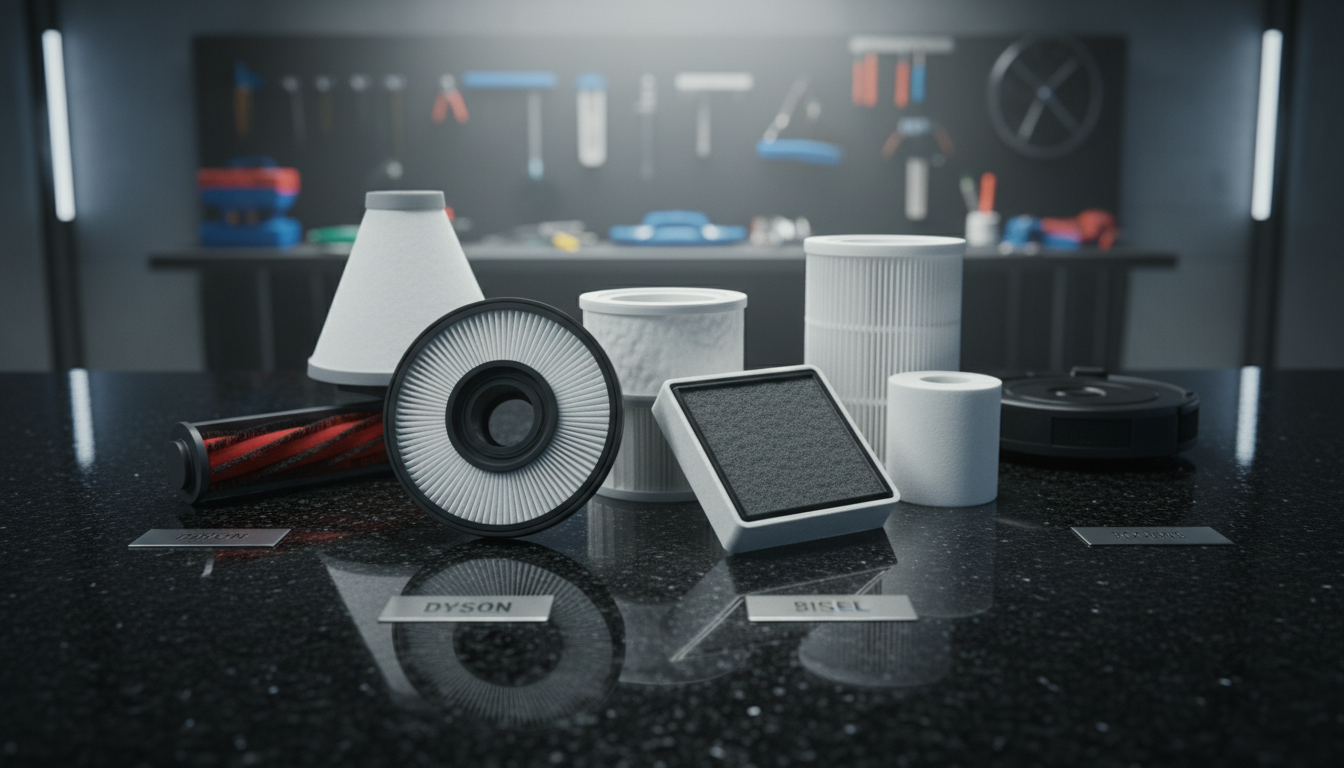
The Invisible Engine: Why Your Vacuum Filter Schedule Matters
You wouldn't expect a car to run indefinitely without an oil change, yet millions of homeowners treat their vacuum cleaners with exactly that level of neglect. We see the dirt in the canister, we empty the bin, and we assume the job is done. But behind the scenes, tucked away in the housing of your machine, is a sophisticated filtration system that is likely suffocating. If you have noticed a decline in suction, a strange "dusty" smell when you clean, or an increase in your allergy symptoms, you aren't dealing with a broken vacuum—you are dealing with a neglected filter.
Understanding how often to replace vacuum filters is not just about home maintenance; it is about protecting a significant financial investment and ensuring your indoor air quality (IAQ) remains within healthy parameters. Modern vacuums, from Dyson sticks to Miele canisters, rely on precise airflow dynamics. The motor pulls air (and debris) through a series of barriers. The first is usually the bin or bag, but the second and third are the filters. These filters are designed to catch microscopic particles—pollen, pet dander, dust mite excrement, and even bacteria—that are too small to stay in the bin.
When these filters become saturated, the vacuum’s efficiency doesn’t just "dip"—it crashes. A clogged filter creates backpressure, forcing the motor to work twice as hard to move half the air. This generates excess heat, which is the primary killer of vacuum motors. Furthermore, a saturated filter reaches a point of "bypass," where the air pressure forces microscopic dust through the filter media and back out the exhaust. In essence, a dirty vacuum becomes a dust-distributing machine rather than a dust-collecting one.
This guide serves as the definitive vacuum filter replacement schedule for every major brand on the market. We are moving beyond the vague "clean it when it looks dirty" advice and into the realm of mechanical precision. Whether you are running a high-end HEPA-sealed system or a budget-friendly upright, the frequency with which you swap or wash your filters dictates the lifespan of your machine and the health of your home.
The Critical Problem: The Hidden Cost of Filtration Neglect
The "Critical Problem" in vacuum maintenance is a phenomenon known as "static pressure loss." To understand why you must strictly adhere to a vacuum filter replacement schedule, you must understand how a vacuum actually works. It doesn't "suck" in the way we think; it creates a pressure differential. When a filter is clogged with fine particulates—specifically the "invisible" dust like skin cells and carbon soot—the motor cannot vent the air it is pulling in.
This leads to three catastrophic failures:
- Thermal Degradation of the Motor: Vacuum motors are cooled by the very air they pull in. When a filter is blocked, the airflow drops significantly. The motor begins to run at higher temperatures, leading to the melting of internal wire insulation and eventual motor seizure. If your vacuum ever shuts off unexpectedly, it is likely the thermal cutoff switch triggering because your filters are choked.
- Micron-Level Pollution: Most modern vacuums boast HEPA (High-Efficiency Particulate Air) filtration, which is rated to capture 99.97% of particles as small as 0.3 microns. However, HEPA filters are "depth" filters. Once the internal maze of glass fibers is filled with debris, the filter no longer traps particles; it either blocks air entirely or develops "micro-tears" where dust leaks through. If you can smell "vacuum smell" (that distinct dusty, warm odor), your filters have already failed. You are effectively aerosolizing allergens.
- The "Washable" Marketing Trap: Many manufacturers market "lifetime" or "washable" filters. As an authority in the field, I must clarify: there is no such thing as a lifetime filter. While foam and felt filters can be washed, every wash cycle slightly degrades the pore structure of the material. Over time, the foam becomes less porous or loses its ability to trap fine dust. Even if it "looks" clean, the microscopic integrity is compromised.
The cost of a replacement filter is typically between $10 and $30. The cost of a new high-end vacuum is $400 to $900. By failing to follow a strict how often replace vacuum filter protocol, you are essentially gambling a $500 motor against a $15 part. Moreover, for households with asthma or allergy sufferers, the "cost" of a dirty filter is measured in medical bills and respiratory distress. We aren't just cleaning floors; we are managing an ecosystem. A vacuum with a compromised filter is a broken tool, regardless of how much you paid for it.
Methodology & Core Guide: Brand-Specific Replacement Schedules
To determine how often to replace vacuum filters, we must look at the specific engineering of each brand. Not all filters are created equal. Some brands use multi-stage filtration (foam + felt + HEPA), while others rely on a single cyclonic HEPA assembly.
Dyson: The High-Performance Requirement
Dyson machines are famous for their "no loss of suction" marketing, but this is entirely dependent on the pre-motor and post-motor filters.
- Cordless Models (V8, V10, V11, V12, V15, Gen5): Dyson recommends washing the filter once a month. However, for a standard home, you should replace the filter every 12 months. If you have heavy shedding pets, move that to every 6 months.
- Upright Models (Ball/Animal): These often have a "lifetime" washable filter. You should wash it every 3 months and replace it every 2 years. The HEPA post-motor filter on these units should be replaced every 12 months, as it is not truly washable without losing its HEPA rating.
Shark: The Multi-Filter Strategy
Shark vacuums typically use a three-filter system: a foam filter, a felt filter, and a HEPA exhaust filter.
- Foam & Felt Filters: These are located under the dust cup. You should wash them every month, but they must be replaced every 3 to 6 months. These filters lose their shape and density quickly.
- HEPA Filters: Usually located at the front of the machine. These should be replaced every 12 months. Shark HEPA filters are notorious for trapping "dog smell," so pet owners should replace them every 6-8 months.
Miele: The Gold Standard of Filtration
Miele uses a sealed system with specific "AirClean" filters.
- AirClean & Active AirClean (Charcoal): These should be replaced every 50 hours of use, or roughly once a year (most Miele filters have a "timestrip" indicator that turns red when it's time).
- HEPA AirClean: Replace every 12 months to maintain the sealed-system integrity.
- Pre-Motor Filter: This comes in every box of Miele bags. You should replace this every 4 bags.
Bissell & Hoover: The Workhorse Schedule
These brands often use pleated paper filters or simple foam circles.
- Pleated Paper Filters: These cannot be washed. They should be replaced every 3 to 6 months. Tapping them against a trash can helps, but it doesn't remove the deep-set dust.
- Foam Filters: Wash monthly, replace every 6 months.
Robot Vacuums (Roomba, Roborock, Shark): The High-Frequency Need
Because robot vacuums have tiny bins and small surface-area filters, they clog much faster than uprights.
- Standard Robot Filters: These should be replaced every 2 months. Because they are small, they saturate quickly, and a clogged filter will significantly drain the robot's battery life as the motor struggles to maintain suction.
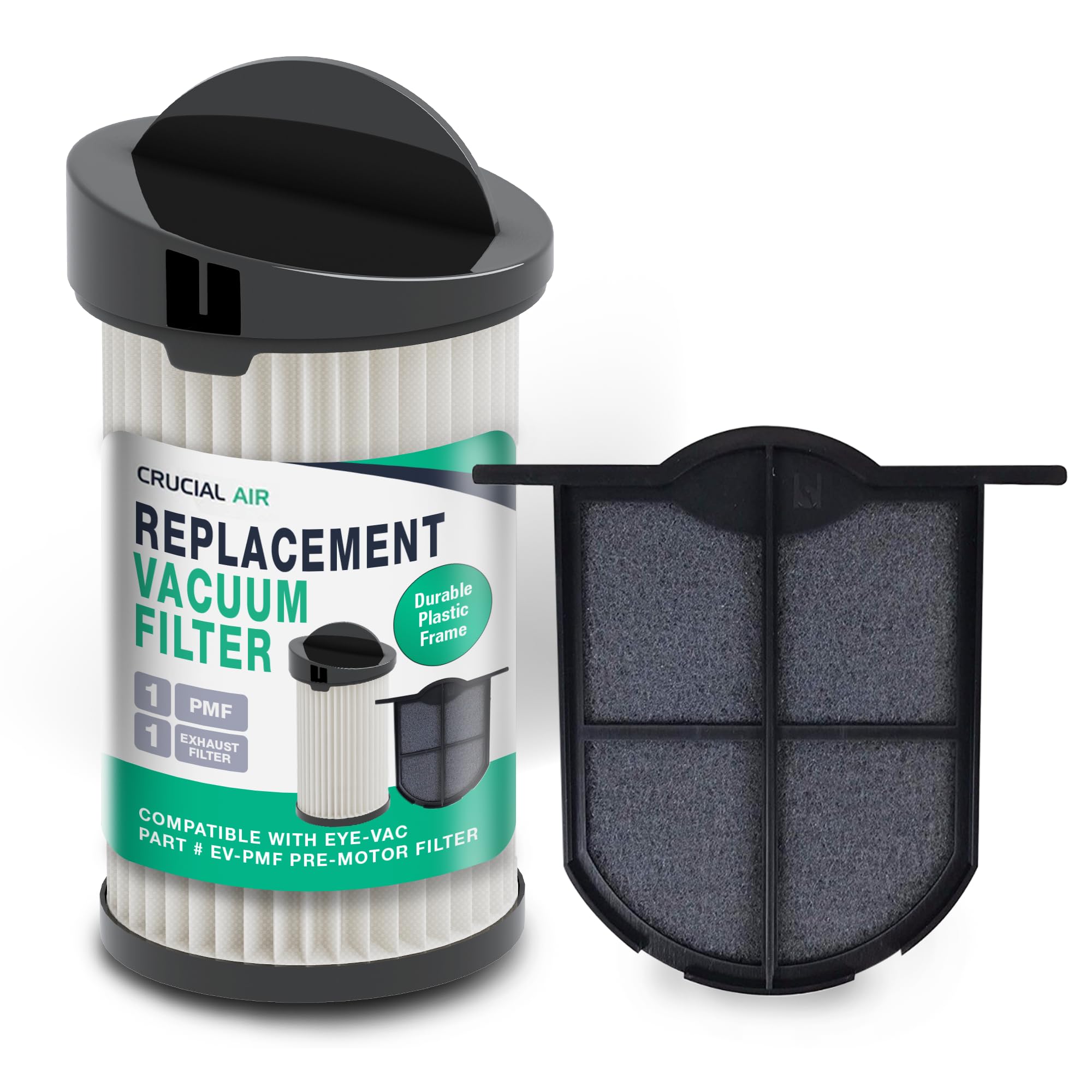
Replacement Vacuum Filter – Compatible with Eye-Vac Part & EV-EF Exhaust Filter & Part # EV-PMF Pre-
- High-quality product
- Customer favorite
- Best value option
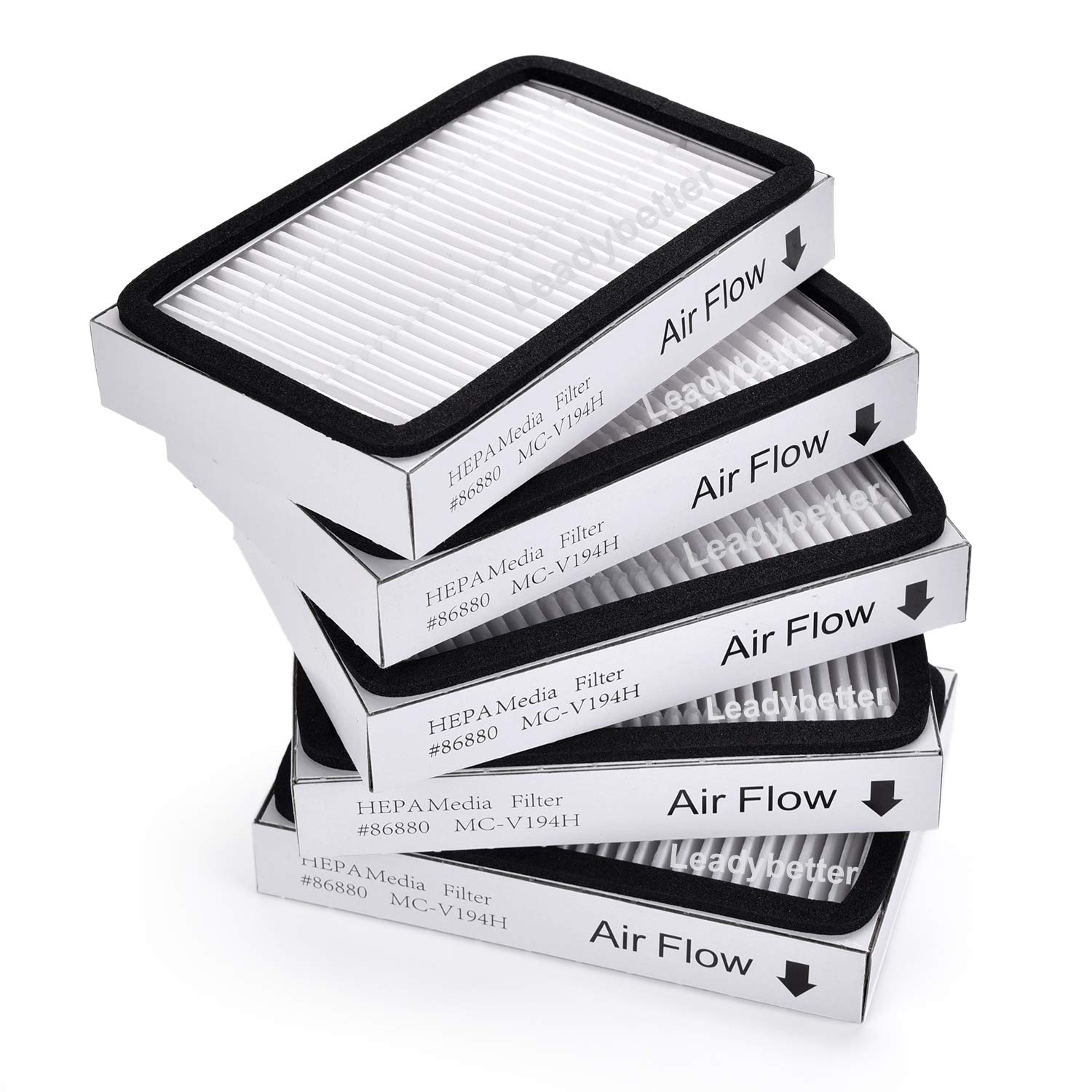
Leadaybetter 5 Pack for Kenmore EF-2 86880 Exhaust Vacuum HEPA Filters. Compare to Replace Sears Par
- High-quality product
- Customer favorite
- Best value option
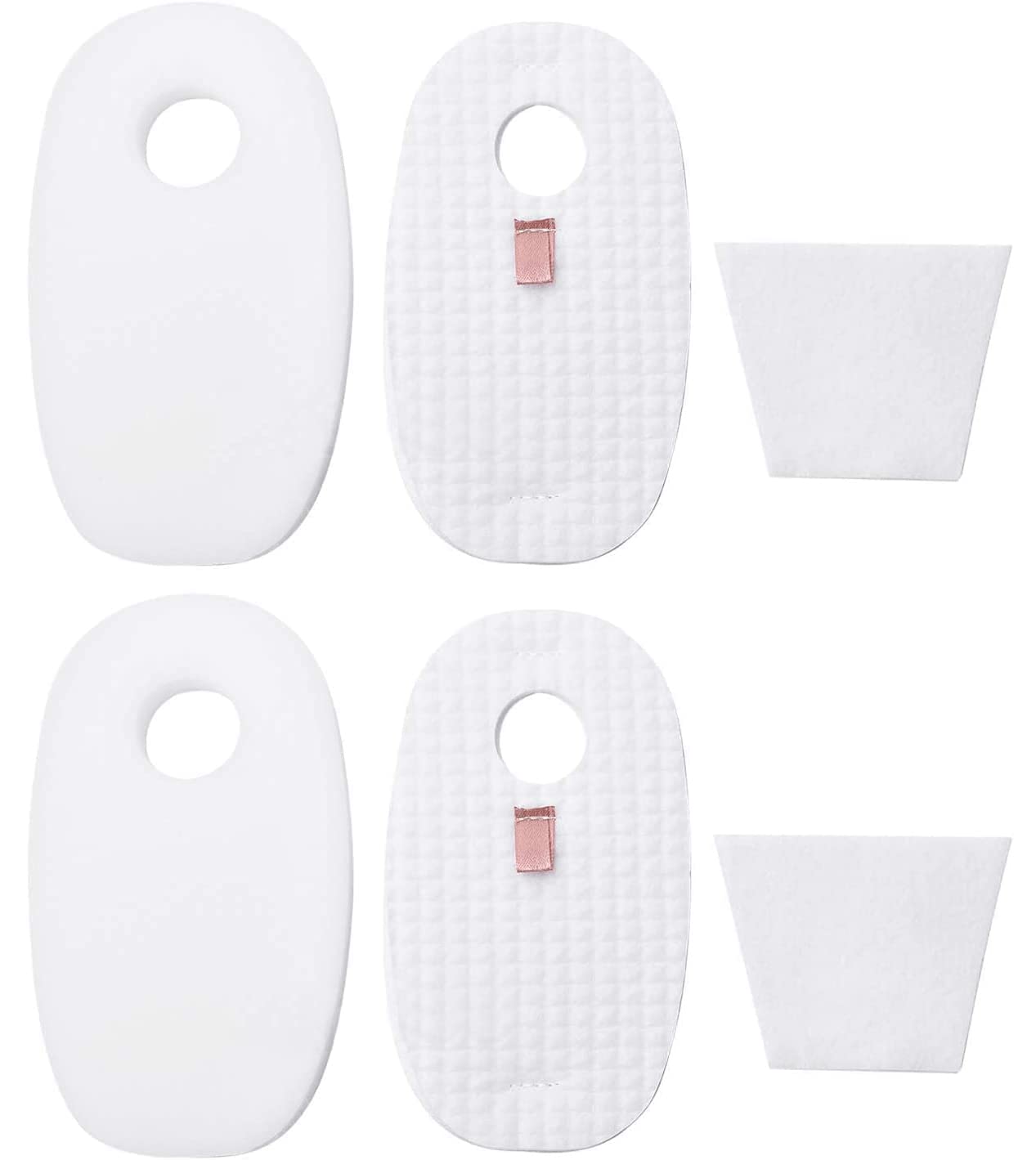
2 Pack Filters for Shark Rocket DeluxePro TruePet HV319Q, HV320, HV320W, HV320C, HV321, HV322, HV322
- High-quality product
- Customer favorite
- Best value option
Expert Hacks & Maintenance: Pro-Level Longevity
While the vacuum filter replacement schedule is your bible, there are several "expert hacks" used by professional cleaning technicians to extend filter life and ensure peak performance.
1. The "Dual Filter" Rotation
The biggest mistake people make with washable filters is putting them back into the vacuum while they are still slightly damp. This creates a "mud" inside the filter the moment you start vacuuming, which permanently ruins the airflow.
The Hack: Buy a second set of filters. When you wash one set, put the dry set in immediately. This allows the washed filters to air-dry for 48 hours (the recommended time) without leaving you without a vacuum.
2. Compressed Air Pre-Cleaning
Before washing a foam filter, or as a maintenance step for a non-washable HEPA filter, use a can of compressed air or an air compressor. Blow the air from the clean side to the dirty side (reverse of the vacuum's airflow). This dislodges deep-seated "cake dust" that washing alone won't touch.
3. The Sunlight Sanitize
If your vacuum has developed a musty smell, it's often due to bacterial growth in the filter fibers. After washing a filter, let it dry in direct sunlight. The UV rays act as a natural disinfectant, killing odors that soap and water might miss. Note: Do not do this with HEPA filters, as heat can warp the plastic housing.
4. The "Sniff Test" and Visual Inspection
Once a month, remove your filter and hold it up to a bright light. If you cannot see any light passing through the pleats or foam, it is saturated beyond the point of cleaning. Furthermore, if you smell anything other than "nothing" when the vacuum is running, your filter is the culprit.
Mega FAQ: Everything You Need to Know About Vacuum Filters
1. Can I use a vacuum without a filter?
Absolutely not. Running a vacuum without a filter allows debris to enter the motor housing directly. This will likely cause a catastrophic motor failure within minutes and will void any warranty you have.
2. Is it okay to vacuum up baking soda or "carpet fresheners"?
No. This is a vacuum killer. Baking soda is a very fine powder that instantly clogs the pores of your filter. It is often too fine for the cyclone to separate, meaning it goes straight to the filter, choking your machine.
3. How do I know if my filter is HEPA?
HEPA filters are usually pleated (like a miniature accordion) and encased in a hard plastic frame. They will be explicitly labeled "HEPA" or "High-Efficiency." If it’s just a piece of foam, it is not HEPA.
4. Can I wash a HEPA filter?
Unless it is specifically labeled "Washable HEPA," the answer is no. Washing a standard HEPA filter destroys the electrostatic charge of the glass fibers, rendering it useless for trapping small particles.
5. Why does my vacuum smell like dog even after I wash the filter?
Pet dander contains oils. These oils seep into the filter media and become rancid. Washing removes the dust but often leaves the oils. In this case, the vacuum filter replacement schedule should be accelerated. Replace the filter immediately.
6. Do generic filters work as well as brand-name ones?
Often, yes. However, ensure the generic brand has high ratings for fit. If a filter doesn't create a perfect seal in the housing, air will leak around the edges (bypass), making the filter useless.
7. How often should I replace filters if I have allergies?
If you have severe allergies or asthma, you should replace your HEPA filters every 6 months, regardless of what the manufacturer says. This ensures you are always getting the maximum possible filtration efficiency.
8. What happens if I don't change my filter?
The suction will decrease, the motor will run hotter, and eventually, the thermal fuse will blow or the motor will burn out. You will also notice more dust settling on your furniture shortly after vacuuming.
9. Can I use essential oils on my vacuum filter?
It is not recommended. Oils can attract more dust to the filter, causing it to clog faster. It can also degrade the plastic housing or the adhesive holding the filter media in place.
10. Does a full dust cup affect the filter?
Yes. When the cup is overfilled, more debris is forced against the filter rather than being spun out by the cyclone. This leads to "premature loading" of the filter.
11. My vacuum has a "pre-filter" and a "post-filter." Which is more important?
Both are vital. The pre-filter protects the motor from debris. The post-filter (exhaust) protects you from microscopic dust and motor carbon.
12. Can I dry my filter with a hair dryer?
No. The high heat from a hair dryer can melt the synthetic fibers in the filter or warp the frame, preventing a proper seal. Always air-dry.
Closing Thoughts: The Path to a Cleaner Home
Mastering how often to replace vacuum filters is the single most effective way to improve your cleaning efficiency. We often blame the "old vacuum" for not picking up hair or leaving a smell, when in reality, we are just asking a suffocated machine to do a marathon.
By following this vacuum filter replacement schedule, you are doing more than just maintaining a tool. You are ensuring that the time you spend cleaning actually results in a cleaner environment. Remember: a vacuum is a closed-loop system. What goes in must stay in, or be filtered out. When you respect the filtration, your vacuum will reward you with years of powerful suction and, more importantly, a home where you can breathe easy. Don't wait for the suction to die—check your filters today.