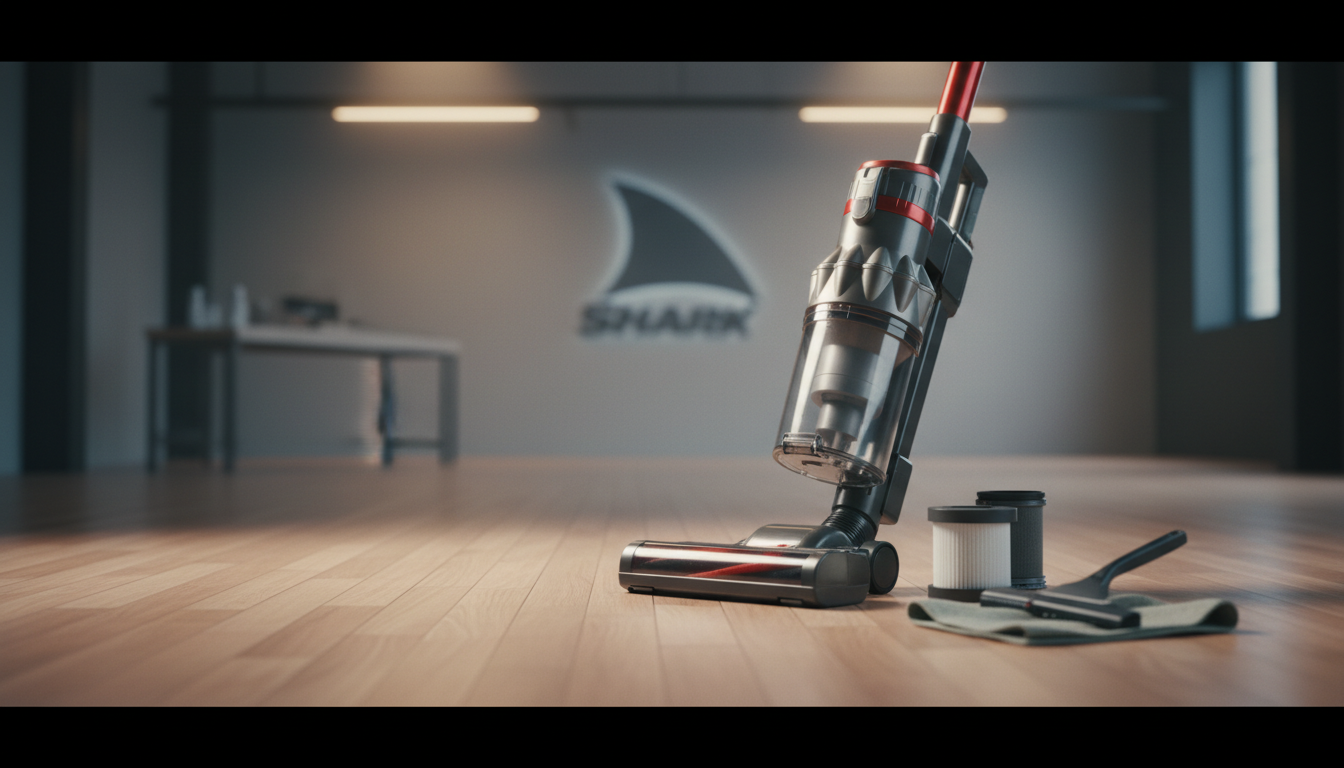
The Art of High-Performance Floor Care: Why Your Shark Vacuum Demands Mastery
Owning a Shark vacuum is often a revelation for homeowners. Whether you’ve opted for the Navigator, the Apex, or the cutting-edge Matrix robot series, you have invested in a machine designed to move massive volumes of air while sequestering microscopic allergens. However, there is a fundamental misunderstanding that plagues the average consumer: the belief that a vacuum is a "set it and forget it" appliance. In reality, a vacuum is a sophisticated pneumatic system that operates under high stress. To truly maintain a Shark vacuum, one must transition from a passive user to an active curator of the machine’s health.
The longevity of your Shark isn't determined by the price tag at the retail counter; it is determined by the 15 minutes of care you provide every month. Shark vacuums are engineered with tight tolerances and high-efficiency particulate air (HEPA) systems. While these features provide industry-leading suction, they also create a "closed-loop" environment where even a minor obstruction can lead to a cascade of mechanical failures. When you ignore shark vacuum maintenance, you aren't just leaving a little dirt behind—you are slowly suffocating the motor.
The goal of this mega guide is to provide you with the technical blueprint required to extend your vacuum’s life by years, not just months. We will move beyond the basic "empty the bin" advice and delve into the mechanical nuances that professional repair technicians use to keep these machines running like new. We will explore the physics of airflow, the chemistry of odor neutralization, and the rigorous schedule of component replacement. By the end of this guide, you will possess the expertise to troubleshoot performance drops before they become costly repairs, ensuring your home remains a sanctuary of cleanliness.
This is about more than just a clean carpet; it’s about protecting a significant financial investment. A well-maintained Shark can easily outperform a neglected high-end competitor. The difference lies in the methodology. If you want to ensure your vacuum maintains its "Day 1" suction for the next decade, you must respect the machine’s need for airflow and agitation. Let’s look at the critical problems that lead to vacuum "death" and how you can prevent them.
The Critical Problem: The Silent Killers of Suction and Motor Longevity
To understand why shark vacuum maintenance is non-negotiable, we must look at the "Critical Problem" of vacuum mechanics: The Thermal Cutoff Cycle. Most users only notice a problem when the vacuum stops picking up debris or shuts off unexpectedly. By that point, the damage may already be done.
The primary enemy of any vacuum is heat. Shark vacuums utilize powerful motors that spin at tens of thousands of RPMs. These motors are cooled by the very air they pull in from the floor. This means the air traveling through your vacuum serves two purposes: carrying dirt and cooling the engine. When airflow is restricted—due to a clogged filter, a tangled brushroll, or a blocked hose—the motor’s cooling capacity drops instantly. This leads to a spike in internal temperature, which can cause the copper windings in the motor to degrade, eventually leading to a permanent "burnt out" motor.
Furthermore, there is the issue of "Fine Dust Bypass." When a user fails to maintain a Shark vacuum by neglecting the pre-motor foam filters, fine particulates begin to migrate past the primary filtration barrier. This microscopic grit acts like sandpaper once it enters the motor housing, grinding down bearings and unbalancing the fan blades. An unbalanced fan leads to vibration, which leads to noise, and eventually, mechanical catastrophic failure. This is why you might notice your vacuum getting louder over time; it's literally shaking itself apart because of dust that should have been caught by a $10 filter.
Another critical but overlooked problem is "Static Pressure Loss." A vacuum works on the principle of pressure differential. If there is a leak in a gasket or a hairline crack in a hose, the system cannot create the vacuum necessary to lift heavy debris. Over time, hair and debris caught in the brushroll increase the "drag" on the drive belt or the electronic motor controller. In Shark’s "DuoClean" or "Zero-M" systems, this resistance can cause the sensors to trip or the internal gears to strip.
Neglect also leads to the "Biofilm Crisis." Vacuums ingest organic matter—skin cells, pet dander, food particles. In the dark, warm confines of a dust bin or a clogged hose, this organic material becomes a breeding ground for bacteria and mold. This is the source of the infamous "old vacuum smell." Without deep cleaning, you aren't just cleaning your floors; you are aerosolizing bacteria into your living room. Addressing these issues requires a disciplined, methodology-driven approach to maintenance.
The Professional Methodology: A Core Guide to Shark Maintenance
Maintaining a Shark vacuum requires a tiered approach: Daily, Monthly, and Quarterly tasks. Following this methodology ensures that airflow remains peak and mechanical resistance remains low.
1. The Dust Cup and Airflow Integrity (Daily/Weekly)
Never wait for the dust cup to reach the "Max Fill" line. For Shark vacuums, the "Max" line is the point of failure, not a suggestion. Once the debris reaches this level, the "cyclonic action" (the spinning air that separates heavy dirt from the filter) is compromised. Dirt begins to slam directly into the foam filters, clogging them instantly.
- Action: Empty the bin after every major use.
- Pro Tip: Once a month, remove the dust cup and wipe the interior with a damp microfiber cloth to remove the static-charged dust that builds up on the walls.
2. The Filtration Trinity: Foam, Felt, and HEPA (Monthly)
Shark vacuums typically use a three-stage filtration system.
- Foam and Felt Filters: These are located directly under the dust cup. They are your motor's first line of defense. Wash these in lukewarm water (no soap!) until the water runs clear. Crucial: They must air dry for at least 24 to 48 hours. Putting damp filters back into a Shark is the fastest way to grow mold and ruin the motor.
- HEPA Filter: Usually located at the front or side of the machine. This catches 99.9% of particles. While many are "washable," experts recommend replacing them every 6-12 months. If the HEPA filter looks gray or black, your vacuum’s "exhaust" is being strangled.
3. The Brushroll and Floor Nozzle (Bi-Weekly)
Even with Shark's "Zero-M" self-cleaning technology, long hair and string can occasionally wrap around the rollers or the end-caps.
- Action: Flip the vacuum over and use a pair of scissors to clear the "pathway" of the brushroll.
- The Bearings: Check the ends of the brushroll. Hair often migrates into the bearings, creating friction that can melt the plastic housing. Use tweezers to pull hair out of these tight gaps.
4. Hose and Airway Inspection (Monthly)
A "hidden" clog is often the culprit for lost suction.
- The Coin Test: Drop a coin through the top of the hose. If it doesn't fall out the other end, you have a partial blockage (often a clump of pet hair or a stray Lego).
- Visual Check: Inspect the "elbow" joints where the hose meets the vacuum base. These are high-friction areas where cracks often develop.

Replacement Parts for Shark AI AV2511AE AV2501S AV2610WA AV2501AE RV2502AE RV2610WA UR2500SR RV2520
- High-quality product
- Customer favorite
- Best value option

Replacement Parts for Shark AI AV2511AE AV2501S AV2610WA AV2501AE RV2502AE RV2610WA UR2500SR RV2520
- High-quality product
- Customer favorite
- Best value option

Replacement Parts for Shark AV2610WA RV2610WA Matrix Plus 2- in-1 Robot Vacuum Cleaner,1 Main Brush,
- High-quality product
- Customer favorite
- Best value option
Expert Hacks & Advanced Maintenance Strategies
Once you have mastered the basics of how to maintain a Shark vacuum, you can move into advanced techniques that separate the amateurs from the pros.
The Odor Neutralization Hack
Even with clean filters, the plastic of the dust bin can absorb odors.
- The Fix: When washing your foam filters, add two drops of high-quality essential oil (lemon or eucalyptus) to the felt filter after it is completely dry. This acts as a passive diffuser every time you vacuum. Additionally, you can wash the dust cup with a solution of white vinegar and water to strip away the bacterial biofilm.
Sensor and Contact Maintenance (For Robot Owners)
If you own a Shark AI or Matrix robot, the most common "failure" isn't mechanical—it's sensory.
- Action: Use a dry magic eraser or a microfiber cloth dipped in rubbing alcohol to clean the charging contacts on both the robot and the dock. Also, wipe the "cliff sensors" on the bottom of the robot. If these are dusty, the robot will refuse to move, thinking it is about to fall down stairs.
Lubricating the Wheels
Squeaky wheels are a sign of friction that puts unnecessary strain on the drive motor.
- The Fix: A tiny drop of silicone-based lubricant (do not use WD-40, as it attracts dust) on the axles of the front caster wheel will keep the vacuum gliding effortlessly.
The "Deep Airway" Flush
Every six months, disconnect the main hose and the wand. Take them outside and use a garden hose to flush out the interior. You will be shocked at the amount of "sludge" that can accumulate on the inner walls of the hose, which narrows the airway and reduces suction. Ensure they are bone-dry before reattaching.
Mega FAQ: Expert Answers for Shark Owners
1. How often should I realistically wash my Shark filters?
Shark recommends every 1-3 months, but if you have pets, you should wash the foam and felt filters every 2 weeks. The HEPA filter should be tapped clean monthly and replaced annually.
2. Why does my Shark vacuum smell like it's burning?
This is usually a sign that the brushroll is jammed or the belt is slipping. Turn it off immediately. Check for hair wraps or a stuck object (like a sock) in the intake.
3. Can I use my Shark vacuum to pick up drywall dust or fireplace ash?
Never. Fine particulates like drywall dust or ash will bypass the filtration system and go straight into the motor, likely killing it instantly. Use a shop vac for construction debris.
4. Why is the "Brushroll Indicator" light red?
A red light means the brushroll has stopped spinning due to an obstruction. A solid red light usually means a jam; a flashing red light might indicate the motor is overheating.
5. My Shark has lost suction, but the filters are clean. What’s wrong?
Check the "secret" filters. Many Shark models have a small screen inside the dust cup assembly or a secondary filter near the exhaust that users often miss. Also, check the base of the wand for a clog.
6. Can I wash the HEPA filter with soap?
No. Soap can leave a residue that actually traps more dust, leadings to a permanent clog. Use only cold water.
7. How do I know if I need a new belt?
Most modern Sharks use geared belts that don't stretch like old-fashioned rubber belts. If your brushroll isn't spinning but the motor is humming, the belt may have snapped or a gear is stripped.
8. Is it okay to leave my Shark Robot on the charger all the time?
Yes. Shark's lithium-ion batteries are designed to be "topped off." Leaving it on the dock is better for the battery's health than letting it drain to 0%.
9. How do I clean the "DuoClean" soft roller?
The soft front roller can be popped out (usually with a button on the side). Wash it with water, squeeze out the excess, and let it dry for 24 hours.
10. Why is my vacuum making a high-pitched whistling sound?
A whistle usually indicates an air leak. Check that the dust cup is seated correctly and that there are no small holes in the flexible hose.
11. Can I use "scent beads" in the dust bin?
It’s not recommended. These beads can get sucked into the cyclonic chambers and cause mechanical blockages or damage the fan blades.
12. How long should a Shark vacuum last?
With proper shark vacuum maintenance, a Shark vacuum should easily last 5 to 7 years. Many users reach the 10-year mark by replacing filters and brushrolls regularly.
Closing Thoughts: The Longevity Mindset
To maintain a Shark vacuum is to respect the engineering that keeps your home healthy. We live in a "disposable" culture where many people simply throw away a vacuum the moment it stops performing. However, as we have explored, most performance issues are not failures of the machine, but failures of maintenance.
By implementing the daily habit of emptying the bin, the monthly discipline of washing filters, and the annual ritual of replacing wear-and-tear parts, you transform your Shark from a temporary tool into a long-term asset. The time you spend clearing a brushroll or flushing a hose pays dividends in the form of a cleaner home, better air quality, and the satisfaction of knowing you’ve mastered your machinery. Treat your Shark with care, and it will reward you with relentless suction for years to come.