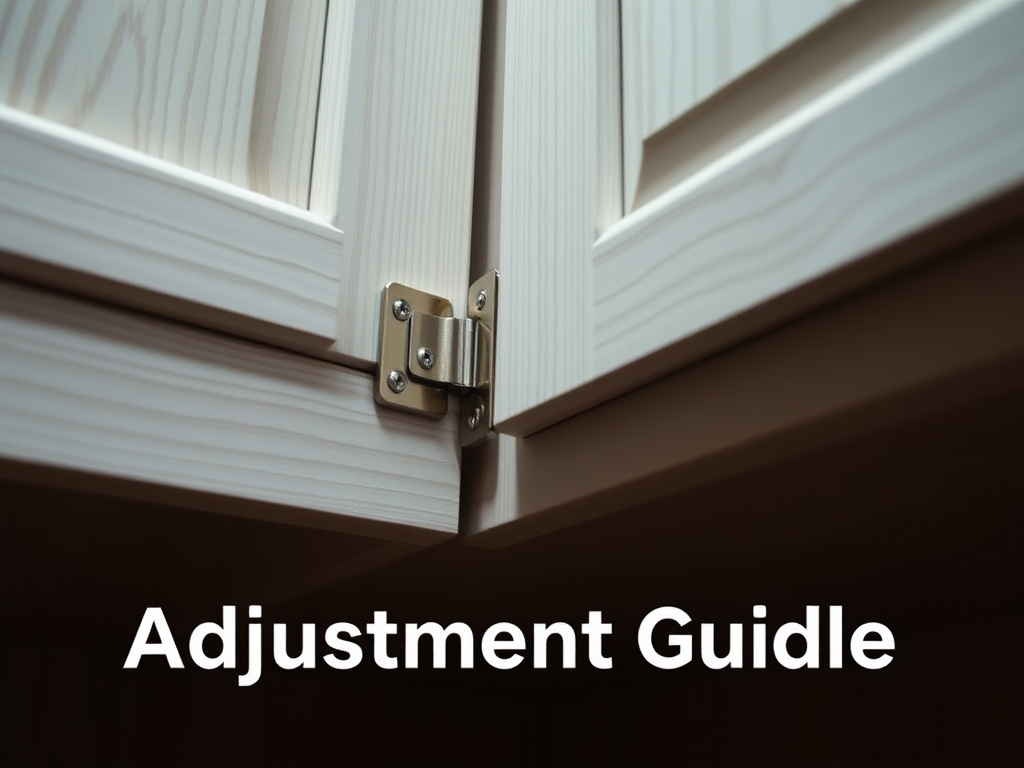
The Silent Frustration of the Kitchen: Why Your Cabinet Hinges Are Failing
There is a specific, tactile frustration that comes with a kitchen cabinet door that refuses to sit flush. You push it shut, expecting that satisfying, silent click or the gentle dampening of a soft-close mechanism, but instead, it bounces back, hangs askew, or grinds against the neighboring frame. When cabinet hinges are not closing, it isn't just a minor aesthetic nuisance; it is a breakdown in the functional ergonomics of your home’s most high-traffic area. Your kitchen is a machine, and the hinges are its most overworked bearings.
The reality is that cabinet doors are heavy, and they are subjected to thousands of cycles of tension and release over their lifespan. Whether you are dealing with modern European-style concealed hinges or traditional face-frame hardware, the physics remain the same. Gravity is constantly pulling at the fasteners, while the daily expansion and contraction of wood—driven by the heat of the stove and the humidity of the dishwasher—slowly works the screws loose. When a cabinet door won't close, it is often the final symptom of a long process of mechanical drift.
Homeowners often assume that a door that won't stay shut requires a full replacement of the hardware or, worse, a costly cabinet refacing. However, most hinge systems designed in the last thirty years are marvels of engineering, featuring three-dimensional adjustment capabilities. The problem isn't usually that the hinge is "broken"—it’s that it has moved out of its calibrated "sweet spot." Understanding the geometry of your cabinetry is the first step toward restoring the sleek, uniform lines of your kitchen. This guide is designed to move you past the "trial and error" phase of screwdriver turning and into the realm of expert-level calibration. We will dissect the mechanics of the "spring-back," the "sag," and the "overlap," providing you with a definitive methodology to reclaim your kitchen’s functionality.
The Critical Problem: An Anatomy of Hinge Failure
To fix a hinge, you must first understand why it has deviated from its intended path. Most modern kitchens utilize "cup hinges" (European hinges). These are sophisticated mechanical linkages that allow for precise movement. When these cabinet hinges are not closing, the failure usually falls into one of three technical categories: mechanical obstruction, structural fatigue, or misalignment of the pivot axis.
Mechanical Obstruction and "Spring-Back"
The most common reason a cabinet door won't close is that the hinge's internal spring mechanism is fighting against an improper depth setting. If the door is set too close to the cabinet box, the edge of the door (the hinge side) will bind against the frame before the door is fully closed. This creates a lever effect that pops the door back open an inch or two. Conversely, if the soft-close piston has accumulated dust or leaked its hydraulic fluid, it may seize, preventing the hinge from completing its arc.
Structural Fatigue and Material Compromise
The screws holding the mounting plate to the cabinet carcass are the most vulnerable point of the system. Cabinet boxes are often made of particle board or MDF (Medium Density Fiberboard). These materials are essentially compressed sawdust and glue. Over time, the constant leverage of the door pulls at the fibers of the wood, enlarging the screw holes. Once the screw loses its "bite," the mounting plate shifts, the door sags, and the hinge can no longer reach its closed position. This is often misdiagnosed as a hinge failure when it is actually a substrate failure.
The Pivot Axis Deviation
For a door to close perfectly, the hinges must be perfectly parallel to one another. If the top hinge is adjusted slightly further out than the bottom hinge, the door is effectively being twisted along its vertical axis. This creates internal tension in the metal components. You might notice the door feels "tight" or makes a clicking sound. This misalignment puts undue stress on the hinge's internal bushings, eventually leading to a permanent warp in the metal arm itself. Understanding these forces is critical because simply tightening every screw you see will often make the problem worse. You need a systematic approach to re-center the door within its three-dimensional field.
Methodology & Core Guide: The Step-by-Step Calibration
Before you begin, you need a #2 Pozidriv or Phillips head screwdriver. Avoid using a power drill for adjustments; the high torque can easily strip the soft wood or the fine threads of the adjustment screws.
Step 1: The Lateral Adjustment (Side-to-Side)
If your cabinet door won't close because it is hitting the door next to it or overlapping the frame unevenly, you need to adjust the lateral screw. This is typically the screw located closest to the door itself on the hinge arm.
- The Fix: Turning this screw clockwise moves the door closer to the edge of the cabinet. Turning it counter-clockwise moves it toward the center of the opening. Adjust both the top and bottom hinges in small increments (quarter-turns) until the vertical gap (reveal) between doors is perfectly uniform.
Step 2: The Vertical Adjustment (Up and Down)
A sagging door is a primary culprit for cabinet hinges not closing. If the door has dropped, the bottom edge may be dragging on the cabinet floor or the decorative trim.
- The Fix: Look at the mounting plate attached to the cabinet box. You will see two screws—one above and one below the hinge arm—housed in elongated slots. Loosen these screws just enough to allow the plate to slide. Lift the door to the desired height (using a shim or a book to hold it in place) and retighten the screws. Some high-end hinges have a single "worm gear" screw for vertical adjustment; turning this will raise or lower the door without needing to loosen the plate.
Step 3: The Depth Adjustment (In and Out)
This is the most critical adjustment for doors that "pop" back open. If the door is too tight against the cabinet face, the hinge cannot complete its cycle.
- The Fix: Locate the screw furthest back on the hinge arm (away from the door). Loosen this screw and pull the door slightly toward you (away from the cabinet box). This creates a "gap" that allows the door to swing freely without binding. Retighten the screw once you have a 1/16th-inch gap between the door and the frame.
Step 4: Soft-Close Tension Calibration
Many modern hinges have a "switch" or a slider on the hinge cup that regulates the speed of the close. If the door stops halfway, the tension is too high. If it slams, the tension is too low.
- The Fix: Toggle the tension switch (usually found on the side of the hinge cup) to find the balance. On some models, you only need to deactivate the soft-close on one of the two hinges to achieve a perfect, smooth motion for lighter doors.
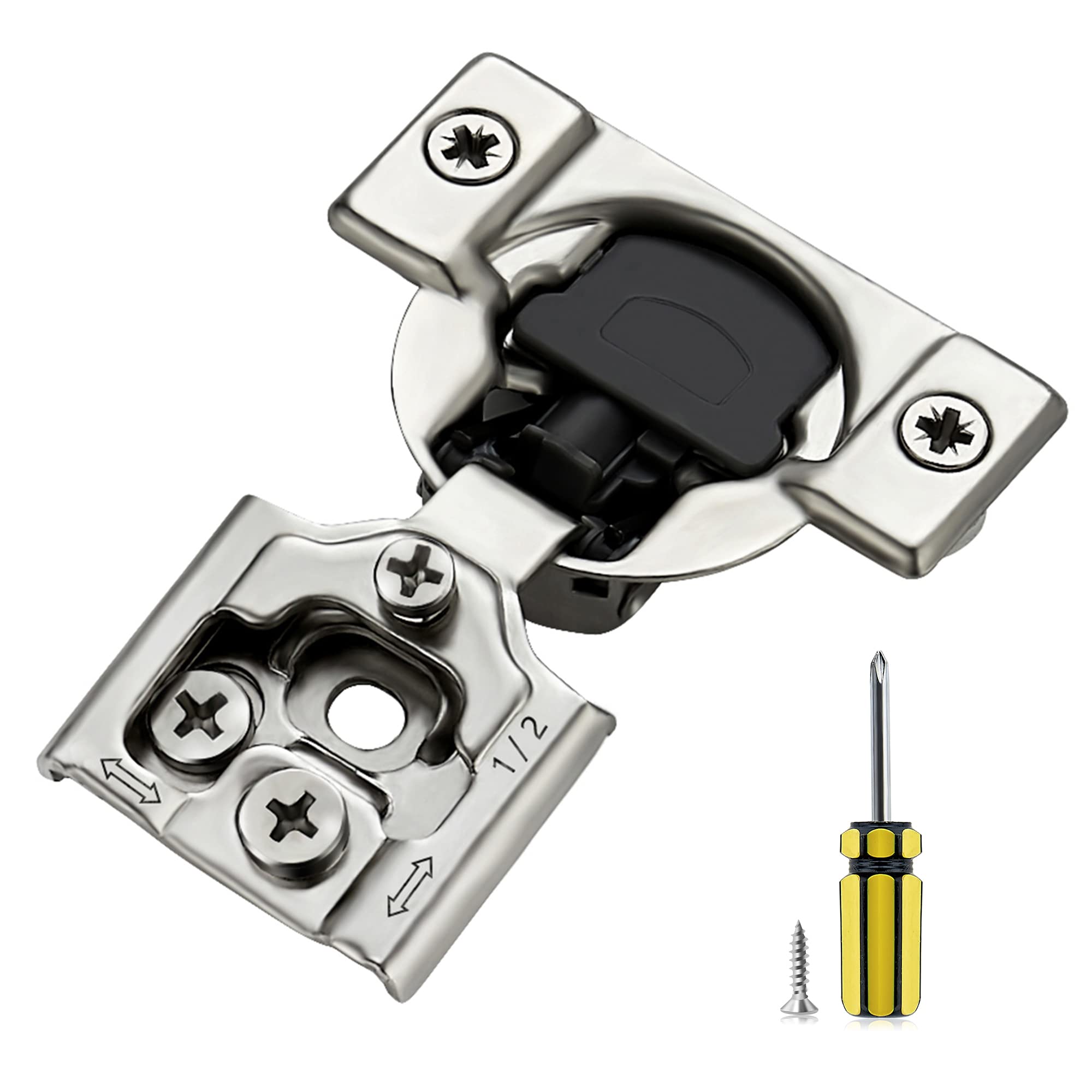
Ravinte 50 Pack 25 Pair 1/2 inch Overlay Cabinet Hinges Soft Close Hidden Door Hinge for Kitchen Cab
- High-quality product
- Customer favorite
- Best value option
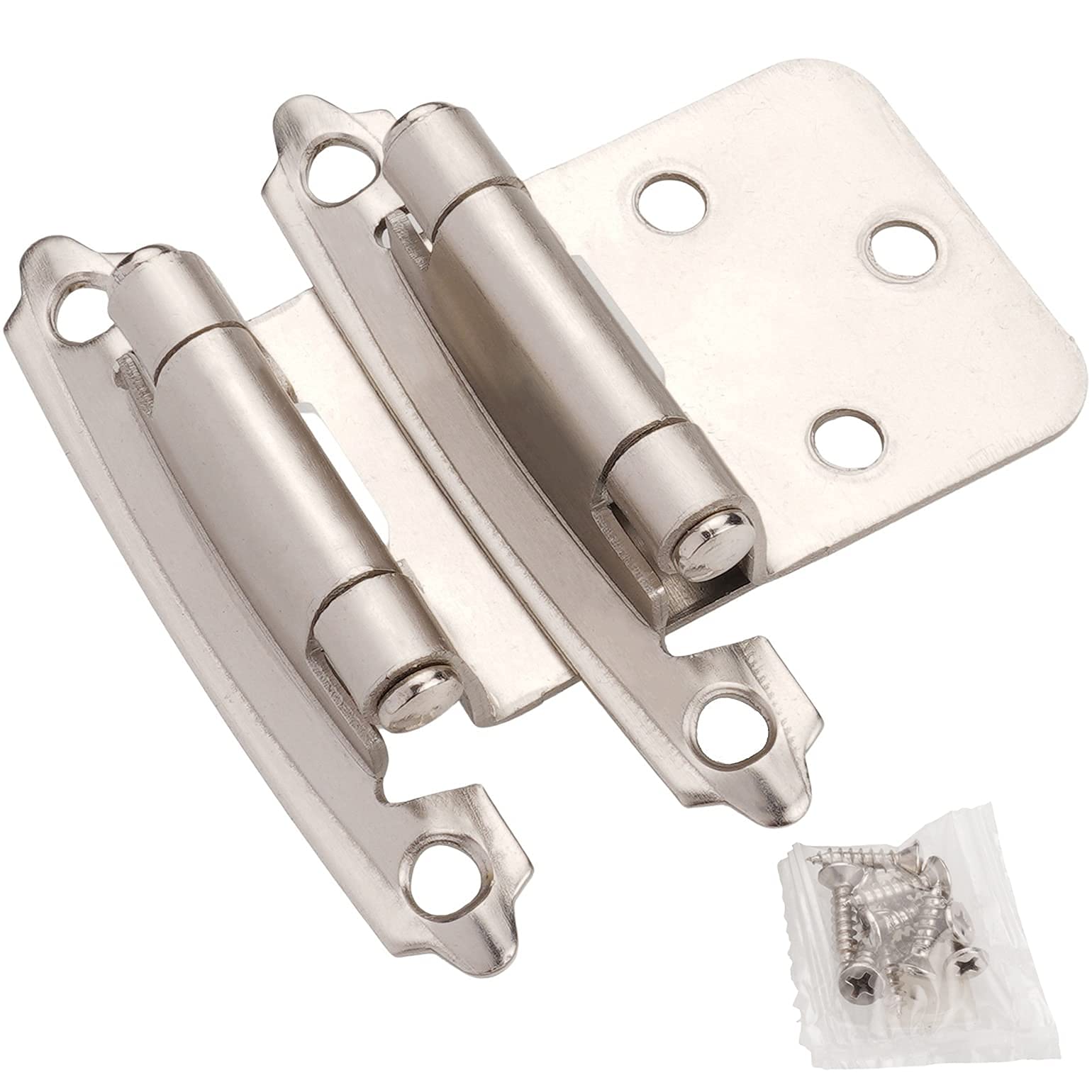
DecoBasics Cabinet Hinges Brushed Nickel for Kitchen Cabinets Doors (10 Pair -20 Pcs) -1/2" Overlay
- High-quality product
- Customer favorite
- Best value option
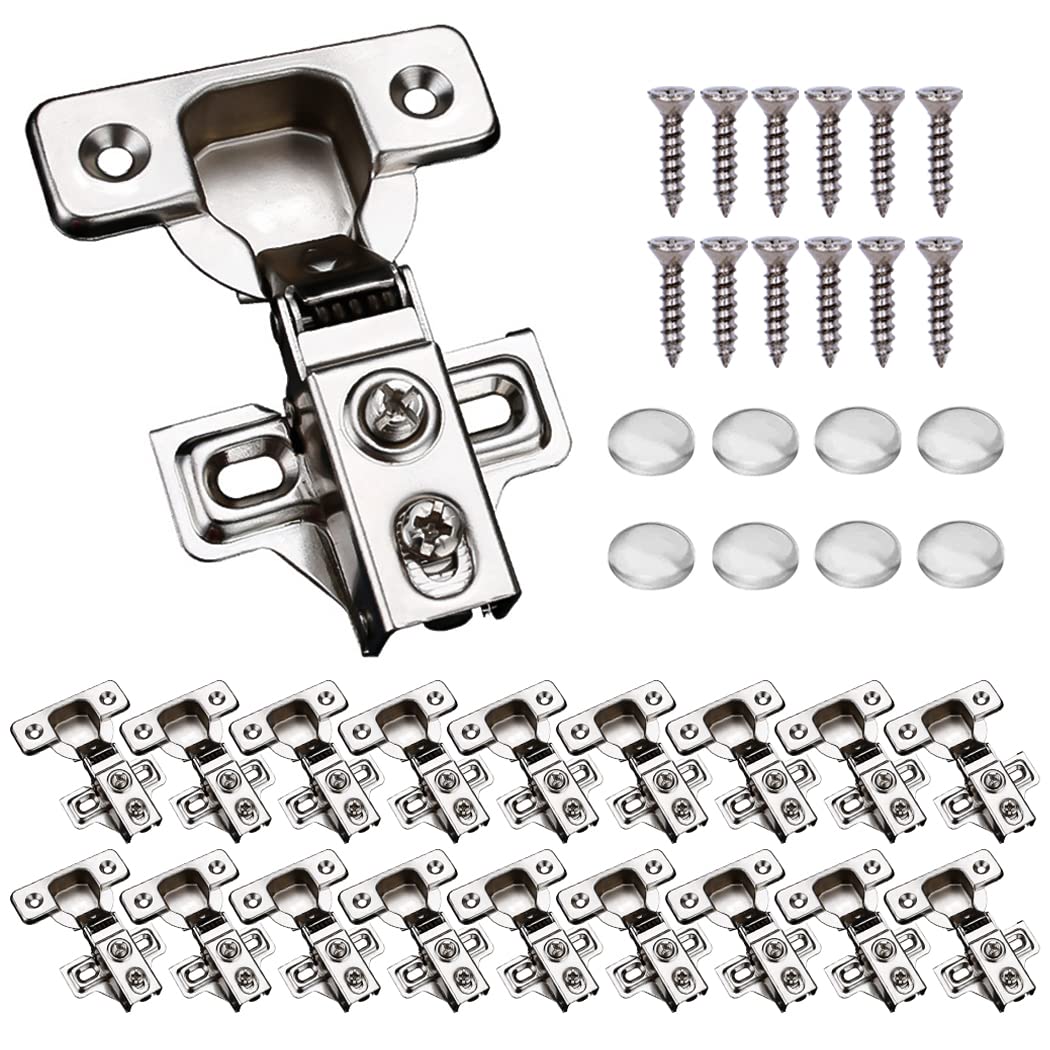
20 Pack Soft Close Cabinet Door Hinges for 1/2" Partial Overlay Cupboard, 100 Degree Opening Angel,
- High-quality product
- Customer favorite
- Best value option
Expert Hacks & Maintenance: Beyond the Screwdriver
When a cabinet hinges not closing issue persists even after adjustment, you need to employ professional-grade recovery tactics.
The Toothpick and Glue Trick
If your screws are spinning freely in the wood, the hole is "blown out." To fix this without moving the hinge, remove the screw, dip several wooden toothpicks in wood glue, and jam them into the hole. Snap them off flush with the surface and let the glue dry for an hour. Re-drive the screw; the toothpicks provide new wood fibers for the threads to grab, creating a bond often stronger than the original material.
Lubrication and Cleaning
Hinges in the kitchen are subject to "aerosolized grease"—the fine mist of oil that rises from cooking. This grease settles into the hinge mechanism and acts as a magnet for dust, creating a sticky paste that prevents smooth closing. Once a year, spray your hinges with a dry silicone lubricant or a shot of WD-40 Specialist (the dry version). Avoid standard WD-40, as it can attract more dust over time.
Checking for "Out of Square" Boxes
Sometimes the problem isn't the hinge or the door; it's the cabinet box itself. If your house has settled, the cabinet might be racked into a parallelogram shape. Use a carpenter's square to check the corners. If the box is out of square, you will have to "over-adjust" the hinges to compensate, which may require longer screws or specialized shim plates behind the mounting hardware.
Mega FAQ: Expert Solutions for Troublesome Hinges
1. Why does my cabinet door pop back open after I close it?
This is usually caused by "binding." The door is adjusted too tightly against the cabinet frame. When you close the door, the hinge-side edge hits the frame, acting as a fulcrum that levers the door back open. Adjust the depth screw to move the door slightly away from the frame.
2. Can I fix a squeaky hinge without replacing it?
Yes. Squeaking is caused by metal-on-metal friction. A small amount of white lithium grease or a dry silicone spray applied to the pivot points will usually silence the hinge.
3. What is the difference between overlay and inset hinges?
Overlay hinges sit on the face of the cabinet frame, covering it. Inset hinges are designed for doors that sit flush inside the cabinet opening. You cannot swap one for the other without significant woodworking.
4. Why is my soft-close hinge suddenly slamming?
The hydraulic damper inside the hinge has likely failed. While some high-end brands like Blum or Grass offer replaceable dampers, most consumer-grade hinges require a full replacement of the hinge unit when the soft-close feature fails.
5. How do I fix a door that is sagging at the top?
Tighten the lateral adjustment screw on the bottom hinge to pull the bottom of the door toward the frame, or loosen the lateral screw on the top hinge to let the top of the door move outward.
6. Does humidity affect how my cabinet hinges work?
Absolutely. High humidity causes wood doors to swell. A door that closed perfectly in the winter might bind in the summer. You should adjust your hinges during a "neutral" season for the best year-round performance.
7. What tool is best for adjusting hinges?
A manual #2 Pozidriv screwdriver is the gold standard. Many European hinges use Pozidriv rather than Phillips; using the wrong one will eventually strip the screw head.
8. Can I add soft-close to old hinges?
Yes, you can buy "add-on" dampers that screw into the corner of the cabinet frame. They catch the door just before it closes, even if the hinges themselves are standard.
9. Why won't the screws stay tight?
The substrate (particle board) is likely failing. Use the toothpick and glue method, or upgrade to "Hinge Repair Plates," which are stainless steel plates that provide a new, wide mounting surface.
10. How many hinges should be on a tall pantry door?
A standard 30-inch cabinet door needs two hinges. Doors between 40 and 60 inches need three. Doors over 60 inches (like pantries) should have four to five hinges to prevent warping and sagging.
11. Is it worth buying "name brand" hinges?
Yes. Brands like Blum, Salice, and Grass are tested for 100,000+ cycles. Cheaper "no-name" hinges often use inferior springs that lose tension within 12–24 months.
12. How do I know if my hinges are "European style"?
If you cannot see the hinge when the door is closed, and there is a large circular hole (35mm) bored into the back of the door, you have European concealed hinges.
Closing Thoughts
A kitchen where every door is perfectly aligned is a hallmark of a well-maintained home. When cabinet hinges are not closing, it is a signal that your hardware needs a few minutes of professional attention. By mastering the three-way adjustment system—lateral, vertical, and depth—you can resolve 95% of all cabinet door won't close issues without spending a dime on replacement parts. Remember that patience is the most important tool in your kit. Make small adjustments, test the swing, and observe how the geometry changes. With the right approach, you can restore the "showroom feel" to your kitchen and ensure your cabinetry functions flawlessly for years to come.