The Silent Death of the Kitchen Workhorse: Why Your Cleaning Routine Matters
The air fryer has transitioned from a niche "As Seen on TV" gadget to an indispensable cornerstone of the modern kitchen. Its ability to mimic deep-frying through high-velocity convection—the Maillard reaction at its most efficient—has revolutionized how we consume everything from frozen fries to complex proteins. However, there is a dark side to this culinary convenience that most manufacturers gloss over in their glossy instruction manuals: the inevitable accumulation of carbonized grease and the fragility of the non-stick basket.
If you are reading this, you likely know the feeling of dread that accompanies a successful meal. You’ve enjoyed the perfectly crisped chicken thighs, but now you’re staring at a basket coated in a stubborn, tacky resin that seems to defy the laws of physics. Many users, in their desperation to restore the basket to its pristine state, reach for the heaviest artillery in their cleaning arsenal—steel wool, abrasive scouring pads, or caustic chemical sprays. This is a fatal mistake.
The non-stick coating on your air fryer basket, typically a PTFE (Polytetrafluoroethylene) or a ceramic derivative, is a marvel of engineering designed to withstand high heat while releasing food. However, it is also incredibly delicate. One over-zealous scrubbing session with a "heavy-duty" sponge can create microscopic fissures in the surface. These fissures aren't just cosmetic; they represent the beginning of the end for your appliance. Once the coating is compromised, food sticks more aggressively, leadings to more scrubbing, which leads to more damage—a feedback loop that eventually ends with you throwing the unit in the trash or, worse, consuming flakes of non-stick coating with your dinner.
To clean air fryer basket properly, you must move away from the "elbow grease" philosophy and embrace a methodology rooted in chemistry and patience. This guide is designed to dismantle the myths of air fryer maintenance and provide you with a professional-grade protocol that preserves the integrity of your equipment while ensuring maximum hygiene. We aren't just washing a dish; we are performing preventative maintenance on a precision convection instrument. Learning how to clean air fryer basket without compromising its structural integrity is the difference between an appliance that lasts ten years and one that becomes a health hazard in ten months.
The Critical Problem: Understanding Polymerized Grease and Coating Failure
To solve the problem of a dirty air fryer, we must first understand the enemy: polymerized grease. When oil is heated to high temperatures in a confined, high-airflow environment, it undergoes a chemical process called polymerization. Essentially, the liquid oil transforms into a plastic-like solid that bonds to the surface of the basket. This is the same process used to "season" a cast-iron skillet, but on a non-stick air fryer basket, it is a catastrophic failure.
Unlike cast iron, which is porous and benefits from this carbonized layer, the non-stick surfaces of air fryers are designed to be non-porous. When grease polymerizes on top of a non-stick coating, it creates a "bridge" between the food and the basket. Because the polymerized oil is now a tough, varnish-like film, it requires significant force to remove. This is where most consumers fail. They attempt to "scrape" the varnish off, but because the varnish is chemically bonded to the surface, the scraping action takes the non-stick coating with it.
Furthermore, we must address the "Dishwasher Lie." Most manufacturers claim their baskets are "dishwasher safe." While technically true—the basket won't melt in a dishwasher—the environment inside a dishwasher is incredibly hostile. The combination of high-pressure water, caustic detergents (which often contain phosphates and abrasives), and the rapid heating/cooling cycles will accelerate the degradation of the non-stick coating. Over time, dishwasher use causes the coating to become brittle and lose its hydrophobic properties. If you want to clean air fryer basket properly, the dishwasher should be your last resort, not your default.
Another critical issue is the accumulation of debris underneath the basket or within the mesh. In many models, the basket features a complex array of holes or a wire mesh designed to facilitate airflow. These areas are magnets for "carbonized crust"—bits of food that have been cooked, cooled, and re-cooked multiple times. If not addressed, these particles can smoke, affecting the flavor of your food and potentially triggering smoke detectors or, in extreme cases, causing grease fires.
The goal of expert cleaning is to dissolve the chemical bonds of the grease without mechanical abrasion. We are looking for a "zero-friction" clean. By understanding that we are dealing with a delicate chemical surface rather than a rugged piece of industrial steel, we can adjust our tools and techniques to ensure the air fryer remains as effective on day 1,000 as it was on day one. This requires a shift in mindset: we are not "scrubbing," we are "de-bonding."
Methodology & Core Guide: The Professional Protocol
To clean air fryer basket properly, you need a systematic approach. Follow these steps in order to ensure you never have to use a scouring pad again.
Step 1: The Immediate Cool-Down Phase
Never submerge a screaming-hot air fryer basket in cold water. This causes thermal shock, which can cause the metal to warp and the non-stick coating to crack or "craze." Allow the basket to sit for 10-15 minutes until it is warm to the touch but no longer hot.
Step 2: The "Soft Soak" (The Most Critical Step)
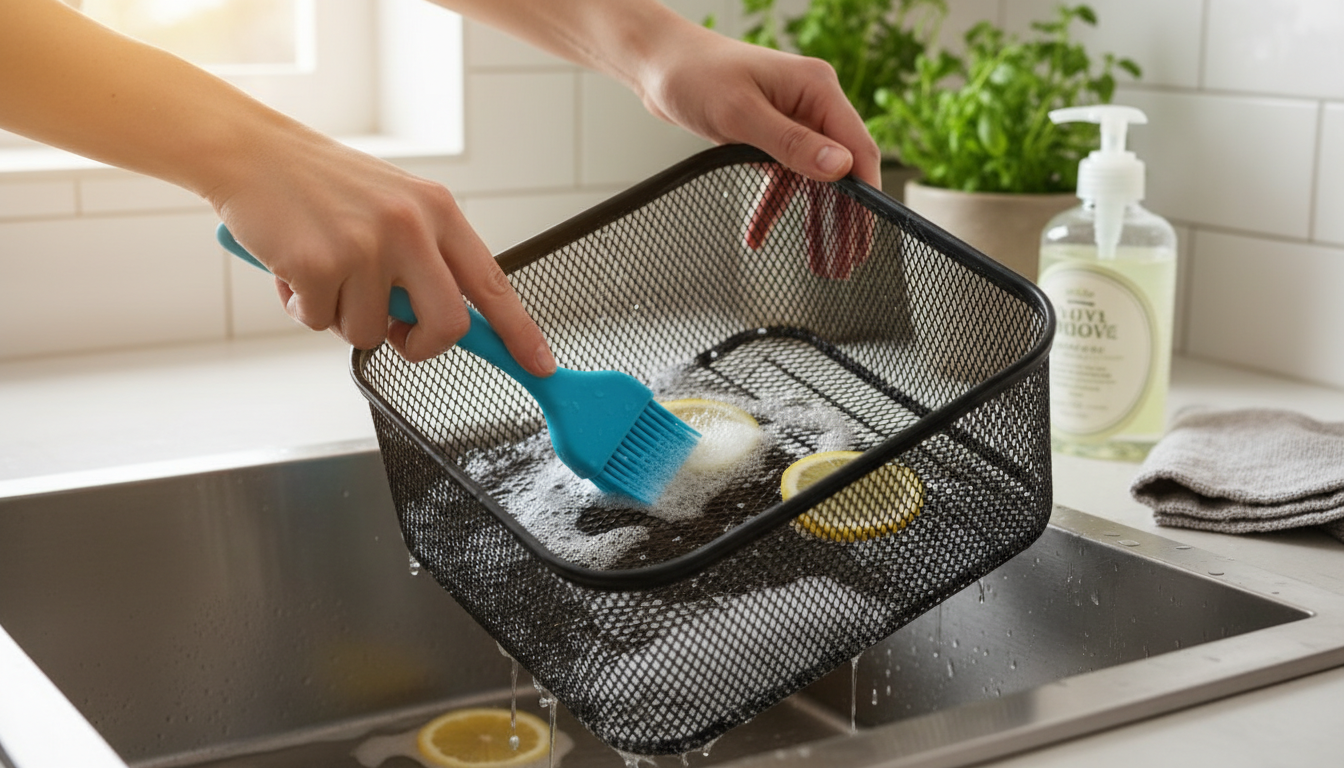
Fill your sink with hot water and a high-quality, grease-cutting dish soap (such as Dawn Platinum). Place the basket and the crisper plate into the water. If the grease is particularly heavy, add half a cup of baking soda to the water. The baking soda acts as a mild alkali to help break down acidic fat bonds without being abrasive. Let it soak for at least 30 minutes. If you have "baked-on" honey or sugar-based glazes, an hour-long soak is mandatory.
Step 3: The Non-Abrasive Agitation
After the soak, use a soft microfiber cloth or a non-scratch silicone brush. Avoid the "green" side of standard sponges, as these often contain minerals that are harder than the non-stick coating. Wipe the surfaces in a circular motion. The grease should lift away easily. For the holes in the basket, use a soft-bristled toothbrush to gently push through any stuck debris.
Step 4: The Steam Clean Hack (For Stubborn Residue)
If residue remains after the soak, place the basket back into the air fryer. Add a small amount of water and a few drops of dish soap into the bottom of the drawer. Run the air fryer at 350°F for 5 minutes. The resulting steam will penetrate the polymerized grease, softening it from the inside out. After the cycle, let it cool slightly and wipe clean.
Step 5: The Acidic Rinse
To remove "ghost smells" (like fish or garlic) and to break down any remaining mineral deposits from your water, wipe the basket with a cloth dipped in white vinegar. This also helps to restore the luster of the surface.
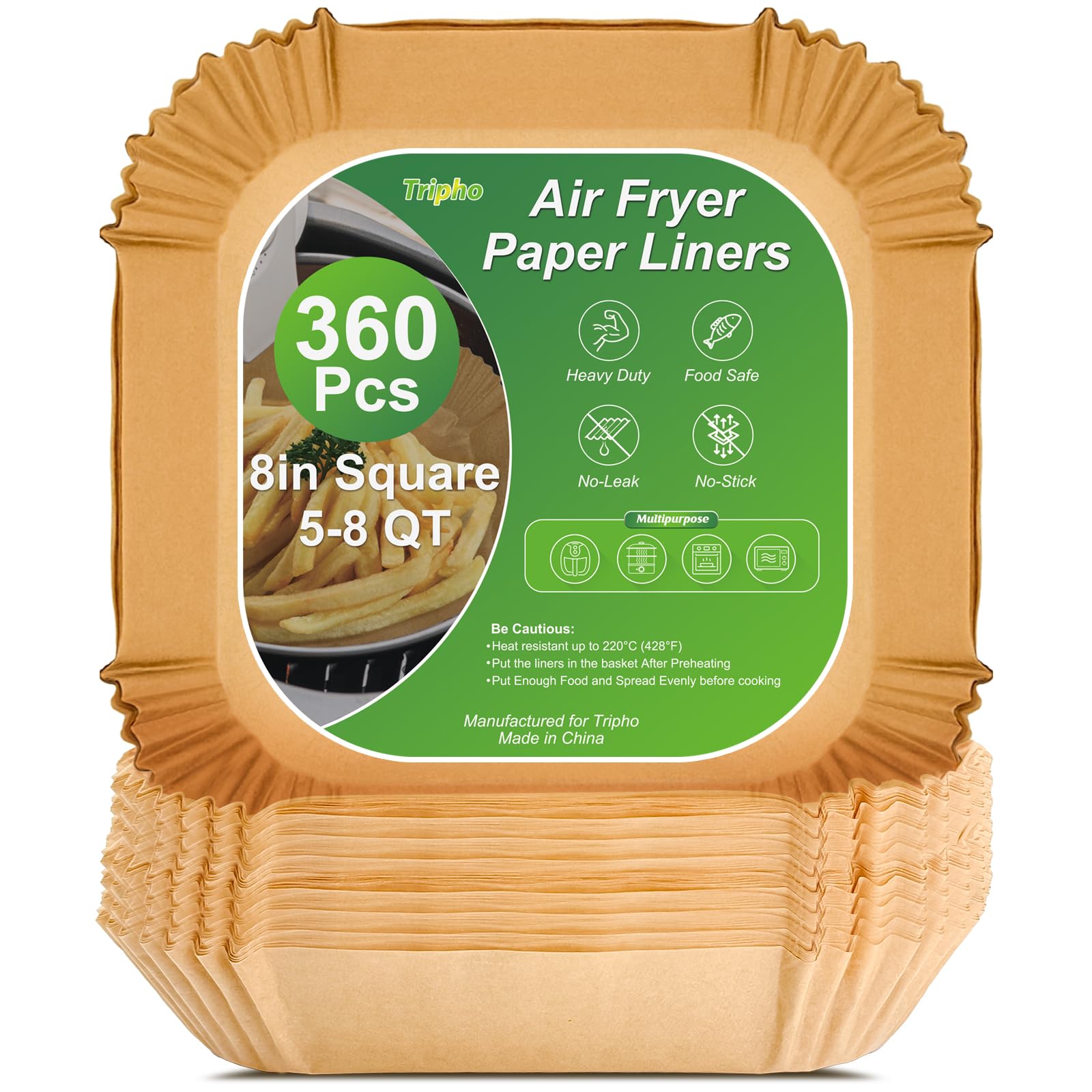
360 Pcs 8” Square Unbleached Heavy Duty Air Fryer Paper Liners Disposable, Non-Stick & Non-Leak Parc
- High-quality product
- Customer favorite
- Best value option
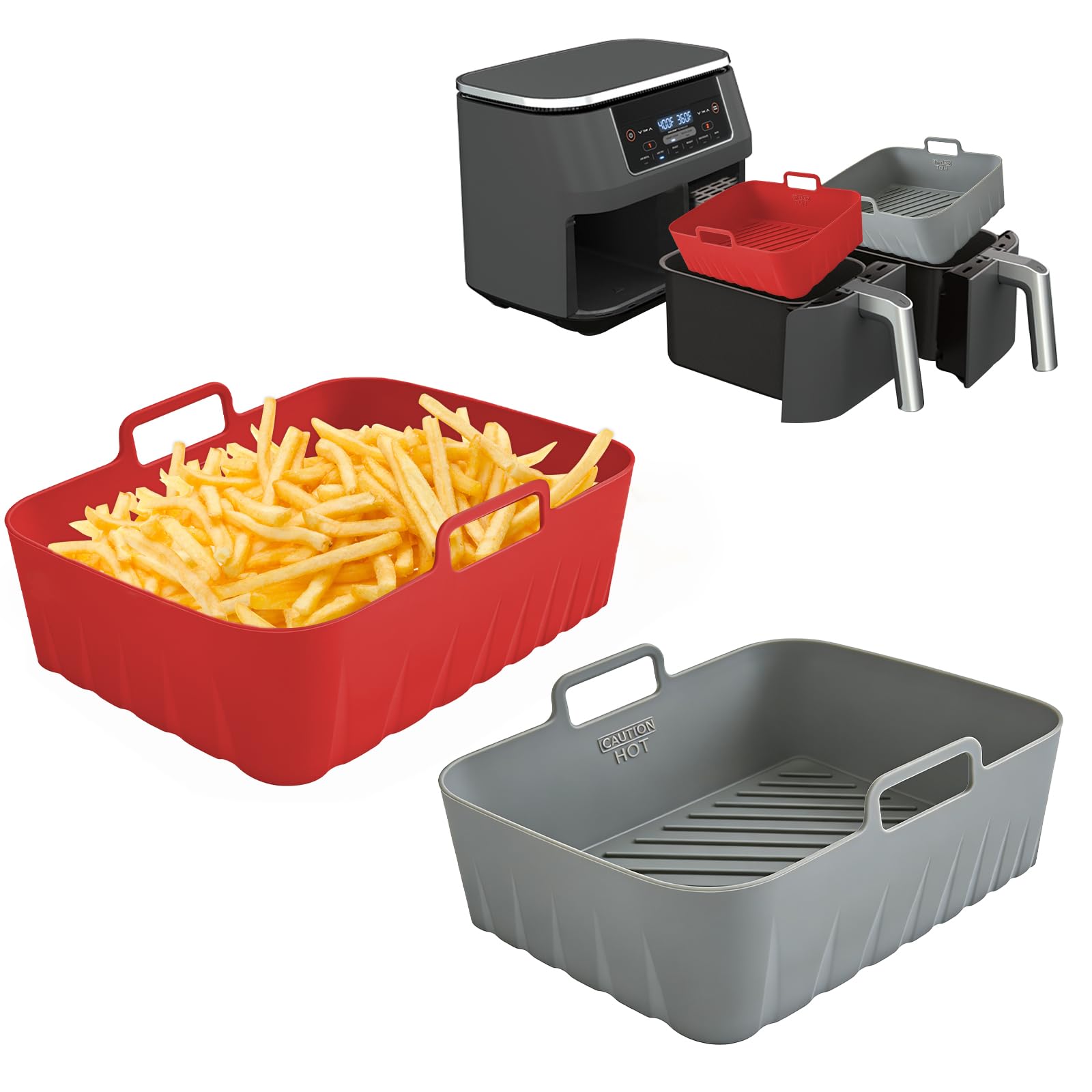
Silicone Liners Rectangle 2 Pcs for Air Fryer Dual Basket 8 to 10 Qt, Food-grade Reusable Baking Tra
- High-quality product
- Customer favorite
- Best value option
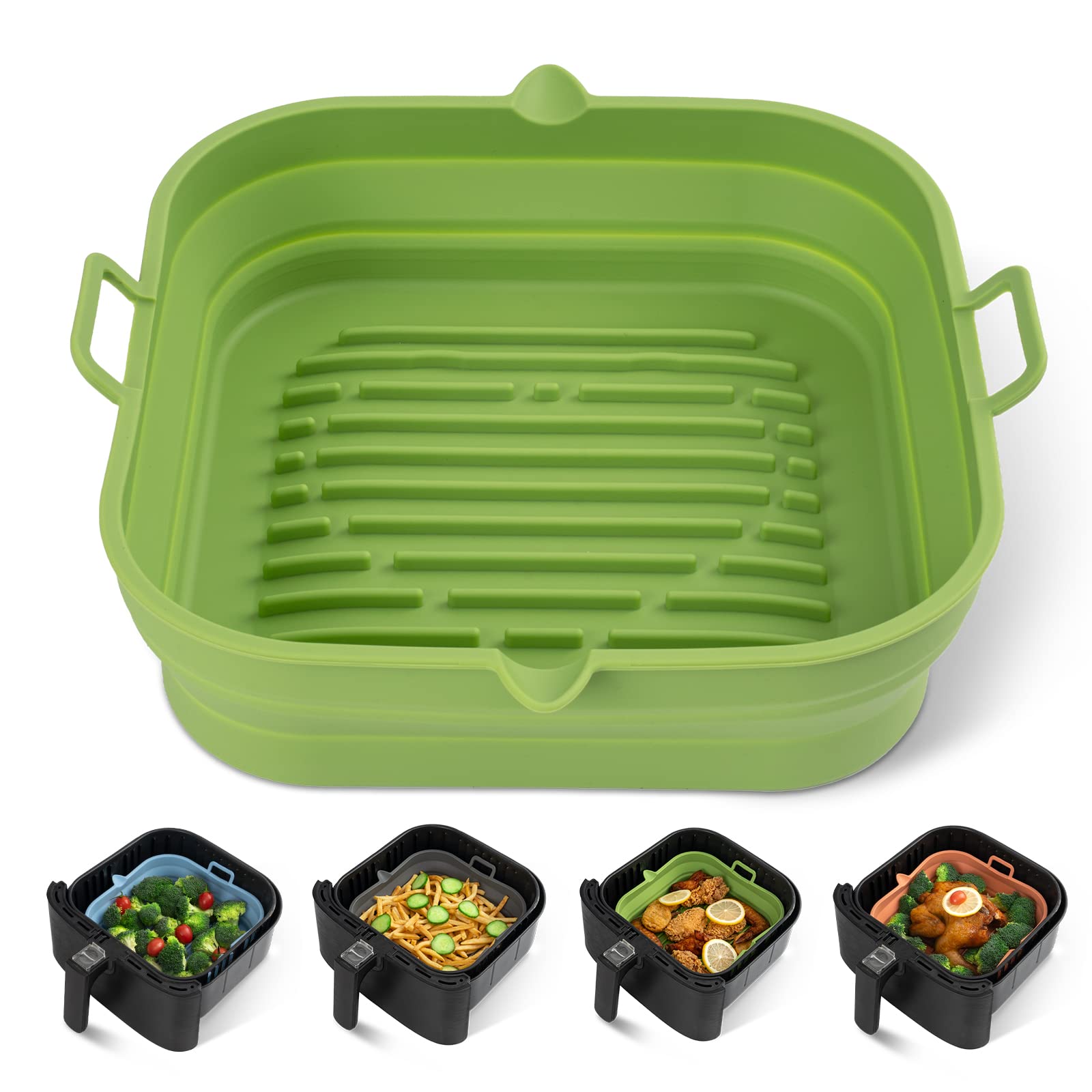
Silicone Air Fryer Liners Square – Reusable Airfryer Collapsible Basket – Easy to Clean Air Fryers P
- High-quality product
- Customer favorite
- Best value option
Expert Hacks & Maintenance: Advanced Longevity Strategies
Once you have mastered the basic cleaning cycle, you can implement advanced strategies to ensure you never have to deal with a "disaster basket" again. The secret to how to clean air fryer basket efficiently is preventing the mess from becoming permanent.
1. The "Dawn Powerwash" Advantage
If you haven't switched to a spray-based dish soap, you are working too hard. These formulations contain alcohol-based solvents that break down surface tension faster than traditional liquid soap. Spraying the basket immediately after use (once it’s warm) and letting it sit while you eat is the single most effective maintenance habit you can develop.
2. The Parchment/Silicone Shield
The absolute best way to clean air fryer basket properly is to prevent food from touching it. Using perforated parchment liners or silicone inserts (as shown in the grid above) catches 90% of the grease and crumbs. This doesn't mean you skip washing the basket, but it means the washing process becomes a 30-second rinse rather than a 30-minute ordeal.
3. The Bread Crumb Trick
If you have cooked something exceptionally greasy (like bacon or 80/20 burgers), place a slice of bread in the bottom of the air fryer drawer underneath the basket. The bread will absorb the liquid grease before it has a chance to smoke or bake onto the drawer's surface.
4. Cleaning the "Hidden" Element
Every 10-15 uses, you must clean the heating element. Unplug the unit, turn it upside down (once cool), and wipe the heating coil with a damp cloth and a bit of lemon juice. This prevents grease from dripping onto the coil and causing that "burnt" smell that ruins delicate foods.
Mega FAQ: Expert Solutions for Air Fryer Maintenance
1. Is the dishwasher truly bad for my air fryer basket?
Yes. Even if labeled "dishwasher safe," the high-heat drying cycle and abrasive detergents will eventually cause the non-stick coating to peel. Hand-washing takes 2 minutes if done correctly and can triple the life of your basket.
2. Can I use Bar Keepers Friend on the basket?
No. Bar Keepers Friend is an abrasive cleaner containing oxalic acid. While great for stainless steel, it will destroy a non-stick coating in seconds.
3. How do I remove a persistent "fishy" odor?
Cut a lemon in half and rub it all over the basket. Let it sit for 10 minutes, then run the air fryer at 400°F with the lemon halves inside for 5 minutes. The citric acid and steam will neutralize the organic compounds causing the smell.
4. What should I do if my non-stick coating is already peeling?
Stop using it immediately. Most non-stick coatings contain chemicals that should not be ingested. Contact the manufacturer for a replacement basket or buy a third-party compatible one.
5. Can I use a SOS pad or steel wool?
Absolutely not. You will strip the coating down to the bare metal, rendering the basket useless for non-stick cooking.
6. Why does my air fryer smoke even when it's clean?
Check the area behind the basket and the heating element. Grease often splatters upward during cooking. If this grease isn't wiped off, it will smoke the next time you turn the unit on.
7. Is it safe to use "non-stick" cooking sprays like Pam?
No. Many commercial sprays contain soy lecithin, which leaves a gummy residue that is nearly impossible to remove from non-stick surfaces. Use a pump sprayer with pure olive or avocado oil instead.
8. How often should I clean the basket?
After every single use. Even if it looks clean, residual oils will polymerize the next time you heat the unit, making them much harder to remove later.
9. Can I use oven cleaner in my air fryer?
Never. Oven cleaners are highly caustic and are designed for porcelain-enamel surfaces, not the delicate coatings or plastics found in air fryers.
10. How do I clean the exterior of the air fryer?
A simple microfiber cloth with a bit of glass cleaner or diluted white vinegar will keep the plastic or stainless steel exterior looking new without streaking.
11. My basket has "white spots" after washing. What are they?
These are likely mineral deposits from hard water. Wipe the basket with white vinegar to dissolve them.
12. Can I soak the basket overnight?
Yes, but only in soapy water. Do not leave it in harsh chemicals or pure vinegar for extended periods, as this can eventually weaken the bond between the coating and the metal.
Closing Thoughts
Mastering how to clean air fryer basket is not merely about aesthetics; it is about food safety, flavor integrity, and financial prudence. Your air fryer is an investment in your health and your time. By treating the non-stick surface with the respect it deserves—avoiding abrasives, utilizing the power of soaking, and employing protective liners—you ensure that your appliance remains a helpful tool rather than a source of frustration.
Remember: clean air fryer basket properly by letting chemistry do the work. If you find yourself scrubbing hard, you are using the wrong technique. Soak, steam, and wipe. That is the path to a pristine kitchen and perfectly cooked meals for years to come.