Navigating the 2025 Landscape of Dyson Power Cells: An Introduction
For over a decade, Dyson has fundamentally rewritten the blueprint of household maintenance. By transitioning from the tethered, cumbersome uprights of the past to the sleek, cyclonic cordless units of today, they have turned a chore into a high-tech experience. However, as any seasoned owner of a V8, V11, or the latest Gen5outsize knows, that experience is tethered to a ticking clock: the lithium-ion battery. In 2025, the dyson cordless battery replacement cost remains one of the most searched queries for homeowners, and for good reason. We are currently in a transition period where older "legacy" models are reaching their third or fourth battery cycle, while newer "smart" models are introducing complex software-locked power management systems.
The brilliance of Dyson’s engineering often masks a simple chemical reality. Lithium-ion batteries are consumable components. They do not fail because of poor manufacturing; they fail because of the inevitable degradation of lithium ions moving between the anode and cathode. As we move through 2025, the market for replacements has bifurcated. On one side, you have Dyson’s official OEM (Original Equipment Manufacturer) ecosystem, which prioritizes safety and firmware compatibility at a premium price. On the other, a robust, high-quality aftermarket has emerged, offering high-capacity cells and even adapters that allow you to power your vacuum with professional power tool batteries from brands like DeWalt or Milwaukee.
Understanding the dyson battery replacement price is not just about looking at a tag on a shelf; it is about calculating the Total Cost of Ownership (TCO). If you spent $700 on a V15 Detect, a $130 battery every three to four years is a minor maintenance fee. If you are still rocking a V6 from 2016, that same $130 might be more than the machine is worth. This guide serves as the definitive 2025 authority on making that "fix or flip" decision. We will analyze the shifting costs, the technical hurdles of modern BMS (Battery Management Systems), and the strategic move toward modular power that is defining this year’s maintenance trends. Whether you are facing the dreaded "red light of death" or simply noticing a significant drop in "Max Mode" runtime, the following expert analysis will provide the clarity needed to restore your machine to its peak performance.
The Critical Problem: The Chemistry and Economics of Battery Failure
The "Critical Problem" with Dyson cordless vacuums isn't the motor—which is often rated for a decade of use—but the thermal stress placed on the battery pack. To understand why the dyson cordless battery replacement cost is a recurring theme, one must understand the "High-Drain" environment of a cordless vacuum. Unlike a laptop or a smartphone, which sips power slowly, a Dyson vacuum in "Boost" or "Max" mode demands a massive, sustained discharge of current. This generates immense internal heat, the primary enemy of lithium-ion stability.
Expert analysis of Dyson battery failures reveals a common pattern: the failure of a single cell within a series. A Dyson V11 battery, for instance, contains a series of high-capacity cells. If the Battery Management System (BMS) detects that one cell has dropped below a specific voltage threshold or has developed too much internal resistance, it will permanently "brick" the entire pack for safety reasons. This is the source of the flashing red light. While this prevents the battery from catching fire (thermal runaway), it also means that a $150 component can be rendered useless by a single $5 component failure. In 2025, we are seeing a rise in "smart" batteries that use encrypted handshakes with the vacuum’s mainboard, making third-party repairs more difficult than in previous years.
Furthermore, the economic problem is exacerbated by Dyson’s "Max Mode" marketing. Many users run their machines on the highest setting exclusively, unaware that they are essentially "cooking" the battery. This reduces the lifespan from an expected 3–5 years down to 18–24 months. When the battery inevitably fails, the consumer is met with a dyson battery replacement price that often feels like a "tax" on their initial high-end purchase.
In 2025, we also face the environmental dimension of this problem. Millions of Dyson battery packs end up in landfills because consumers find the replacement process confusing or the OEM costs too high. The lack of a formalized, low-cost "cell refresh" program from the manufacturer forces users to choose between expensive official parts or potentially hazardous, low-quality knockoffs. This creates a "Right to Repair" friction point that defines the current cordless vacuum market. The critical problem, therefore, is not just technical—it is a convergence of chemical limits, aggressive power demands, and a rigid supply chain for replacement parts.
Methodology & Core Guide: 2025 Cost Breakdown and Strategy
To provide an accurate guide for 2025, we have analyzed three primary sources: official Dyson MSRP, reputable third-party retailers (such as specialized Amazon vendors), and the burgeoning "Power Tool Adapter" market. The dyson cordless battery replacement cost varies wildly based on the generation of your machine.
1. Legacy Models (V6, V7, V8)
These models use a "screw-in" battery design. Because the technology is mature, the costs have stabilized.
- Official Dyson Price: $79 – $95.
- Third-Party High Quality: $35 – $55.
- 2025 Recommendation: Do not buy official for these models unless you are under warranty. High-quality aftermarket cells (like those from reputable 4000mAh+ brands) offer significantly better runtime than the original 2100mAh cells.
2. The Mid-Range Titans (V10, V11)
The V10 and early V11 models introduced the "Click-in" vs. "Screw-in" divide.
- Official Dyson Price: $100 – $130.
- Third-Party High Quality: $60 – $85.
- 2025 Strategy: The V11 is particularly sensitive to BMS errors. If you have a V11 with an LCD screen, ensure the third-party battery is "Firmware Compatible," or the screen may not accurately report remaining minutes.
3. The Modern Flagships (V12, V15, Gen5)
These are the most expensive to maintain due to high-density cells and advanced monitoring.
- Official Dyson Price: $129 – $180.
- Third-Party High Quality: $80 – $110.
- 2025 Strategy: Because these machines are often still under their 2-year warranty, always check with Dyson support first. They frequently replace batteries for free if you can prove a capacity drop-off within the warranty window.
4. The "Adapter Revolution"
A major trend in 2025 is the use of battery adapters. For approximately $25–$40, you can buy an adapter that allows your Dyson to run on 18V/20V power tool batteries (DeWalt, Milwaukee, Makita).
- Pros: If you already own power tools, your "replacement cost" is essentially the price of the adapter.
- Cons: These batteries lack the internal communication with the Dyson motor, meaning you lose the "remaining minutes" display on the LCD, and you must be careful not to over-discharge the battery.
Summary Table of Estimated Costs (2025)
| Model Series | OEM Cost (Dyson) | Aftermarket (High Quality) | Adapter Route |
|---|---|---|---|
| V6 / DC58 / DC59 | $79 | $30 – $45 | N/A |
| V7 / V8 Series | $95 | $40 – $60 | $25 + Tool Battery |
| V10 Series | $120 | $65 – $80 | $30 + Tool Battery |
| V11 / V15 Series | $149 | $85 – $110 | $35 + Tool Battery |
| Gen5 / Outsize | $179+ | $120+ | Experimental |
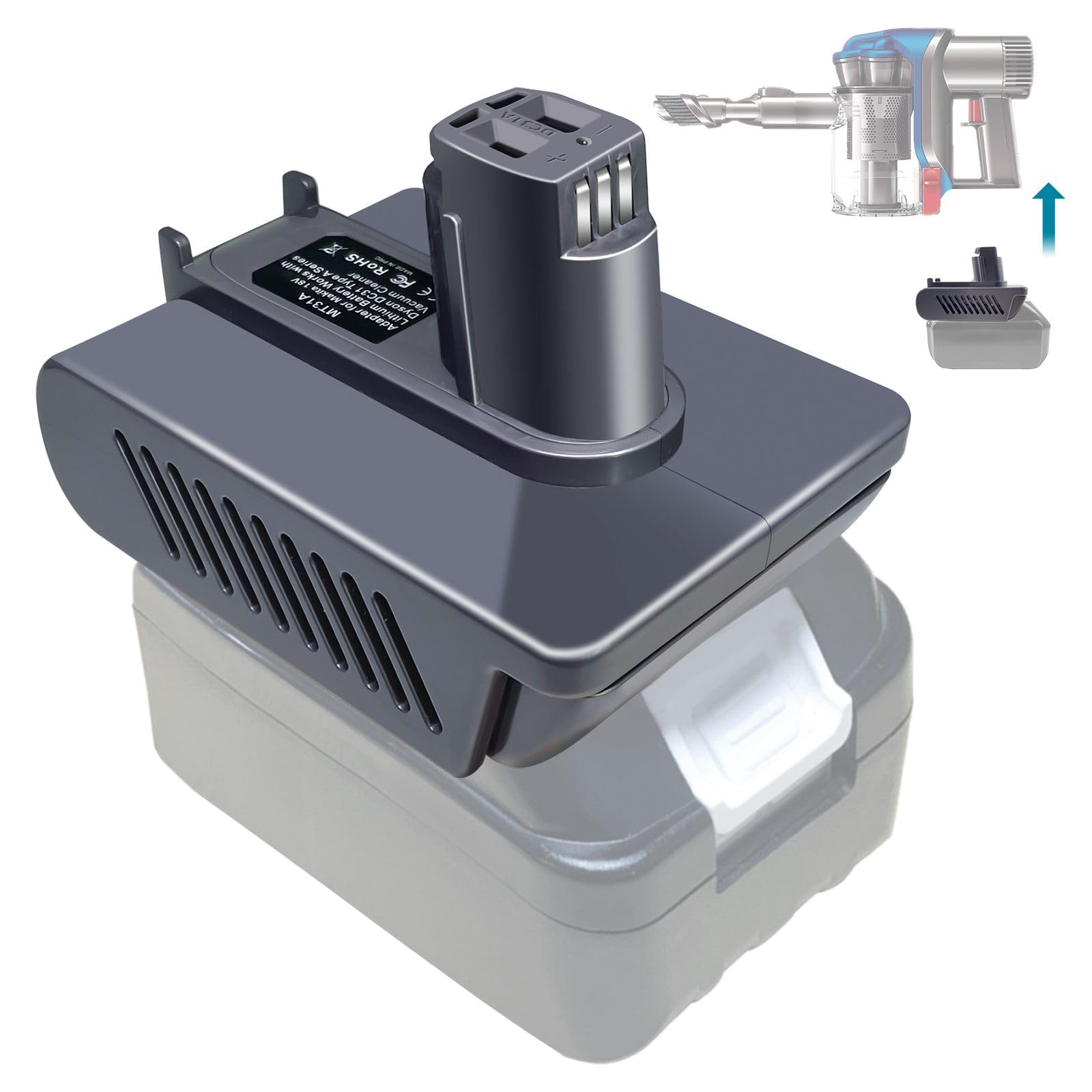
DC31 Battery Adapter for Dyson Type A DC35 DC34 DC45 917083-01 DC44 (Not Fit Type B, DC44 MK2) Anima
- High-quality product
- Customer favorite
- Best value option
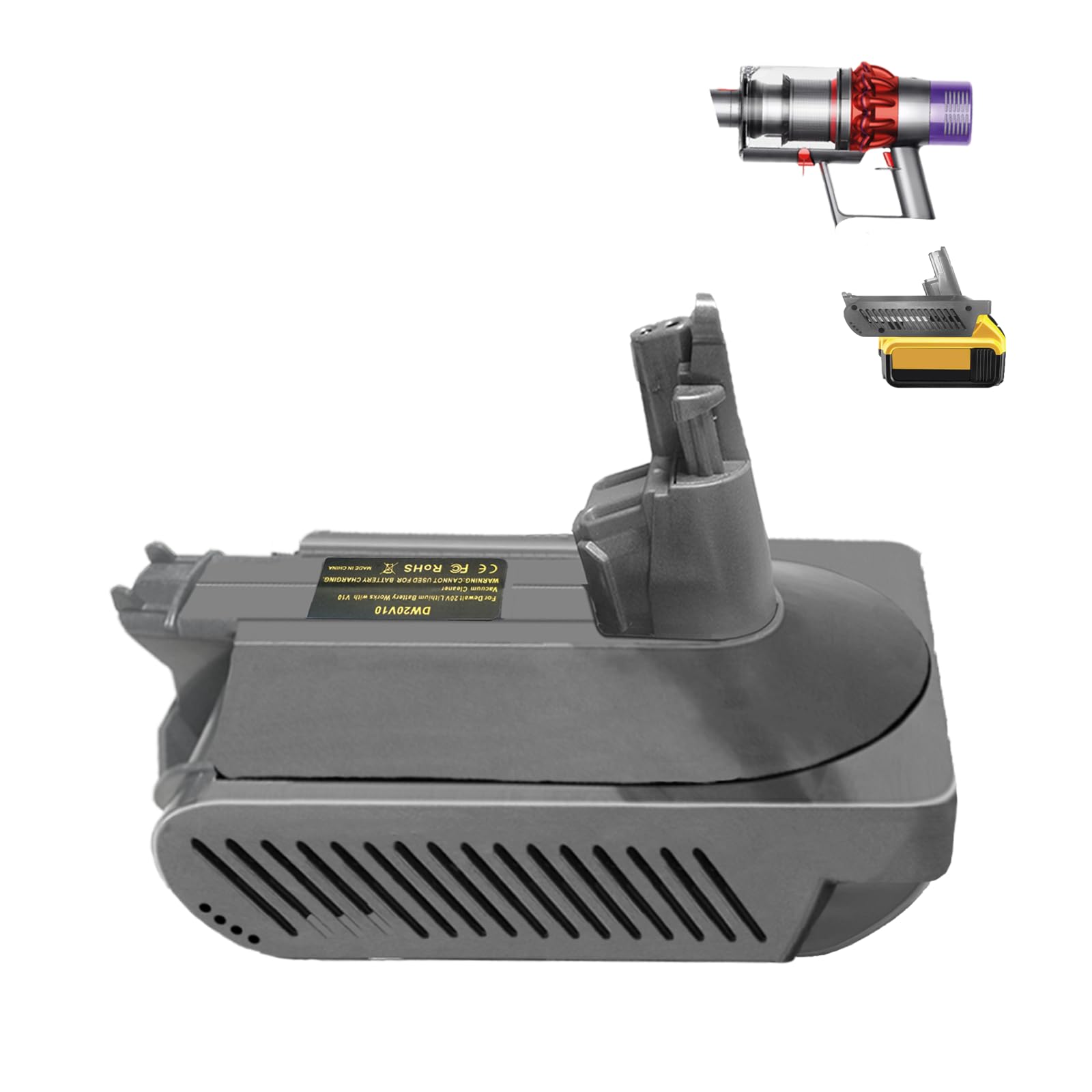
V10 Battery Adapter for Dewalt for Dyson V10 Replacement 25.2V Original Battery,for Dyson V10 Animal
- High-quality product
- Customer favorite
- Best value option
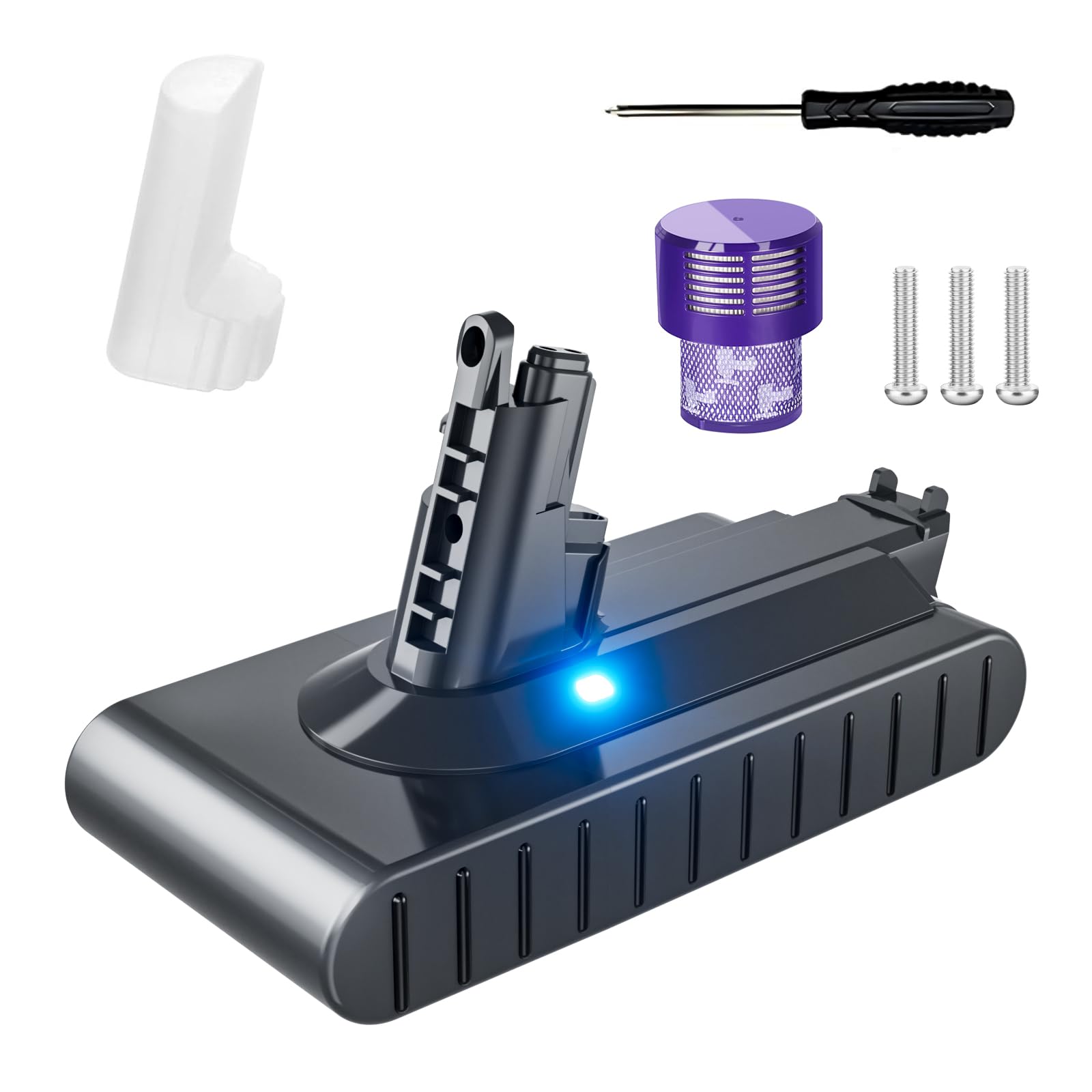
Upgraded 7000mAh V11 SV14 Battery for Dyson V11 25.2V Li-ion Battery Compatible for V11 Animal/Absol
- High-quality product
- Customer favorite
- Best value option
Expert Hacks & Maintenance: Extending the Life of Your New Battery
Once you have absorbed the dyson battery replacement price, your primary goal should be to ensure you don't have to pay it again for at least four years. As a top-tier authority on these machines, I recommend the following advanced maintenance protocols:
- The 20-80 Rule: Lithium batteries are happiest between 20% and 80% charge. While Dyson’s docking stations are designed to stay plugged in, if you are going on vacation for more than a week, unplug the dock. Storing a battery at 100% in a hot room is the fastest way to induce chemical degradation.
- Thermal Management: Never use "Boost" mode for your entire house. Boost mode is intended for 30-second bursts on stubborn rugs. If you use it for 10 minutes straight, the internal temperature of the cells can exceed 60°C (140°F), causing permanent capacity loss.
- The "Cool Down" Period: After a heavy cleaning session, the battery will be warm. Do not immediately snap it back into the charger. Wait 15 minutes for the cells to stabilize. Most modern Dysons have a thermal lockout that prevents charging while hot, but manual cooling is always safer.
- Filter Hygiene: This is the most overlooked "hack." A dirty, clogged HEPA filter forces the motor to work harder to maintain suction. This increases the current draw from the battery, generating more heat. Wash your filters monthly—no exceptions.
- Storage Environment: Avoid storing your Dyson in uninsulated garages or laundry rooms that get excessively hot or cold. Extreme temperatures significantly shorten the lifespan of the electrolyte solution within the cells.
Mega FAQ: Everything You Need to Know About Dyson Battery Costs
1. How long does a Dyson cordless battery typically last?
In a standard household environment with mixed mode usage, expect 3 to 5 years. If used exclusively on "Max/Boost" mode, this can drop to 18 months.
2. Is it worth replacing the battery on an old V6 or V7?
Yes, but only with a third-party battery. Spending $95 on an OEM battery for a V6 is poor math, but spending $35 on an aftermarket battery can give that machine another 3 years of life as a dedicated "car vacuum" or "upstairs unit."
3. Why is my Dyson flashing a red light?
A flashing red light (usually more than 12 times) indicates a fundamental hardware failure within the battery pack. It is the BMS telling you the battery is no longer safe to charge or discharge. It must be replaced.
4. Can I leave my Dyson on the charger all the time?
Yes. Dyson’s official stance is that the charger is "smart" and will cease drawing current once 100% is reached. However, for long-term cell health, periodic unplugging doesn't hurt.
5. Does the Dyson warranty cover battery replacement?
Yes, the standard 2-year warranty covers the battery. If your runtime has significantly diminished within 24 months, Dyson will usually ship you a replacement at no cost.
6. Are "High Capacity" (6000mAh) aftermarket batteries safe?
Be cautious. Some third-party sellers inflate their mAh ratings. A legitimate high-capacity battery is slightly heavier than the original. Look for reviews that specifically mention "runtime tests."
7. How do I know if I have a "Click-in" or "Screw-in" battery?
Look at the base of the handle where it meets the battery. If there is a large red button you can press to slide the battery out, it’s a click-in. If you see small Phillips-head screws, it’s a screw-in.
8. Will using a third-party battery void my vacuum's warranty?
Technically, yes, if the third-party battery causes damage to the motor. However, if your machine is already out of its 2-year warranty, there is no warranty left to void.
9. Why is the Gen5outsize battery so expensive?
The Gen5 uses a higher voltage system and larger cells to support the increased suction power. The complexity of its BMS is also significantly higher than the V8 or V10.
10. Can I "reset" a Dyson battery?
No. Once the BMS triggers a red-light failure, it is a permanent software lock for safety. There are no "button combinations" that can reset a failed lithium pack.
11. Are the power tool adapters safe for the motor?
Generally, yes. However, power tool batteries (like DeWalt) often have a higher discharge rate. The main risk is running the battery too low, as the Dyson might not communicate the "low voltage cutoff" to the tool battery correctly.
12. Where is the best place to buy a replacement?
For OEM, buy directly from Dyson.com to ensure you get a fresh batch. For aftermarket, Amazon remains the leader due to the easy return policy if the battery arrives DOA (Dead on Arrival).
Closing Thoughts: The Verdict on Dyson Battery Replacement
In 2025, the dyson cordless battery replacement cost is a manageable hurdle rather than a reason to discard a premium machine. The market has matured to the point where owners have genuine choices. If you value the peace of mind and the precision of the remaining-minutes display, the $130–$150 investment in an official Dyson pack for your V11 or V15 is logically sound—it protects a $700 investment.
However, for the millions of users with V7 and V8 models, the aftermarket and adapter markets have turned these vacuums into "immortal" tools. By opting for a high-quality $50 replacement or a $30 adapter, you are participating in a more sustainable, circular economy. The key is to remain vigilant: avoid the cheapest "no-name" cells on auction sites, maintain your filters, and respect the thermal limits of "Boost" mode. A Dyson is a marvel of airflow engineering, but its heart is a chemical engine—treat that heart with care, and your machine will serve you well into the next decade.