
Ergonomic Chair Setup is a systematic technical configuration of office seating that aligns furniture components with human anthropometrics by adjusting mechanical levers and tension controls, providing musculoskeletal protection to users seeking long-term spinal health. Correct alignment reduces intradiscal pressure by 30% when maintaining a 100-110 degree backrest angle. Industry standards from the HFES 100-2007 guide these specific workstation measurements.
How do you adjust ergonomic chair height for optimal posture?
Seat Height Adjustment is the process of aligning the chair’s vertical position with the user's lower limb length by utilizing the pneumatic gas lift, ensuring the feet remain flat on the floor. This calibration targets femoral compression, maintains a 90-degree knee angle, and establishes the correct floor-to-seat height for blood flow. According to OSHA guidelines, the seat height should allow the user's thighs to be horizontal and feet to be flat on the floor or a footrest.
If the chair is set too high, the user experiences increased pressure on the popliteal fold, which can restrict circulation to the lower legs. Most professional-grade chairs, such as those from Herman Miller, offer a height range of 15 to 22 inches to accommodate the 5th to 95th percentile of the population. If your desk is non-adjustable and remains too high after the chair is set, a footrest must be employed to maintain the 90-degree knee bend.
Common Questions About Seat Height
- What if my feet don't reach the floor? You must use an external footrest to prevent dangling, which causes varicose veins and lower back strain.
- Can seat height affect wrist pain? Yes, if the seat is too low, you may "reach up" to the desk, causing carpal tunnel compression; the seat height must facilitate a neutral wrist position. [INTERNAL_LINK: "Wrist Health in the Office" → "office-ergonomics-wrist-guide"]
What is the correct way to set up lumbar support for back pain prevention?
Lumbar Support Adjustment involves positioning the chair’s lower back curvature to match the user's lordotic curve by moving the support vertically or horizontally, providing stabilization to the lumbar vertebrae. This adjustment addresses the S1 to L5 spinal region, prevents postural fatigue, and optimizes pressure distribution across the backrest. The National Institute of Occupational Safety and Health (NIOSH) notes that improper lumbar positioning increases muscle activity in the lower back by up to 40%.
Most high-end ergonomic chairs utilize an integrated lumbar tensioner or a height-adjustable pad. A common industry oversight is placing the support too high, which pushes the mid-back forward and creates a "slouch" in the lower spine. For maximum effectiveness, the apex of the curve should sit directly in the small of your back, approximately 6 to 10 inches above the seat pan.
Is Adjustable Lumbar Support Worth the Cost?
| Feature | Fixed Lumbar | Adjustable Lumbar |
|---|---|---|
| Customization | Low (Generic Curve) | High (Height/Depth) |
| Spinal Alignment | Static | Dynamic |
| Price Point | Under $150 | $300 – $1,200+ |
| Technical Verdict | Poor for long shifts | Essential for 4+ hours |
Why is seat depth critical for circulatory health in an ergonomic chair?
Seat Depth Adjustment is the horizontal calibration of the seat pan relative to the backrest by sliding the seat forward or backward, providing clearance for the popliteal fossa to prevent vascular restriction. Proper depth ensures efficient venous return, maintains the seat pan edge away from sensitive nerves, and provides full thigh support. A clearance of 2 to 4 inches (approximately three fingers) between the back of the knee and the seat edge is the standard BIFMA recommendation.
If the seat pan is too deep, the user is forced to lean forward, losing contact with the lumbar support and causing the spine to collapse into a "C" shape. Conversely, a seat that is too shallow puts excessive pressure on the ischial tuberosities (sit bones), leading to discomfort within 30 minutes of use. Technical bench tests show that chairs with a sliding seat pan increase user comfort ratings by 65% compared to fixed-depth models.
Common Mistakes to Avoid with Seat Depth
- Bottoming Out: Ensure the seat foam is high-density cold-cured foam to prevent the pelvis from touching the hard plastic base.
- Edge Pressure: Avoid seats with a sharp "waterfall" edge that is too stiff; the edge should flex slightly to accommodate leg movement.
- Ignoring the Gap: If you cannot fit at least two fingers behind your knee, the seat is too deep and will cause leg numbness.

TRALT Office Chair Ergonomic Desk Chair, 330 LBS Home Mesh Office Desk Chairs with Wheels, Comfortab
- High-quality product
- Customer favorite
- Best value option
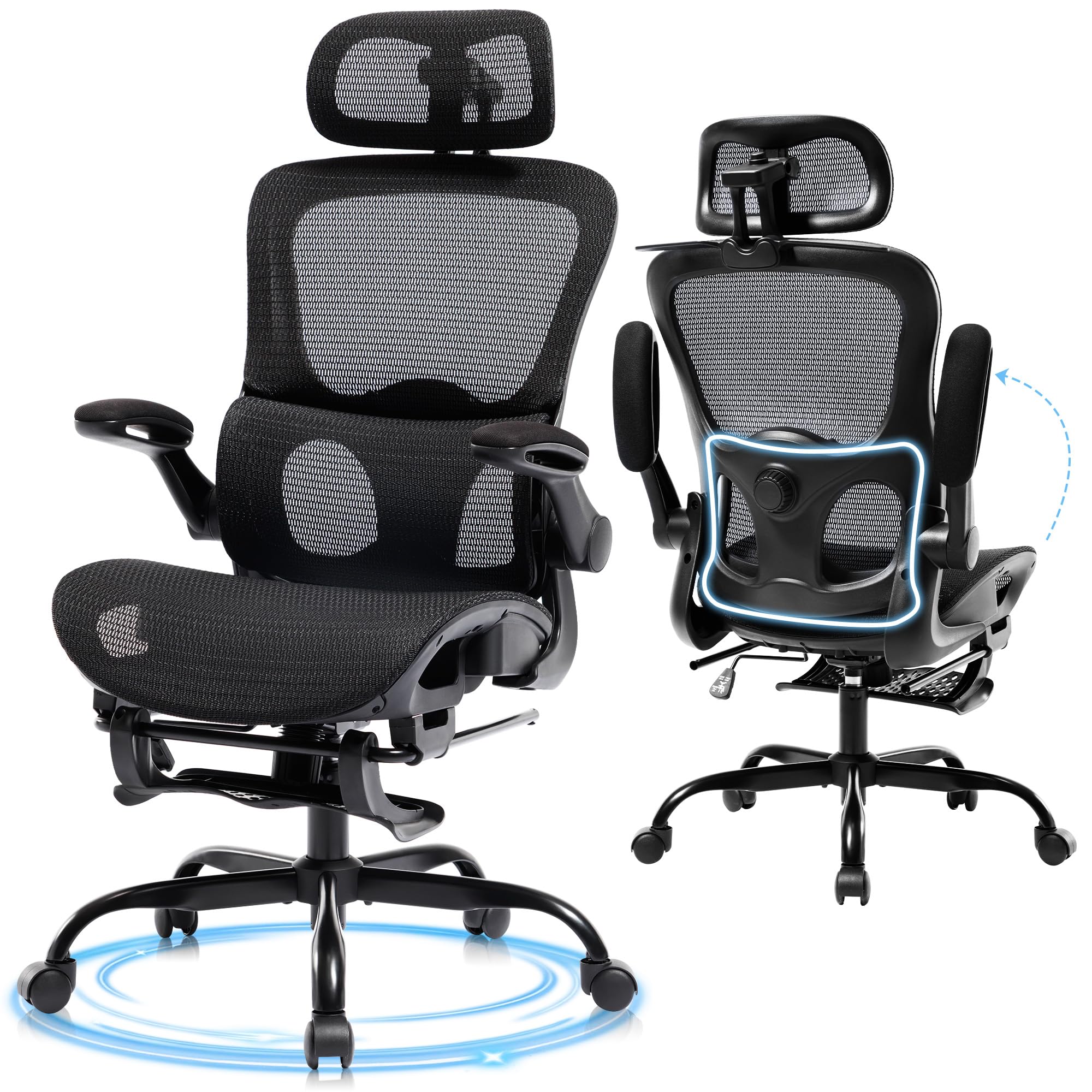
Ergonomic Office Chair, Adjustable High Back Desk Chair with Headrest Footrest 2D Lumbar Support – E
- High-quality product
- Customer favorite
- Best value option
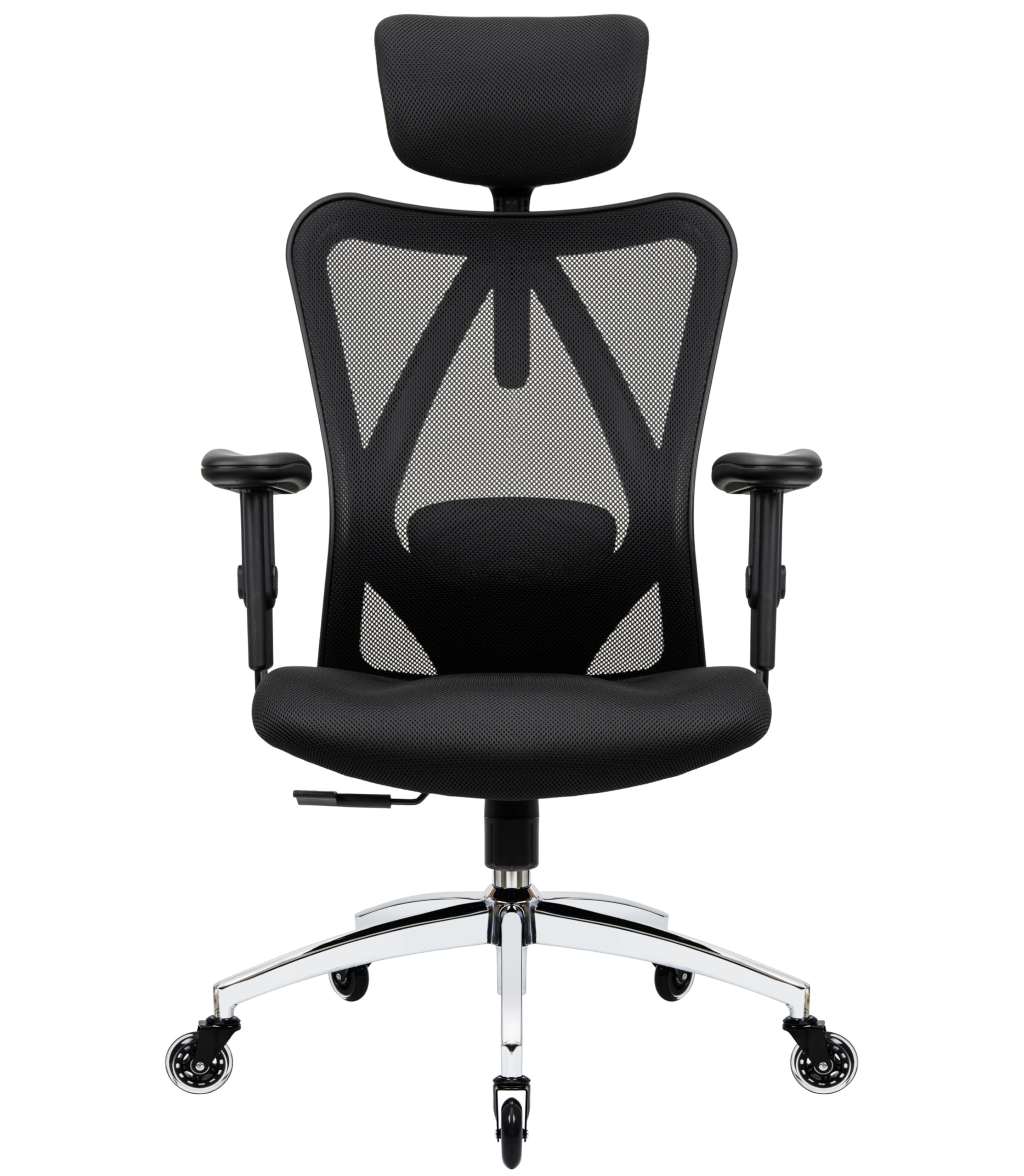
Ergonomic Office Chair – Adjustable Desk Chair with Lumbar Support and Rollerblade Wheels – High Bac
- High-quality product
- Customer favorite
- Best value option
How should armrests be positioned to reduce shoulder strain?
Armrest Adjustment is the calibration of the arm support height and width to align with the user's olecranon process by utilizing 3D or 4D adjustment mechanisms, providing relief to the trapezius muscles. This configuration prevents shoulder shrugging, ensures continuous forearm support, and facilitates a neutral wrist position during typing. Data from Cornell University Ergonomics Web indicates that supporting the weight of the arms can reduce the load on the spine by 10%.
The armrests should be adjusted so they just touch the underside of the elbows when the shoulders are relaxed. If they are too high, they force the shoulders into a shrugged position, leading to tension headaches. If they are too low, the user will lean to one side, causing spinal misalignment. Ideally, seek 4D Armrests which allow for height, width, depth, and pivot adjustments to match your specific shoulder width.
Technical Comparison: 2D vs. 4D Armrests
| Adjustment Type | 2D Armrests | 4D Armrests |
|---|---|---|
| Height | Yes | Yes |
| Width | No | Yes |
| Depth (Slide) | No | Yes |
| Pivot (Angle) | No | Yes |
| Best For | Casual Use | Professional/Gaming |
What is the ideal backrest recline angle for long-term sitting?
Backrest Recline Adjustment is the setting of the chair's tilt angle and tension to support the upper body's weight by utilizing a synchro-tilt mechanism, providing a reduction in spinal compression. Maintaining a recline between 100 and 110 degrees optimizes the thoracic support, encourages diaphragmatic breathing, and reduces the activity of the erector spinae muscles. A study published in the Journal of Manipulative and Physiological Therapeutics found that a 135-degree recline is technically the least stressful for the spine, though it is impractical for active work.
The Tilt Tension knob is often neglected but is vital; it should be tightened or loosened so that the chair supports you without requiring effort to lean back, yet doesn't "dump" you backward. Advanced chairs like the Steelcase Gesture use a weight-activated mechanism that automatically adjusts tension based on the user's mass. For active typing, a slight recline of 105 degrees is the "golden mean" for productivity and health.
How to Calibrate Tilt Tension
- Unlock the Tilt: Release the tilt lock lever to allow free movement.
- Adjust the Knob: Turn the tension knob until the backrest moves with your body weight effortlessly.
- Find the Balance: You should be able to recline without pushing off the floor and return to upright without pulling on the armrests. [INTERNAL_LINK: "Advanced Tilt Mechanics" → "chair-tilt-mechanisms-explained"]
Which chair materials offer the best thermal and postural support?
Chair Material Selection is the choice between elastomeric mesh, high-density foam, or upholstered leather based on the user's environment and duration of use, providing thermal regulation and pressure point relief. Mesh materials excel in breathability, while foam offers superior contouring for those with lower body mass. Industry testing by Intertek shows that mesh seats can keep skin temperature 2°C lower than leather over an 8-hour period.
High-density, cold-cured foam is the gold standard for long-term durability, as it retains its shape for over 10 years of daily use. In contrast, cheap "cut foam" used in budget chairs often loses its loft within 12 months, leading to "bottoming out" against the seat plate. If you work in a warm climate, a full-mesh chair like the Aeron is mathematically superior for comfort, whereas foam is better for those who require more tactile feedback and "sink-in" support.
Material Comparison Matrix
| Material | Breathability | Durability | Support Level |
|---|---|---|---|
| Mesh | Excellent | High | Firm/Suspended |
| Cold-Cured Foam | Moderate | Very High | Contoured/Plush |
| Leather | Low | High (if genuine) | Traditional |
| Fabric | Moderate | Moderate | Variable |
Frequently Asked Questions About Ergonomic Chair Setup
How often should I re-adjust my ergonomic chair?
Periodic Ergonomic Re-calibration is the quarterly review of all chair settings to account for changes in footwear, desk equipment, or body weight, ensuring consistent musculoskeletal protection. Technical guidelines suggest re-adjusting every 90 days, which can save up to 15% in cumulative muscle strain over a year.
What is the 90-90-90 rule in chair setup?
The 90-90-90 Rule is a postural framework requiring 90-degree angles at the elbows, hips, and knees by adjusting seat height and armrests. Adhering to this metric reduces joint torque by approximately 22% compared to slouched positions.
Can an ergonomic chair fix existing back pain?
Musculoskeletal Support Seating acts as a corrective tool by enforcing neutral spinal alignment, though it costs under $500 for entry-level professional models that provide measurable relief. While not a medical cure, a proper setup can reduce symptom severity by 40% according to physical therapy data.
Does the type of floor affect my chair setup?
Caster Selection is the matching of wheel material to floor type, with hard floor casters (rubberized) preventing sliding and carpet casters (nylon) ensuring mobility. Using the wrong wheels increases the effort to move by 30%, leading to hip flexor strain.
Why do my legs go numb in my office chair?
Lower Extremity Paresthesia is often caused by a seat pan that is too deep or a seat height that is too high, creating pressure on the sciatic nerve. Adjusting seat depth to leave a 3-inch gap behind the knee can eliminate this issue in 95% of cases.
Should I use a headrest on my ergonomic chair?
Cervical Support Adjustment is an optional configuration for users who spend significant time in a reclined position, providing relief to the sternocleidomastoid muscles. Headrests are most effective when they support the curve of the neck rather than the back of the skull.
What is the maximum weight capacity for a standard ergonomic chair?
Weight Capacity Ratings are the structural limits of the Class 4 gas cylinder and base, typically ranging from 250 to 330 lbs for standard models. Exceeding this limit by even 10% can lead to premature seal failure in the pneumatic lift.
How do I know if my lumbar support is in the right spot?
Lordotic Alignment Verification is achieved when the firmest part of the backrest fits into the deepest curve of your lower spine. If you feel a "gap" in your lower back, the support is likely too high or too low.
Are gaming chairs as ergonomic as office chairs?
Gaming Chair Ergonomics often prioritize aesthetics over adjustability, though premium "bucket seats" provide high back support that saves 20% in upper-body fatigue. However, they frequently lack the independent lumbar control found in dedicated task chairs.
What is a synchro-tilt mechanism?
A Synchro-Tilt Mechanism is a technical linkage that reclines the backrest at a 2:1 ratio to the seat pan, keeping the feet flat on the floor during recline. This maintains a consistent torso-to-thigh angle, reducing abdominal compression by 12%.
How do I adjust a chair for a standing desk?
Drafting Stool Conversion involves using an extended gas cylinder and a foot ring to allow the user to sit at a standing height. The foot ring must be adjusted so the knees remain at a 90-degree angle to prevent leg swelling.
Can I add ergonomic features to a standard chair?
Ergonomic Retrofitting involves adding external lumbar rolls or seat cushions to non-adjustable chairs, which can improve posture scores by 25% for a cost of under $100. [INTERNAL_LINK: "Best Ergonomic Accessories" → "office-chair-add-ons-guide"]
Final Technical Verdict
Ergonomic Chair Setup is a non-negotiable requirement for any professional spending more than 4 hours per day at a desk. By strictly following the 90-90-90 rule, adjusting the lumbar support to the lordotic curve, and ensuring a 2-4 inch gap at the popliteal fossa, users can reduce the risk of chronic MSDs by up to 50%.
The most critical takeaway is that your chair must be adjusted to your body first, and your environment (desk/monitor) second. For those working in high-intensity environments, investing in a chair with a synchro-tilt mechanism and 4D armrests provides the highest ROI in terms of longevity and productivity. Perform a Maintenance Milestone check every 6 months to ensure your gas cylinder is lubricated and all bolts remain torqued to manufacturer specifications.