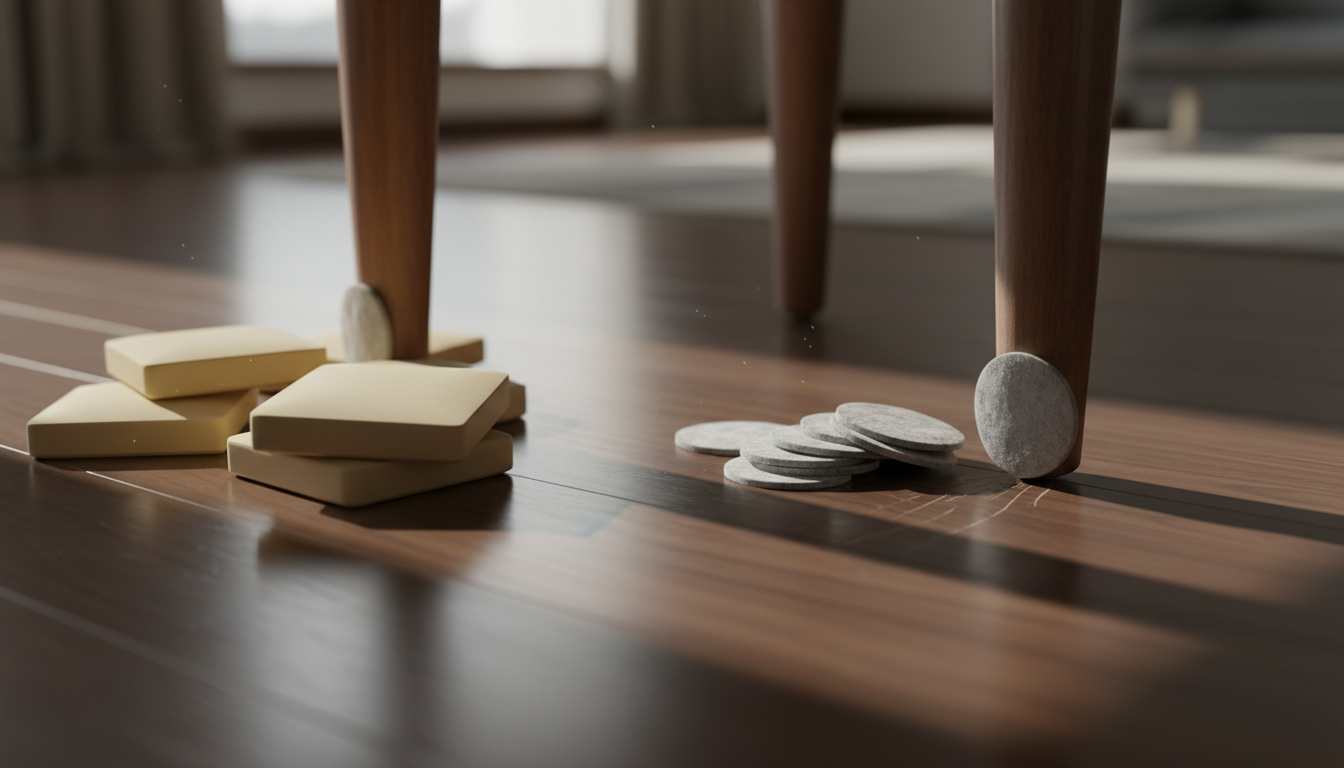
The Silent Surface War: Why Floor Protection is Non-Negotiable
When you invest thousands of dollars into premium white oak hardwood, luxury vinyl plank (LVP), or polished marble, you aren't just buying a floor; you are buying an aesthetic foundation for your life. Yet, most homeowners treat the interface between their heavy furniture and these delicate surfaces as an afterthought. This is a critical error. The debate of furniture pads vs felt pads isn't just a matter of preference—it is a matter of structural preservation. In the world of interior maintenance, the "best furniture floor protectors" act as the primary defense against the inevitable degradation caused by kinetic energy and static weight.
The moment you slide a dining chair back to sit down, a complex physical interaction occurs. If the chair leg is bare, you are applying hundreds of pounds of pressure per square inch onto a finish that is often only microns thick. Without an intermediary buffer, the friction generates heat and abrasive force, leading to "white scratching"—the crushing of the floor's protective topcoat. This is where the distinction between general furniture pads and specific felt pads becomes vital.
General "furniture pads" is a broad umbrella term encompassing everything from rigid plastic glides and rubber grippers to silicone sleeves and metal domes. "Felt pads," on the other hand, represent a specific sub-sector of this industry, utilizing compressed wool or synthetic fibers to create a soft, fibrous cushion. Choosing between them requires an understanding of your floor's chemistry and the way your furniture moves. For instance, a sofa that stays stationary for six months requires a completely different protection strategy than a kitchen stool that is moved thirty times a day.
In this mega guide, we will dismantle the myths surrounding floor protection. We will move beyond the superficial "soft vs. hard" argument and delve into the engineering of friction coefficients, adhesive shear strength, and the long-term impact of material off-gassing on floor finishes. Whether you are dealing with the "grab" of rubber or the "glide" of high-density felt, the goal remains the same: total surface integrity. If you have ever cringed at the sound of a chair dragging across a quiet room, you already know why this guide is the most important document for your home’s longevity.
The Critical Problem: Why Most Floor Protectors Fail
The primary reason floor protectors fail isn't usually the material itself; it’s the failure of the user to account for the "Sandpaper Effect." This is a phenomenon well-known to floor restoration experts. Even the best furniture floor protectors can become weapons of destruction if they are not maintained.
The "Critical Problem" lies in the accumulation of household detritus. Felt pads, by their very nature, are porous. As they glide across a floor, they act like a micro-vacuum, picking up dust, pet hair, and—most dangerously—fine grains of silica (sand). Once sand is embedded into a felt pad, that pad is no longer a protector; it has been transformed into a high-grit sandpaper block. Every subsequent movement of the chair grinds that silica into the hardwood's polyurethane or the LVP's wear layer. This is why many homeowners are shocked to find deep circular scratches under their chairs despite having felt pads installed.
Furthermore, there is the "Adhesive Failure Crisis." Most consumer-grade furniture pads rely on cheap, pressure-sensitive adhesives (PSA). Under the lateral stress of a heavy human sitting in a chair and shifting their weight, the adhesive undergoes "creep." The pad slowly slides off the center of the chair leg, leaving behind a sticky residue that attracts even more dirt. Eventually, the pad falls off entirely, and the bare wood or metal of the furniture leg makes direct, high-impact contact with the floor. If you aren't checking your pads every 90 days, you are essentially gambling with your floor's finish.
There is also the issue of chemical incompatibility. Some rubberized furniture pads contain plasticizers that can chemically react with certain floor finishes, particularly older oil-based varnishes or certain types of linoleum. This reaction, known as "plasticizer migration," can leave permanent yellow stains or "ghosting" marks that cannot be cleaned away—they must be sanded out. This is a critical reason why the furniture pads vs felt pads debate is so nuanced; rubber provides excellent grip for stationary items, but it can be a chemical hazard for specific finishes.
Finally, we must address weight distribution. A heavy mahogany sideboard exerts immense static pressure. A thin, low-density felt pad will eventually compress to the point of "bottoming out," where the fibers are so tightly packed they no longer provide a cushion. At this stage, the pad is as hard as the wood itself, transferring all vibration and impact directly into the floor. Understanding the density (measured in ounces per square yard) of your felt or the durometer (hardness) of your rubber pads is the only way to ensure the protection actually holds up under load.
Methodology: The Definitive Guide to Furniture Pads vs Felt Pads
To determine which works better, we must categorize your needs based on two factors: Floor Type and Mobility Requirement.
1. The Felt Pad: The King of Hardwood
Felt is the industry standard for hardwood, bamboo, and laminate. Its primary advantage is the "low-friction glide."
- Heavy-Duty Compressed Felt: Look for pads that are at least 3mm to 5mm thick. High-density felt (often synthetic or a wool blend) resists flattening over time.
- Nail-on vs. Adhesive: For dining chairs that see heavy use, adhesive pads are often insufficient. Professional installers recommend nail-on or screw-in felt glides. These have a plastic or metal base that secures to the leg, with a thick felt layer permanently bonded to the bottom. This eliminates the "sliding pad" problem.
- Best Use Case: Anything that moves frequently. Chairs, barstools, and ottomans.
2. The Rubber/Non-Slip Pad: The Anchor
When comparing furniture pads vs felt pads, rubber is the antithesis of felt. While felt is designed to move, rubber is designed to stay.
- Grip Technology: Rubber pads (or textured foam) increase the coefficient of friction. This is essential for sectional sofas that tend to slide apart on slick floors or for heavy beds.
- The Hybrid Approach: Some of the best furniture floor protectors feature a "sandwich" design: a rubber core for grip against the furniture leg and a felt bottom for the floor, or vice versa.
- Best Use Case: Stationary furniture. Sofas, wardrobes, and heavy dining tables that shouldn't budge.
3. Plastic and PTFE (Teflon) Sliders: The Carpet Specialists
If you are moving furniture over carpet, felt is useless—it will catch on the fibers.
- Hard Plastic Glides: These allow heavy items to skim over carpet fibers without snagging or causing "rug burn."
- PTFE (Teflon): These are the ultimate in low-friction. They are often used for very heavy appliances or furniture that needs to be moved for cleaning. However, never use these on hardwood, as any grain of sand trapped under the hard plastic will cause a deep gouge.
4. Silicone Sleeves: The Modern Hybrid
A rising trend in the furniture pads vs felt pads discussion is the silicone chair leg cap. These are transparent sleeves that stretch over the chair leg, with a felt pad fused to the bottom.
- Pros: They don't rely on adhesive, so they never "slide off." They are also nearly invisible, preserving the aesthetic of the furniture.
- Cons: They can collect hair and dust inside the sleeve, and if the fit isn't perfect, they can look messy.
Summary Comparison Table
| Feature | Felt Pads | Rubber Pads | Silicone Caps |
|---|---|---|---|
| Primary Goal | Smooth Gliding | Preventing Movement | Secure Attachment |
| Best Floor | Hardwood, Laminate | Tile, LVP, Stone | Hardwood, Tile |
| Longevity | Medium (Needs replacement) | High | High |
| Aesthetics | Low (Can be bulky) | Low | High (Transparent) |
| Floor Safety | High (If kept clean) | High (Non-staining types) | High |
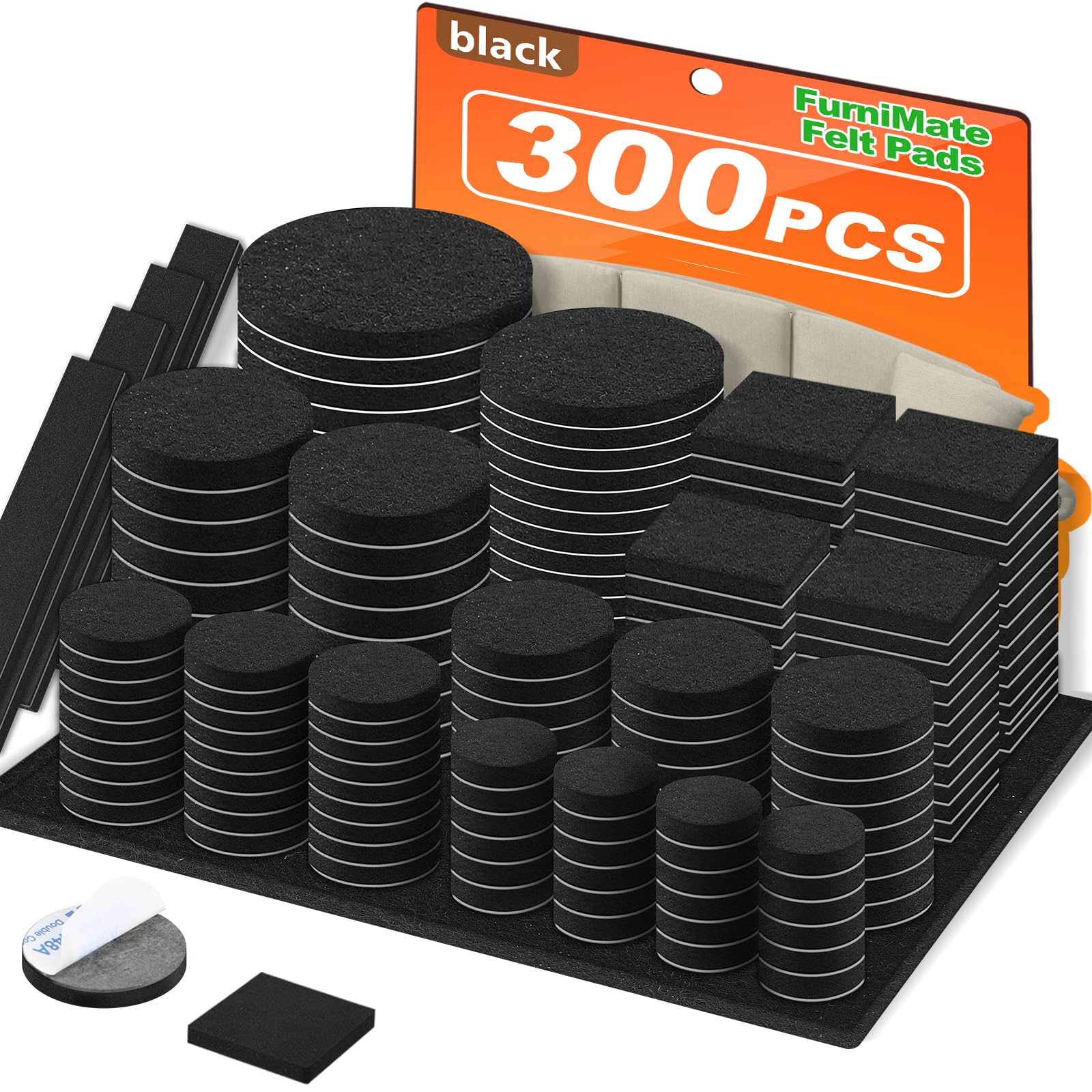
Felt Furniture Pads 300 Pieces, Furniture Pads for Hardwood Floors, Felt Pads for Chair Legs Furnitu
- High-quality product
- Customer favorite
- Best value option
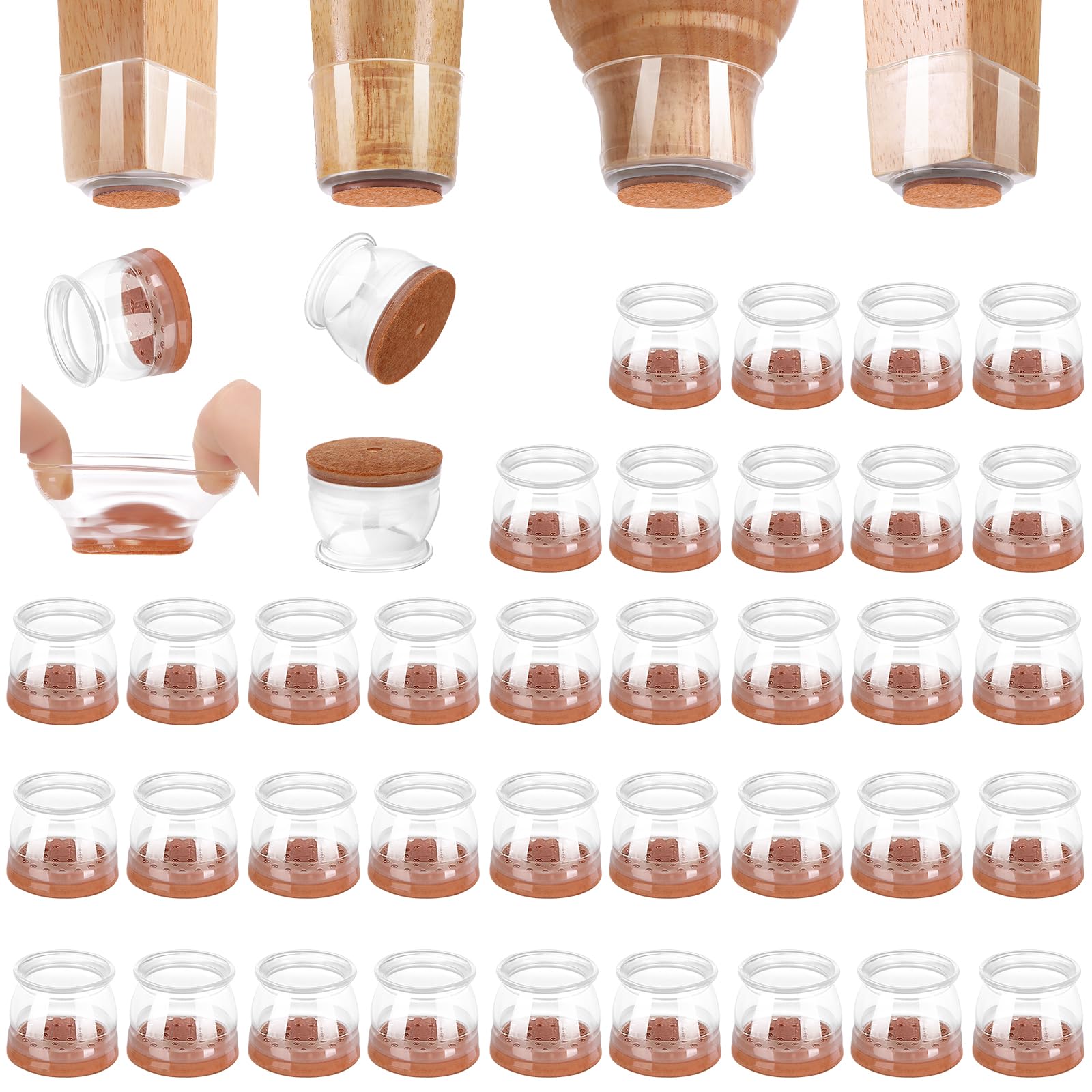
CHUNZEXI 36 Pack Chair Leg Floor Protectors for Hardwood Floors, Silicone Felt Covers Pads Caps, Pro
- High-quality product
- Customer favorite
- Best value option
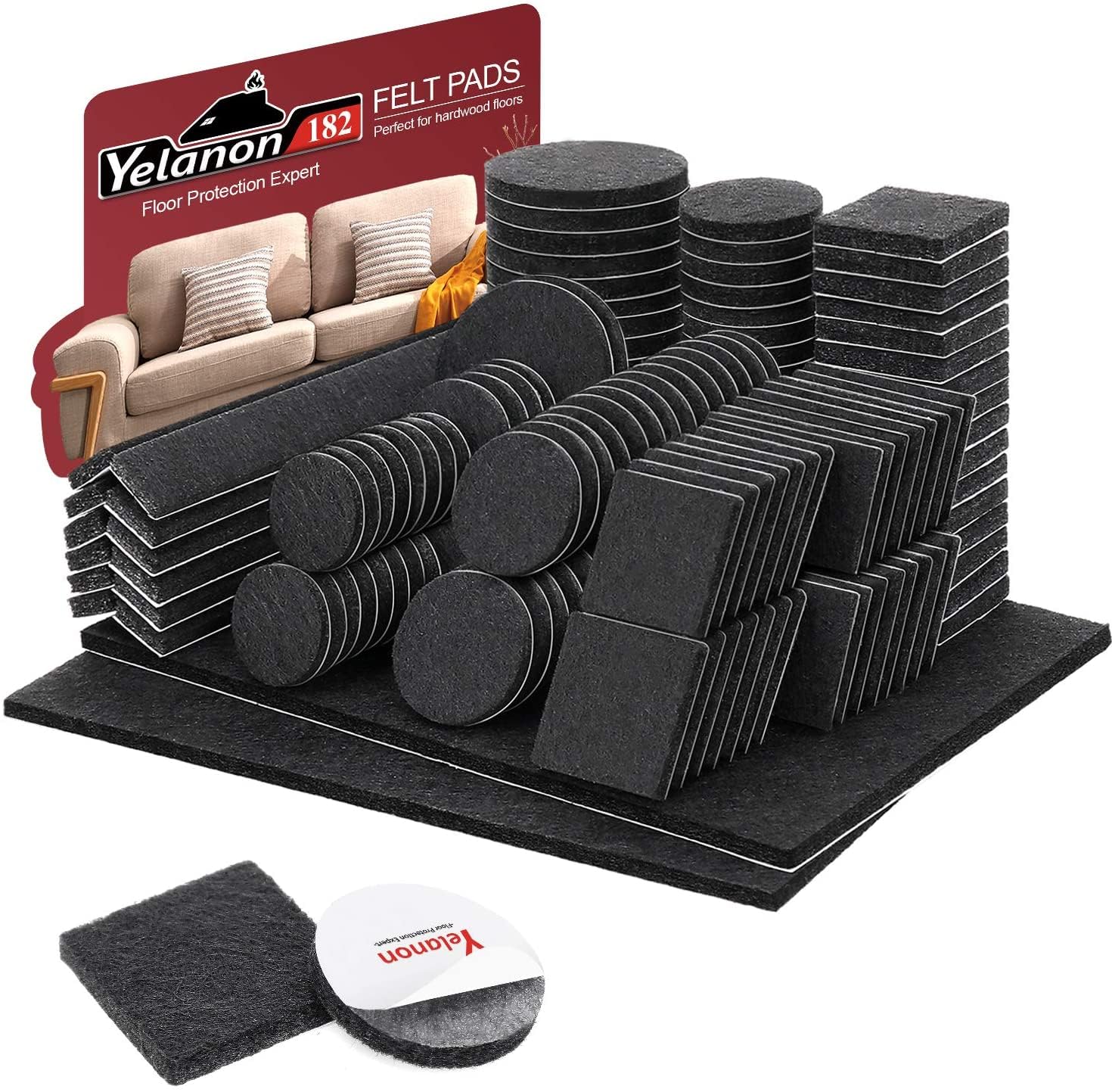
Yelanon Felt Furniture Pads -182 Pcs Premium Felt Pads for Chair Legs Furniture, Floor Protectors fo
- High-quality product
- Customer favorite
- Best value option
Expert Hacks & Maintenance for Floor Longevity
If you want to move from a novice to an expert in home maintenance, you need to treat your furniture floor protectors as a consumable item—like windshield wipers on a car. They require inspection and replacement.
The Prep is the Secret
Never apply an adhesive pad to a dirty furniture leg. The factory finish on chair legs often has a slight oily residue.
- Pro Hack: Use a cloth dampened with isopropyl alcohol to wipe the bottom of the furniture leg. Let it dry completely. This ensures a molecular bond between the adhesive and the wood.
- The Heat Treatment: After applying an adhesive felt pad, use a hairdryer to lightly warm the adhesive for 30 seconds, then apply heavy pressure. This "sets" the bond and significantly reduces the chance of the pad sliding off.
The "Sandpaper" Audit
Every time you vacuum your floors, take 60 seconds to flip one of your dining chairs. Run your thumb across the felt. Does it feel soft, or does it feel crunchy and hard? If it feels hard, it is saturated with dirt and is currently scratching your floor.
- Maintenance Hack: You can actually "refresh" felt pads once or twice by using a stiff wire brush to fluff the fibers and dislodge trapped grit. However, if they are compressed flat, replace them immediately.
Custom Sizing
Don't settle for "close enough" when it comes to size. If a pad is too small, the edge of the furniture leg can still strike the floor. If it's too large, it creates a "lip" that collects massive amounts of pet hair.
- Pro Hack: Buy large sheets of heavy-duty felt and use a sharp utility knife or a hollow punch set to cut pads that are exactly 1/16th of an inch smaller than the furniture leg. This provides maximum coverage while remaining invisible.
Mega FAQ: Everything You Need to Know About Floor Protection
1. Can I use felt pads on Luxury Vinyl Plank (LVP)?
Yes. While LVP is more durable than hardwood, the "best furniture floor protectors" for LVP are still high-density felt. Avoid rubber pads that contain plasticizers, as they can cause permanent yellowing of the vinyl.
2. How often should I replace my felt pads?
In a typical household, dining chair pads should be replaced every 6 to 12 months. For stationary items like beds, they can last years.
3. Are nail-on pads better than stick-on pads?
For chairs that move daily, yes. Nail-on pads cannot slide off. However, ensure the nail is driven straight; if it's crooked, the metal head could eventually touch the floor.
4. What is the best way to remove old adhesive residue?
Use a citrus-based adhesive remover (like Goo Gone) or a small amount of mineral spirits. Be careful not to damage the finish of the furniture leg itself.
5. Why do my felt pads keep falling off?
This is usually due to poor surface preparation (dust/oil on the leg) or high lateral stress. Switch to a silicone sleeve or a nail-on glide for better results.
6. Can I use felt pads on outdoor furniture?
No. Felt absorbs water, which will lead to rot in the furniture legs and a moldy mess. Use solid plastic or stainless steel glides for outdoors.
7. Do felt pads work on tile floors?
They do, but the grout lines act like "speed bumps" that can tear adhesive pads off. For tile, silicone caps or thicker nail-on felt are superior.
8. Are expensive wool felt pads worth it?
Yes. Synthetic (polyester) felt flattens much faster than wool-blend felt. Wool has natural resilience and "spring back."
9. Will rubber pads leave marks on my floor?
Cheap black rubber can leave "scuff marks." Always look for "non-marking" rubber or silicone grippers, which are usually clear, white, or grey.
10. Can I put furniture pads on top of an area rug?
There is no need. The rug itself is the protector. However, if the furniture is very heavy, you might use a "carpet cup" to distribute the weight and prevent deep divots in the rug pile.
11. What should I use for a heavy piano?
Pianos require specialized "caster cups." These are wide, deep dishes made of wood or heavy-duty plastic with a felt bottom. They are designed to handle the massive static load of a piano without cracking.
12. My chair legs are at an angle. What should I use?
Standard flat pads will wear unevenly on angled legs. Look for "swivel glides" or silicone sleeves that allow the felt base to sit flush with the floor regardless of the leg's angle.
Closing Thoughts: The Verdict on Furniture Pads vs Felt Pads
In the ultimate showdown of furniture pads vs felt pads, the winner is determined by the mission. If your mission is to move—to slide chairs, to pull out a desk, or to shift a coffee table—felt pads are the undisputed champion. They provide the necessary "slip" while offering a soft buffer that protects the delicate polyurethane layers of your flooring.
However, if your mission is to stay—to keep a heavy sectional from migrating across the room or to ensure a bed remains centered—rubber furniture pads or "grippers" are the essential choice.
The secret to a pristine floor isn't just buying the right product once; it is the commitment to maintenance. By choosing high-density materials, preparing the surfaces correctly, and performing regular "grit audits," you can ensure that your floors remain as beautiful as the day they were installed. Don't let a $5 set of cheap pads ruin a $10,000 floor. Invest in quality, and your floors will thank you for decades.