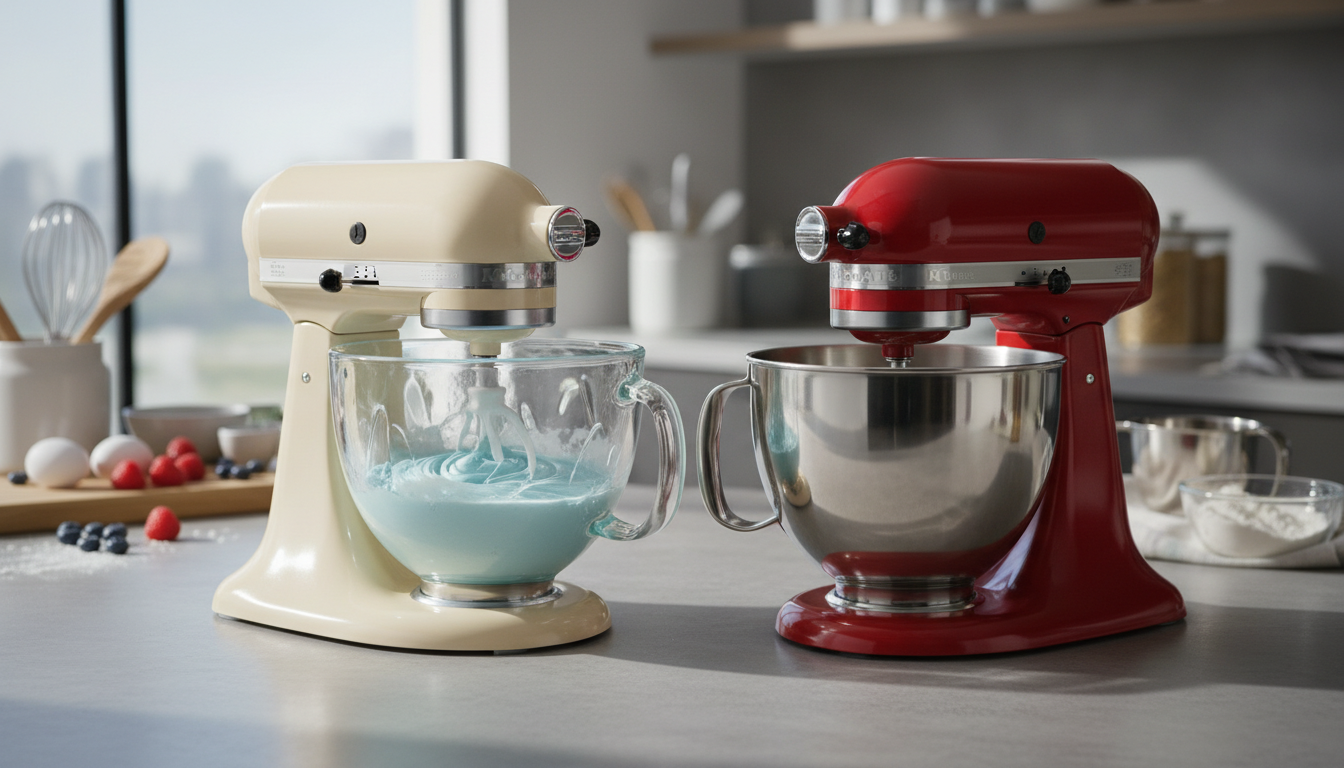
The Culinary Crossroads: Choosing Your KitchenAid Foundation
The KitchenAid Stand Mixer is not merely a countertop appliance; it is the crown jewel of the modern culinary workspace. For decades, it has stood as a silent witness to holiday feasts, experimental sourdough ventures, and the precise chemistry of French patisserie. However, even the most robust machines reach a point where the user must make a pivotal decision: the bowl replacement. Whether you are upgrading from a standard setup or replacing a damaged component, the debate between kitchenaid bowl glass vs stainless steel is one of the most significant choices you will make for your kitchen’s workflow.
The bowl is the theater where the "Planetary Action" occurs. It is the vessel that dictates how heat is transferred to your meringue, how easily you can monitor a delicate emulsion, and how much physical strain your wrists endure during a heavy baking session. Choosing between glass and stainless steel isn't just about aesthetics; it’s about aligning your hardware with your specific culinary style. Stainless steel offers the rugged, industrial reliability of a professional kitchen, while glass provides a transparent, calibrated environment that favors precision and visual monitoring.
Many home bakers find themselves at this crossroads when their original bowl begins to show signs of wear, or when they realize that a single bowl is simply not enough for complex recipes that require multiple stages of mixing. The "KitchenAid glass bowl benefits" are often touted by those who value visibility and microwave versatility, while the purists swear by the indestructible nature of high-grade steel. To make an informed decision, one must look beyond the surface level and understand the thermal dynamics, weight distribution, and long-term durability of each material. This guide serves as the definitive authority to help you navigate this choice, ensuring your KitchenAid remains the high-performing workhorse it was designed to be.
The Critical Problem: The "Bowl Bottleneck" and Compatibility Chaos
The most significant issue facing KitchenAid owners today is the "Bowl Bottleneck." This occurs when a baker’s ambition is throttled by the limitations of their mixing vessel. If you are using a stainless steel bowl for a recipe that requires precise visual cues—like ensuring no pockets of flour remain at the bottom of a sponge cake—you are working at a disadvantage. Conversely, if you are using a heavy glass bowl for a high-speed, high-vibration task like kneading a stiff bagel dough, you risk structural fatigue or even catastrophic failure if the bowl isn't seated perfectly.
Beyond performance, there is the "Compatibility Chaos." KitchenAid produces two primary styles of mixers: the Tilt-Head and the Bowl-Lift. A common and costly mistake is purchasing a replacement bowl that fits the volume (e.g., 5-quart) but ignores the mounting mechanism. A Tilt-Head bowl screws into a base plate; a Bowl-Lift bowl snaps into two side arms and a rear spring latch. Attempting to force a "universal" fit often results in damaged gears or a stripped base plate.
Furthermore, the "Dime Test" problem looms large. Every time you switch bowl materials, the clearance between the beater and the bowl changes. Stainless steel bowls are spun and polished, leading to slight variations in the bottom curvature compared to molded glass. If you don't recalibrate your mixer’s height after a replacement, you either leave a layer of unmixed ingredients at the bottom or, worse, you cause the beater to grind against the surface, shedding metal or glass particles into your food.
Thermal mass is another critical, often ignored problem. Stainless steel has low thermal mass but high conductivity; it gets cold fast but doesn't hold it. Glass has high thermal mass; it takes longer to chill but retains that temperature significantly longer. Using the wrong material for a temperature-sensitive task, like tempering chocolate or whipping cream in a hot kitchen, can lead to inconsistent results that frustrate even seasoned chefs. This guide addresses these technical frictions, providing a clear path through the marketing fluff to the engineering reality of your mixer.
Methodology: The Definitive Guide to KitchenAid Bowl Selection
To determine the winner in the kitchenaid bowl glass vs stainless debate, we must evaluate them across four primary pillars: Thermal Dynamics, Durability, Ergonomics, and Visibility.
1. Stainless Steel: The Industrial Standard
Stainless steel is the default for a reason. It is virtually indestructible. If you drop a stainless steel bowl, it might dent, but it won't shatter, allowing you to finish your recipe.
- Pros: It is lightweight, making it the superior choice for those with hand or wrist issues. It is also non-reactive and dishwasher safe. For tasks requiring a "cold bowl" (like whipping heavy cream), stainless steel can be chilled in the freezer in minutes.
- Cons: You cannot see through it. You must manually stop the mixer and scrape the bottom to ensure total incorporation. It is also not microwave-safe, meaning you must melt butter or chocolate in a separate container before adding it.
2. Glass: The Precision Instrument
The kitchenaid glass bowl benefits center around one thing: total visibility.
- Pros: Being able to see the "bottom of the well" is a game-changer for beginners and precision bakers alike. Most KitchenAid glass bowls feature molded-in measurement markings (liters/cups) and come with a lid, allowing the bowl to double as a proofing vessel or storage container. Most importantly, glass is microwave-safe, allowing for one-bowl transitions from melting to mixing.
- Cons: Weight and fragility. A 5-quart glass bowl is significantly heavier than its steel counterpart. It is also prone to chipping at the rim if hit with a heavy metal beater, and thermal shock (moving from a hot dishwasher to a cold fridge) can cause it to crack.
3. The Compatibility Checklist
Before purchasing, you must identify your model. Look at the silver band around your mixer:
- K45, KSM75, KSM150 (Artisan/Classic): These are Tilt-Head models. You need a bowl with a threaded base.
- Professional 600, 6000, 7-Quart: These are Bowl-Lift models. You need a bowl with side "ears" and a rear hook. Note that glass bowls for Bowl-Lift models are increasingly rare and often require a specific accessory kit to fit properly.
4. Aesthetics and Kitchen Vibe
While performance is king, the KitchenAid is a design icon. Stainless steel offers a professional, "chef’s kitchen" look. Glass, however, offers a more "homey," classic aesthetic that showcases the colors of your ingredients. If your mixer lives on the counter, consider which material complements your decor.
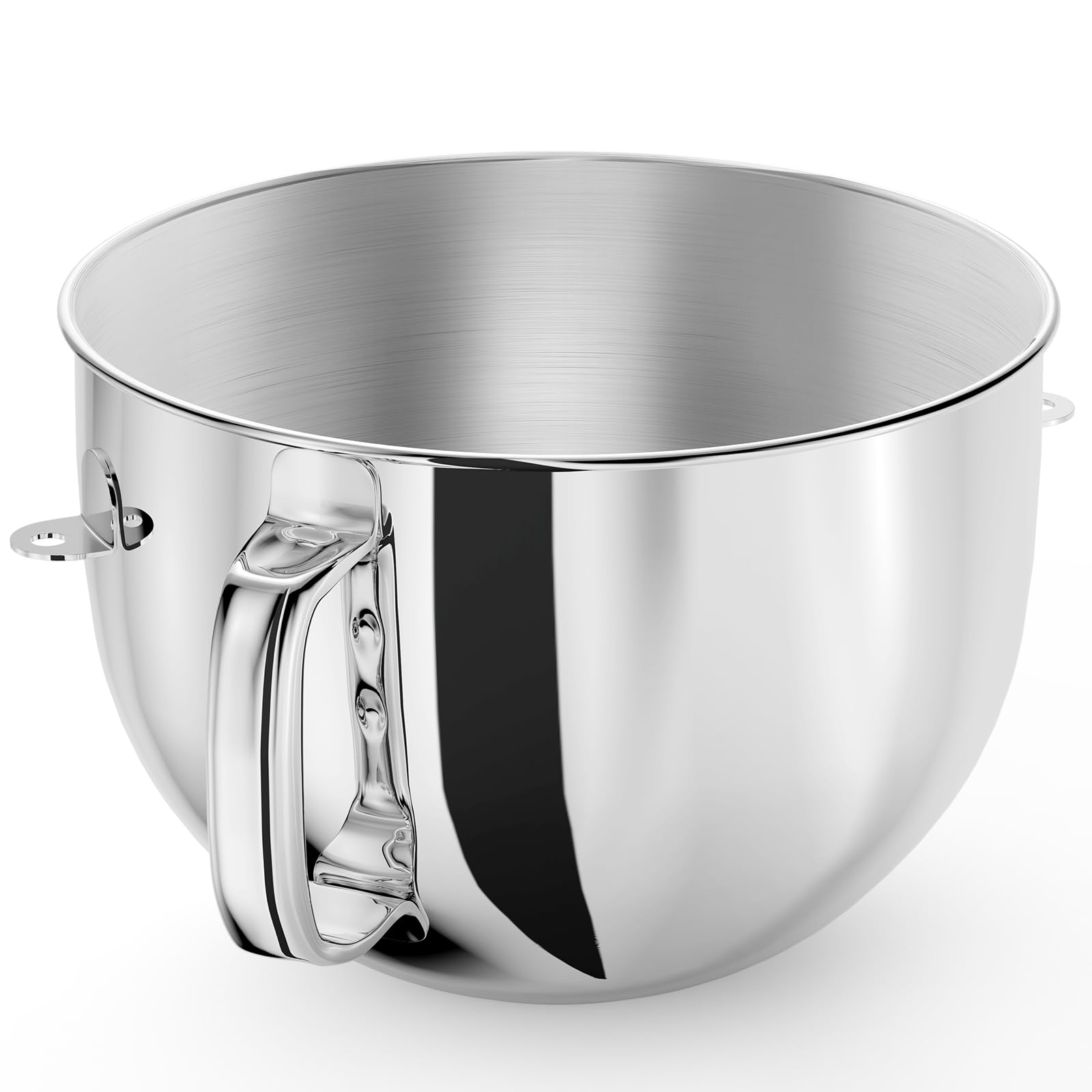
6QT Stainless Steel Mixer Bowl for Kitchenaid Stand Mixers, Kitchen Aid Mixing Bowl for 6QT Lift Mix
- High-quality product
- Customer favorite
- Best value option
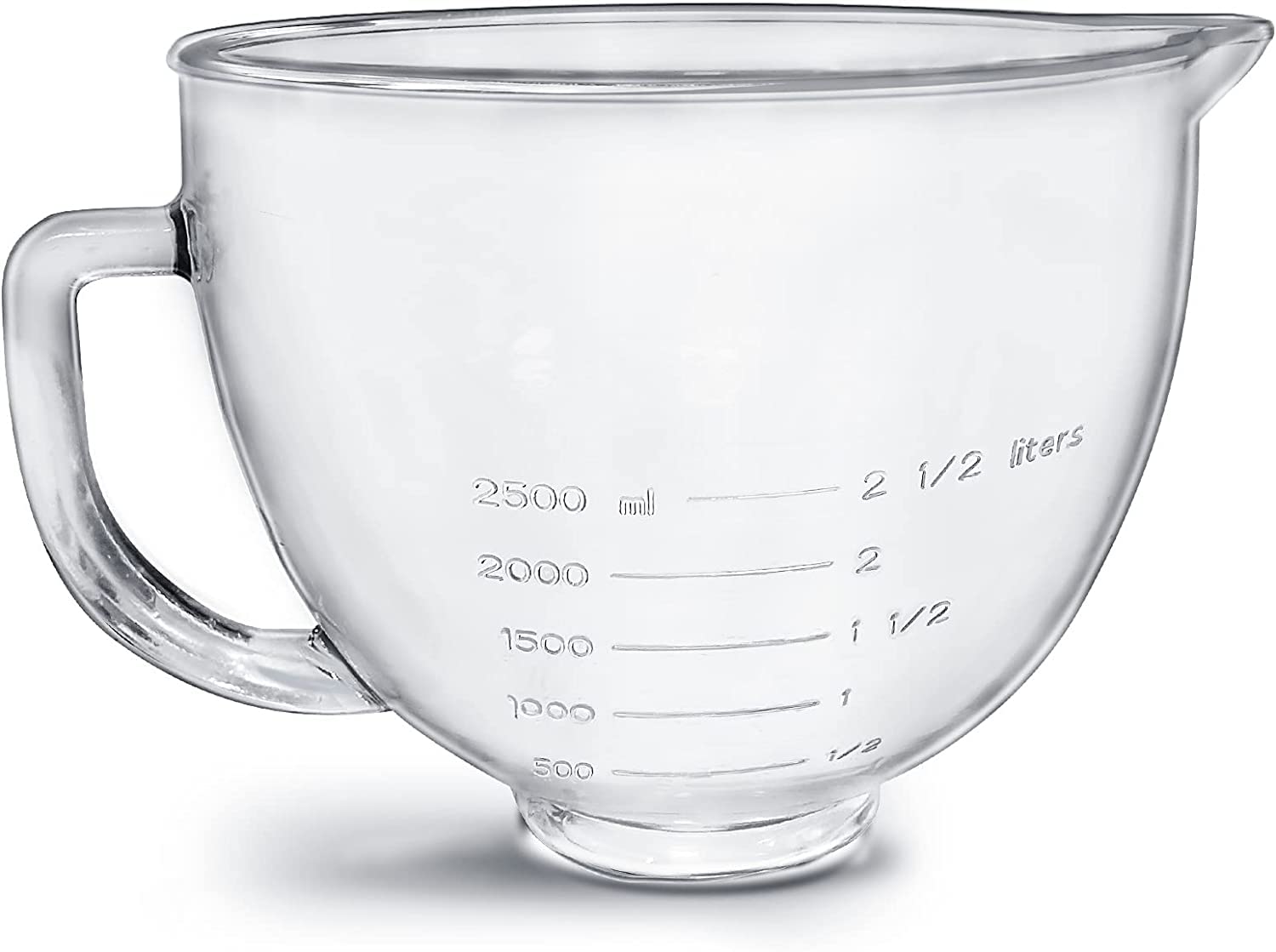
Tilt-Head Stand Mixer Glass Bowl, 5 QT,Compatible with Kitchenaid Artisan 5KSM125, 5KSM150, 5KSM175,
- High-quality product
- Customer favorite
- Best value option
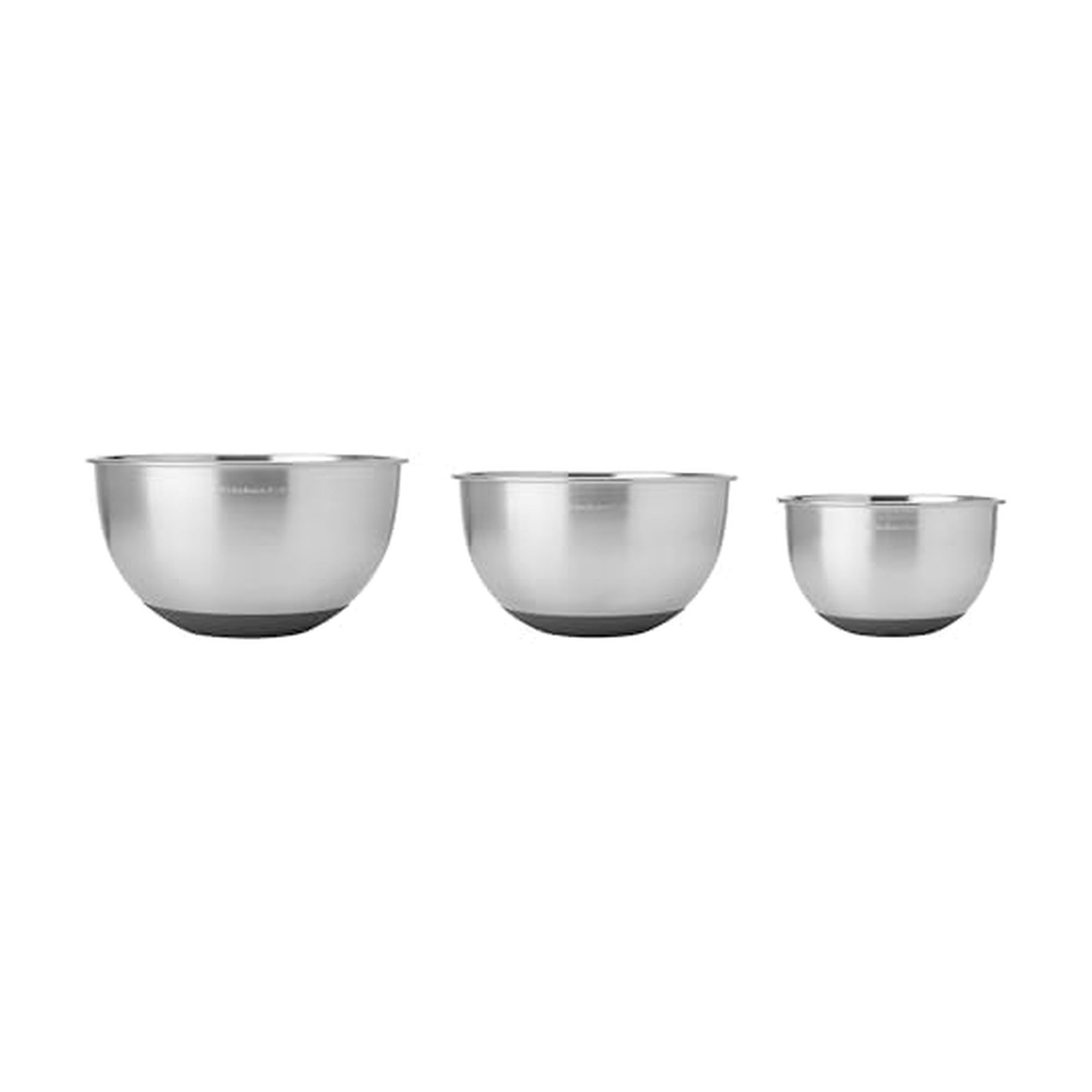
KitchenAid Stainless Steel Mixing Bowls, Set Of 3
- High-quality product
- Customer favorite
- Best value option
Expert Hacks & Maintenance: Pro-Level Longevity
To get the most out of your bowl replacement, whether you choose glass or stainless, you must master these maintenance protocols:
The "Dime Test" Recalibration
Whenever you swap a bowl, place a dime in the bottom. Attach the flat beater and turn the mixer to Speed 2. If the beater doesn't touch the dime, the bowl is too low. If it moves the dime continuously, it's too high. Adjust the screw located in the neck of the mixer (for tilt-heads) or the height adjustment screw (for bowl-lifts) until the beater just nudges the dime about 1/4 inch every rotation.
Glass Bowl "Stress Guard"
Never use a metal whisk or beater to "tap" the side of a glass bowl to knock off excess flour. This creates micro-fractures that eventually lead to the bowl shattering under the torque of mixing. Use a silicone spatula for scraping.
Stainless Steel Polishing
Over time, stainless steel bowls can develop "gray residue" (oxidation). To fix this, create a paste of baking soda and lemon juice. Scrub the interior thoroughly, rinse with hot water, and dry immediately. This removes the factory polishing compounds and ensures your egg whites whip to maximum volume.
Temperature Tempering
If using glass for bread dough, warm the bowl with hot tap water before adding your yeast. Glass is a heat sink; adding warm water to a cold glass bowl can drop the temperature by 10 degrees instantly, potentially killing your yeast or slowing the rise significantly.
Mega FAQ: Expert Answers for KitchenAid Owners
1. Can I use a glass bowl on my Professional 600 Series?
Yes, but you must ensure it is the specific 6-quart glass bowl designed for lift-models. These are much heavier and require a specific F-series beater set because the bowl geometry differs from the standard steel version.
2. Are glass bowls more likely to break in the dishwasher?
The dishwasher itself won't break them, but the "clanking" against other heavy pots can cause chips. Always secure the glass bowl on the bottom rack with ample space.
3. Why do my egg whites whip faster in stainless steel?
Stainless steel can be cleaned of all residual fats more effectively than glass. Any microscopic oil residue on glass (which is more porous than polished steel) will deflate a meringue.
4. Is there a ceramic option?
Yes, KitchenAid offers ceramic bowls for Tilt-Head models. They offer the aesthetics of glass with even higher thermal mass, though they are the heaviest and most fragile option.
5. Can I use a 3-quart bowl on a 5-quart mixer?
For Tilt-Head models, yes. KitchenAid makes a 3-quart "combi-bowl" that fits the same base as the 5-quart, perfect for small batches of frosting.
6. Does the glass bowl come with a pour spout?
Most modern KitchenAid glass bowls feature an integrated pour spout and handle, which is a major ergonomic advantage over the standard 4.5-qt steel bowls that lack handles.
7. Can I put my stainless steel bowl in the oven?
While the steel can handle the heat, KitchenAid does not recommend it. The base plate or handle attachments may expand at different rates, leading to warping.
8. How do I stop my glass bowl from sticking to the base?
Apply a tiny drop of mineral oil or vegetable oil to the threads of the base plate. This prevents the "vacuum lock" that often occurs with glass-to-metal contact.
9. Are third-party bowls safe?
High-quality third-party bowls are usually fine, but ensure they are made of 304-grade stainless steel. Lower-grade steel can rust or leach a metallic taste.
10. What is the "Hammered" finish?
This is a stylistic choice for stainless steel. It hides scratches and fingerprints better than the mirror-polished finish but functions identically.
11. Does the glass bowl fit the "Classic" model?
Yes, the 5-quart glass bowl is generally compatible with the 4.5-quart Classic Tilt-Head, but you must recalibrate the beater height.
12. Is the glass bowl lead-free?
Yes, official KitchenAid glass bowls are made of tempered soda-lime glass and are lead and cadmium-free.
Closing Thoughts: The Verdict
In the battle of kitchenaid bowl glass vs stainless, there is no universal winner—only the right tool for the specific baker. If you prioritize durability, lightweight handling, and professional-grade whipping, stainless steel is your best bet. It is the "buy it once" solution that will likely outlive the mixer's motor.
However, if you are a baker who values the kitchenaid glass bowl benefits—specifically the ability to microwave ingredients directly in the bowl and monitor the bottom of the mix for dry pockets—the glass bowl is a transformative upgrade. For the ultimate kitchen setup, many experts recommend owning both: a stainless steel bowl for heavy-duty bread kneading and a glass bowl for delicate cakes and frostings. Whichever you choose, ensure you perform the "Dime Test" to keep your mixer running smoothly for decades to come.