Mastering the Heat: Why Precision Matters in Your Countertop Kitchen
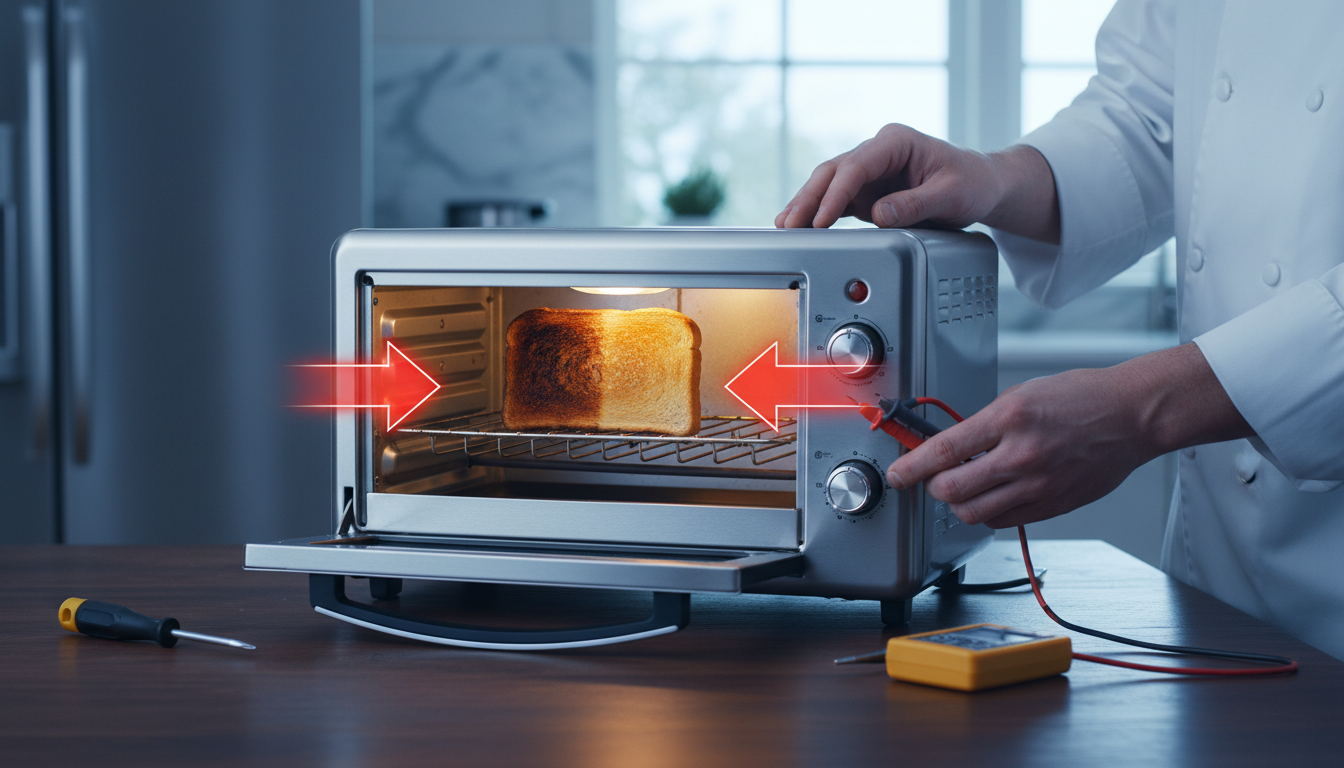
Few kitchen frustrations match the disappointment of pulling a tray out of a toaster oven only to find one side charred to a crisp while the other remains doughy and pale. We rely on these compact powerhouses for everything from artisanal sourdough toast to perfectly roasted salmon fillets. When a toaster oven not heating evenly becomes a recurring theme, it isn't just a minor inconvenience; it is a fundamental failure of a tool designed for precision and speed. The modern toaster oven has evolved far beyond the simple "two-slice" pop-up devices of the past. Today, they are sophisticated convection machines, often doubling as air fryers and rotisseries. However, this complexity brings with it a higher margin for mechanical and thermodynamic error.
The quest for the perfect golden-brown finish is governed by the laws of thermodynamics, specifically how radiant heat and convection currents interact within a small, enclosed stainless steel box. Because the cooking chamber is significantly smaller than a standard wall oven, any slight deviation in heat output or airflow is magnified tenfold. A standard oven has the luxury of space to allow heat to circulate and stabilize; a toaster oven operates in a high-intensity environment where the distance between the heating element and your food is often less than three inches.
When you encounter toaster oven hot spots, you are witnessing an imbalance in the distribution of infrared energy. This guide is designed to move beyond the surface-level advice of "just turn the pan." We are going to dive into the mechanical guts of your appliance, exploring the calibration of bimetallic thermostats, the integrity of quartz heating elements, and the aerodynamics of internal fans. Whether you are a culinary enthusiast or someone who just wants a reliable bagel in the morning, understanding the "why" behind uneven heating is the first step to reclaiming your kitchen’s efficiency. We will diagnose the symptoms, analyze the failure points, and provide a roadmap for professional-grade fixes that will extend the life of your appliance and ensure every meal is cooked to perfection.
The Critical Problem: Analyzing the Mechanics of Heat Failure
To solve the mystery of why a toaster oven fails to distribute heat, we must look at the three primary ways heat travels: conduction, convection, and radiation. In a toaster oven, radiation is king. The heating elements (usually metal coils or quartz tubes) glow orange, emitting infrared waves that hit the food directly. If one element is even slightly degraded, or if its reflective housing is coated in grease, the "line of sight" for that radiation is broken. This creates immediate, localized cold zones.
The second major player is the thermostat. Most mid-range toaster ovens use a bimetallic strip thermostat. This is a mechanical switch made of two different metals that expand at different rates when heated. Over time, these strips can lose their "memory" or become pitted with carbon deposits from electrical arcing. When this happens, the oven might cycle off too early or stay on too long, causing the temperature to swing wildly. In a small chamber, a 25-degree fluctuation can be the difference between a perfect melt and a blackened mess.
Furthermore, we must address the "Boundary Layer" problem. In many toaster ovens, air tends to stagnate in the corners. This is where toaster oven hot spots often originate. If the oven lacks a convection fan—or if that fan is spinning at a sub-optimal RPM due to dust buildup on the motor—the hot air pools at the top of the chamber while the bottom remains relatively cool. This is exacerbated by the proximity of the food to the elements. Because the "Inverse Square Law" applies to radiant heat, moving a piece of toast just one inch closer to an element can quadruple the heat intensity it receives.
Finally, the physical structure of the oven plays a role. Toaster oven doors are notorious for heat leakage. If the door hinge is slightly out of alignment or if the glass gasket has perished, a constant stream of cool kitchen air enters the front of the chamber. This forces the rear elements to work harder to maintain the set temperature, resulting in a "front-cold, back-hot" cooking profile. This isn't just a minor thermal leak; it is a systemic failure of the oven's ability to maintain a pressurized, heated environment. Understanding these mechanical nuances is essential before attempting any DIY repairs or adjustments.
Methodology & Core Guide: The Step-by-Step Restoration of Thermal Balance
Restoring a toaster oven to its peak performance requires a systematic approach. Do not begin by tearing the unit apart; begin with a diagnostic baseline.
1. The Toast Mapping Test (Diagnostic)
Before you pick up a screwdriver, you need to visualize the problem. Take a loaf of cheap white bread and fill the rack completely, edge to edge. Set the oven to "Toast" at a medium setting. Once the cycle finishes, observe the browning pattern. This "thermal map" will tell you exactly which elements are underperforming. If the back left is white while the rest is brown, you have a localized element or airflow issue.
2. Deep Cleaning the Reflective Surfaces
Toaster ovens rely on the internal walls reflecting infrared energy back toward the food. If your oven walls are coated in baked-on grease and carbon, they absorb heat instead of reflecting it.
- The Fix: Use a paste of baking soda and water. Avoid caustic oven cleaners which can damage the delicate galvanized steel or aluminum linings. Clean the reflective shields behind the heating elements. A shiny interior ensures that radiant heat bounces evenly throughout the chamber.
3. Heating Element Inspection and Maintenance
If your elements are quartz (glass tubes), check for cracks or dark "fogging" inside the tube. If they are metal, look for pitting or warping.
- The Fix: With the unit unplugged and cool, wipe the elements with a soft cloth dampened with rubbing alcohol. Fingerprint oils can create "hot spots" on quartz tubes that lead to premature failure. If an element does not glow uniformly from end to end, it likely needs replacement. Check the electrical terminals at the ends of the elements for corrosion; a loose connection increases resistance and drops heat output.
4. Calibrating the Thermostat
Many high-end toaster ovens allow for a manual calibration offset. If your oven is consistently running 20 degrees too cool, it will struggle to brown food evenly.
- The Fix: Place an independent oven thermometer in the center of the rack. Set the oven to 350°F. Let it cycle for at least 20 minutes. If the thermometer reads 325°F, you need to adjust. On many mechanical dials, there is a small calibration screw behind the knob or inside the back panel. Turning this slightly can re-sync the dial with the actual internal temperature.
5. Evaluating the Convection Fan
If your unit has a "Convection" or "Air Fry" setting and you notice unevenness, the fan is likely the culprit.
- The Fix: Listen for a rattling or humming sound. This indicates a dry bearing or a fan blade obstructed by debris. You can often access the fan from the rear panel. A single drop of high-temperature machine oil on the motor shaft and a thorough dusting of the blades can restore the airflow velocity needed to eliminate stagnant air pockets.
6. Door Seal Integrity
A sagging door is a primary cause of toaster oven not heating evenly.
- The Fix: Inspect the hinges. Over time, the springs can weaken. If the door doesn't pull tight against the frame, you can sometimes gently "tweak" the hinge arms back into alignment using pliers. Ensure the glass is clean; a heavy layer of grease on the door glass can actually absorb heat that should be staying in the oven.
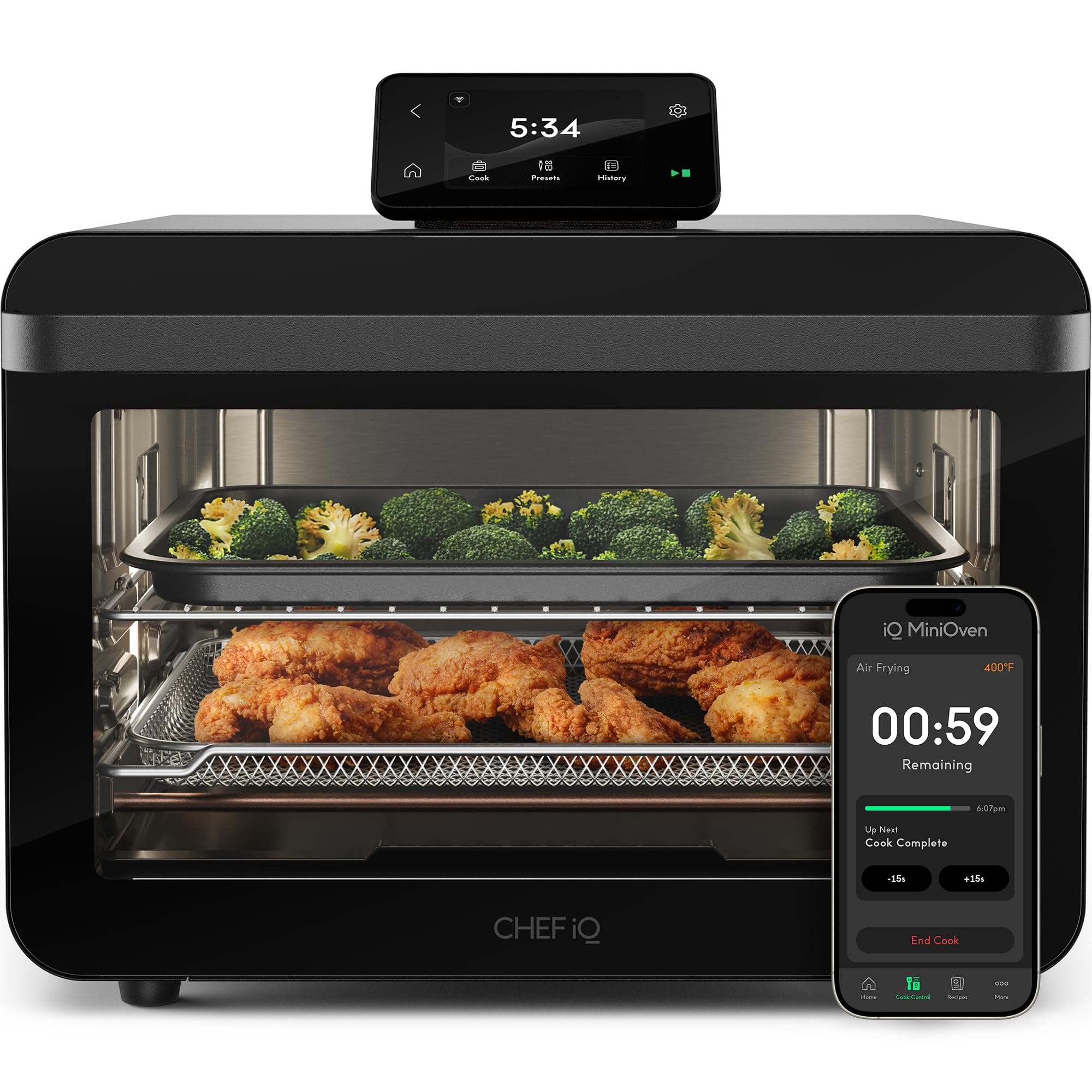
CHEF iQ MiniOven Smart Toaster Oven Air Fryer Combo, 11-in-1 Countertop Convection Oven, Bake, Broil
- High-quality product
- Customer favorite
- Best value option
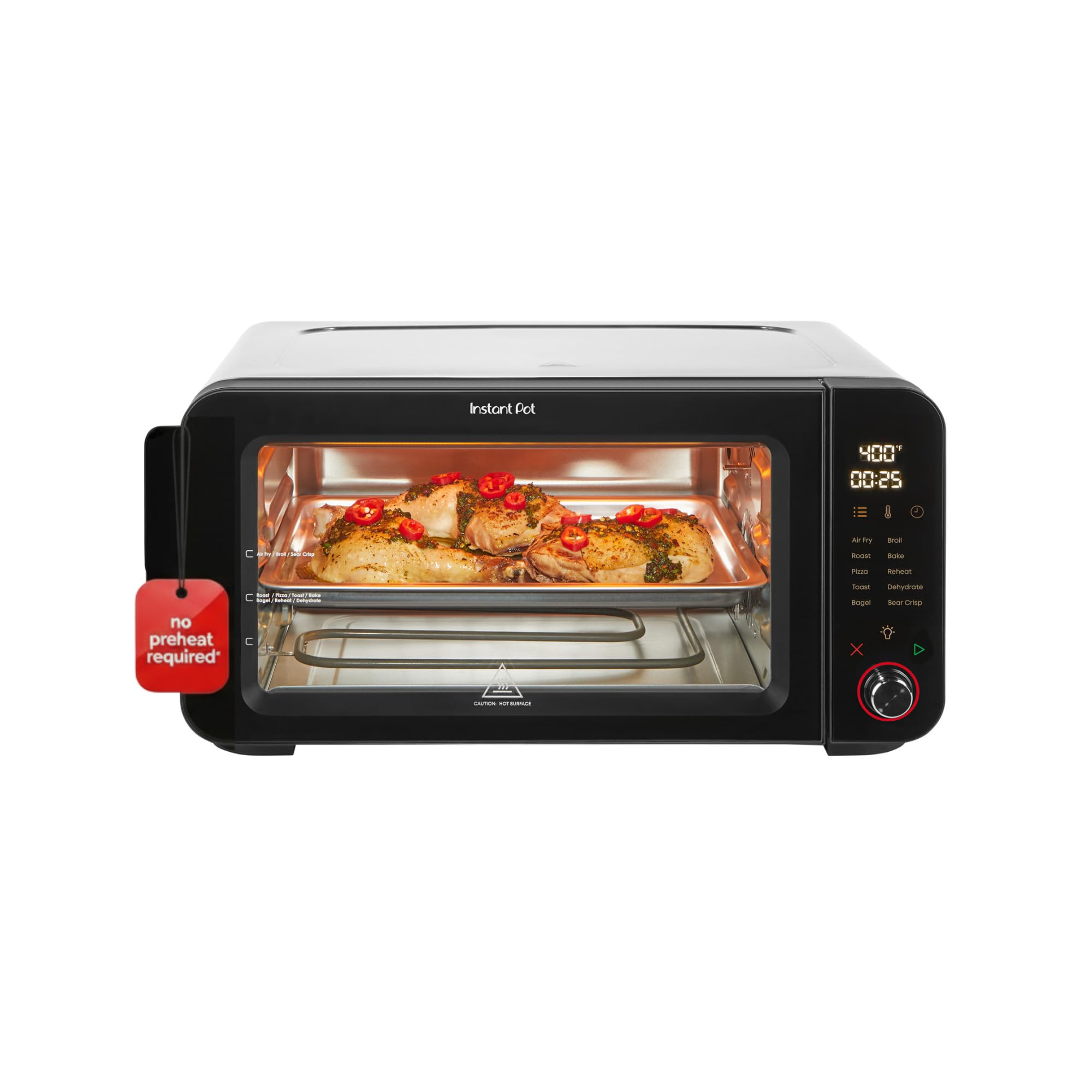
Instant Pot No Preheat Required* 6-Slice Air Fryer Toaster Oven with InstantHeat Technology, 10-in-1
- High-quality product
- Customer favorite
- Best value option
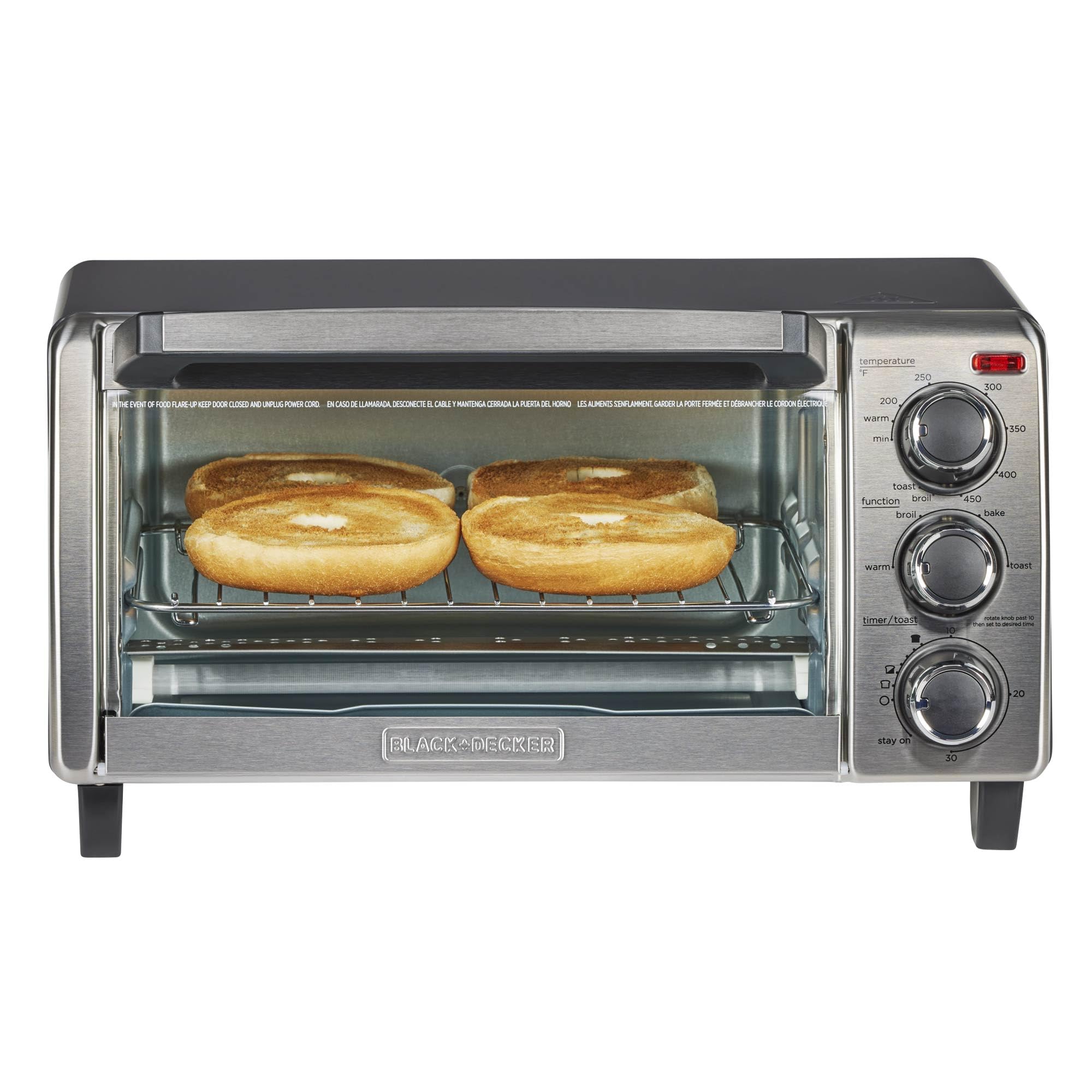
BLACK+DECKER TO1313SBD Toaster Oven, 15.47 Inch, Silver
- High-quality product
- Customer favorite
- Best value option
Expert Hacks & Maintenance: Pro-Level Optimization
Once your toaster oven is clean and mechanically sound, you can use advanced culinary hacks to further mitigate toaster oven hot spots.
The Thermal Mass Trick
Toaster ovens lose heat rapidly when opened. To stabilize the internal temperature, place a small unglazed ceramic tile or a small pizza stone on the bottom rack (ensure it doesn't touch the elements). This acts as a thermal battery, absorbing heat and radiating it steadily, which significantly reduces the temperature fluctuations caused by the thermostat cycling on and off.
Rack Height and Pan Selection
The middle rack is not always the best choice. For items that need even browning without burning (like cookies), use the lowest rack setting and place an empty tray on the top rack to act as a heat shield against the top elements. Furthermore, swap your dark, non-stick pans for light-colored aluminum ones. Dark pans absorb radiant heat too quickly, leading to burnt bottoms before the tops are cooked.
The "Preheat Plus" Strategy
Most toaster ovens signal they are preheated when the air reaches the set temperature. However, the internal walls are still cold. For critical baking, preheat the oven for a full 15 minutes. This ensures the "Radiant Environment" is fully saturated with heat, providing much more even results than a 5-minute preheat.
Mega FAQ: Expert Answers to Common Heating Issues
1. Why does my toaster oven burn the back of my food but leave the front cold?
This is almost always due to a poor door seal or a malfunctioning convection fan. Heat naturally pools in the back of the unit; without a fan to push it forward, or if cold air is leaking in through the door, you get a massive thermal gradient.
2. Is it safe to clean the heating elements with soap?
No. Soap residue can bake onto the elements, creating a permanent film that reduces heat efficiency and can even cause the glass (in quartz elements) to fail. Use only rubbing alcohol or a dry micro-fiber cloth.
3. Why did my toaster oven suddenly develop hot spots after years of use?
The most likely cause is carbon buildup on the reflective interior walls or a weakening thermostat spring. As the metal reflects less heat, the direct radiation from the elements becomes the only source of heat, creating "laser-like" hot zones.
4. Can a power strip cause a toaster oven not to heat evenly?
Yes. Toaster ovens pull significant amperage (1200-1800 watts). If your power strip is low-quality, it can cause a voltage drop. This prevents the elements from reaching their full design temperature, leading to sluggish heating and poor browning.
5. What is the "Toast Test" and how often should I do it?
The toast test involves covering the entire rack with bread to see the browning pattern. You should do this once every six months or whenever you suspect a heating issue. It is the most accurate diagnostic tool available.
6. Should I use "Convection" for everything to avoid hot spots?
Convection helps, but it isn't a cure-all. For delicate items like soufflés or certain cakes, the moving air can actually cause uneven rising. Use convection for roasting, toasting, and air-frying.
7. Why do my quartz elements glow at different brightness levels?
This indicates an electrical imbalance. It could be a failing element or a corroded wire connection. If one element is significantly dimmer than the others, it will create a cold spot in that area of the oven.
8. Does the size of the pan affect heating evenness?
Absolutely. If your pan is too large and touches the sides of the oven, it blocks the vertical airflow. Always leave at least one inch of clearance on all sides of the pan for proper heat circulation.
9. Can I replace the thermostat myself?
If you are comfortable with basic electronics and the unit is out of warranty, yes. Most thermostats are held in by two screws and connected with spade lugs. Ensure you buy the exact OEM replacement part.
10. Why is my "Air Fry" setting hotter than the "Bake" setting at the same temperature?
The Air Fry setting usually runs the convection fan at a much higher RPM. This increases the "Convective Heat Transfer Coefficient," making the air feel "hotter" to the food, even if the thermometer reading is the same.
11. Is a "Smart" toaster oven better at preventing hot spots?
Yes. High-end smart ovens use PID (Proportional-Integral-Derivative) controllers instead of bimetallic thermostats. These use algorithms to pulse the power to the elements, maintaining a rock-steady temperature within 1-2 degrees.
12. My oven makes a clicking sound; is that related to uneven heating?
Clicking is usually the thermostat cycling. If it clicks every few seconds, it may be "short-cycling," which prevents the oven from ever reaching a stable, even temperature.
Closing Thoughts: When to Fix vs. When to Upgrade
Understanding why a toaster oven is not heating evenly is a masterclass in kitchen physics. Most issues—from dirty reflectors to sagging doors—are easily solvable with a bit of maintenance and a few expert hacks. However, there comes a point of diminishing returns. If your heating elements are physically warped or if the electronic control board is failing, the cost of parts and the risk of a fire hazard may outweigh the benefits of a DIY fix.
If you have performed the "Toast Test," cleaned the reflective surfaces, and checked your door seals, yet still struggle with toaster oven hot spots, it may be time to invest in a modern unit with a PID controller and high-velocity convection. A reliable toaster oven is the workhorse of the modern kitchen; ensuring it performs with precision is the best way to elevate your daily cooking from "acceptable" to "exceptional." Keep your elements clean, your hinges tight, and your racks positioned wisely, and you will never have to settle for a half-burnt bagel again.