The Silent Gatekeepers of Your Home’s Air Quality
When you flip the switch on your vacuum cleaner, you aren’t just engaging a motor; you are initiating a complex pneumatic process designed to separate solid waste from the air you breathe. For most homeowners, the vacuum is a tool for aesthetics—removing visible crumbs, pet hair, and dirt from the carpet. However, from a technical and health perspective, the vacuum is an air filtration device. The efficiency of this device depends entirely on its filtration system. Understanding vacuum filter types is the difference between a home that looks clean and a home that actually is clean.
The air entering a vacuum is a chaotic slurry of heavy debris, fine dust, skin cells, pollen, and microscopic allergens. Without a sophisticated multi-stage filtration system, the vacuum would simply act as a motorized bellows, sucking up dust from the floor and blasting it back out into the room at eye level. This phenomenon, known as "dust blowback," is the primary reason why cheap or poorly maintained vacuums often leave a room smelling "dusty" after a cleaning session.
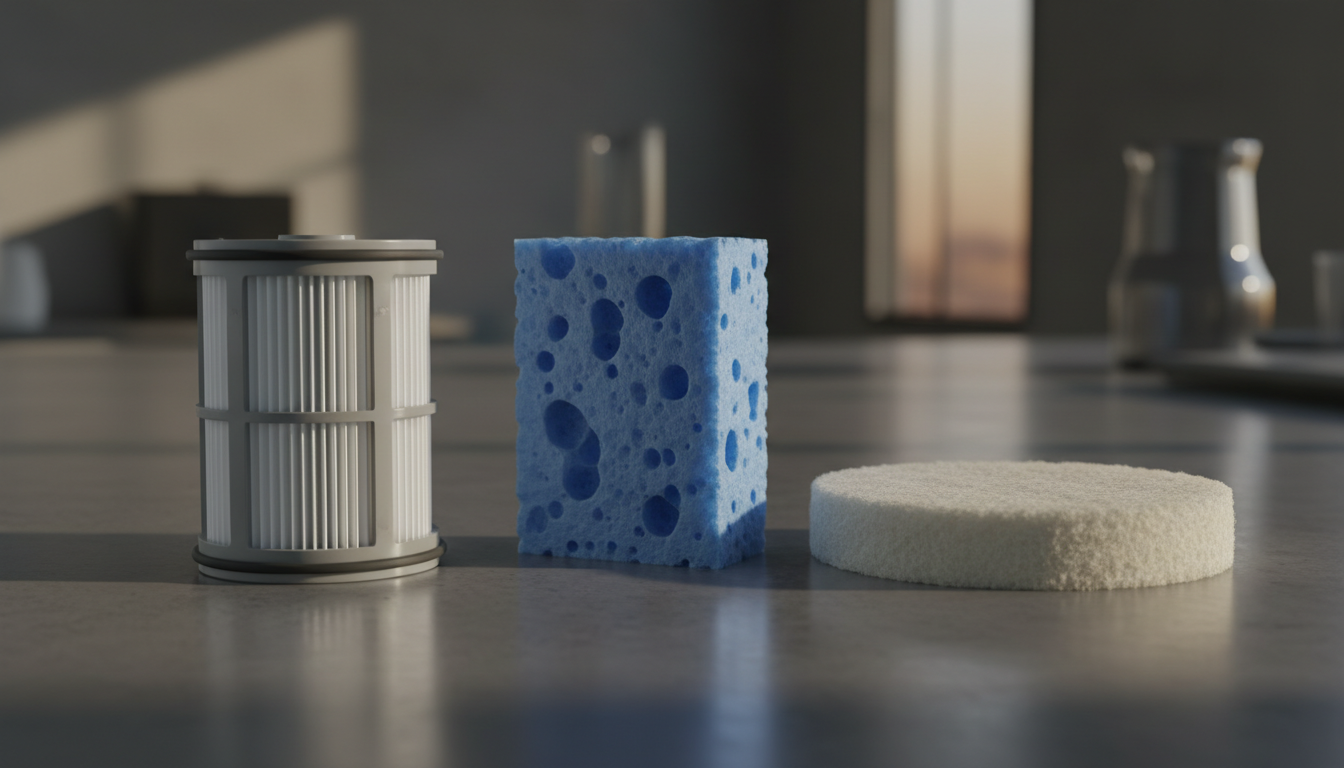
In the modern marketplace, three primary materials dominate the landscape: HEPA, foam, and felt. Each serves a specific engineering purpose. Foam and felt are typically your front-line soldiers, acting as pre-motor filters to protect the mechanical integrity of the machine. HEPA is the elite rear guard, a post-motor final stage designed to trap the microscopic particles that the first two stages missed.
As an authority in home maintenance and appliance engineering, I can tell you that the "HEPA filter vs foam" debate is a misunderstanding of vacuum architecture. You don't choose one over the other; you optimize the synergy between them. If your foam filter is degraded, your expensive HEPA filter will clog in weeks. If your HEPA filter is a low-quality imitation, your foam filter’s hard work is rendered moot as allergens bypass the exhaust. This guide will dismantle the myths, explain the science of micron-level filtration, and provide the methodology you need to maintain a truly sterile living environment.
The Critical Problem: Why Most Filtration Fails
The fundamental crisis in vacuum technology is the "Micron Gap." To understand why vacuum filter types matter, we must look at the scale of the enemy. A human hair is approximately 70 microns in diameter. Most people can see dust particles down to about 40 microns. However, the particles that trigger asthma, allergies, and long-term respiratory inflammation—such as pet dander, mold spores, and PM2.5 (fine particulate matter)—are often smaller than 2.5 microns.
The critical problem with standard, non-HEPA filtration systems is that they are highly effective at catching what you can see, but almost entirely transparent to what actually harms you. When a vacuum lacks a sealed HEPA system, it acts as a centrifugal concentrator. It pulls in heavy dust, traps it in the bin, but then aerosolizes the finer, more dangerous particles, suspending them in the air for hours after you’ve finished vacuuming. This is why many people experience sneezing fits or "vacuum smell" during and after cleaning.
Furthermore, there is the issue of "Airflow Resistance vs. Filtration Efficiency." This is the engineering tightrope that vacuum manufacturers walk. A filter that is too dense will trap everything but will also choke the motor, causing it to overheat and lose suction power. A filter that is too porous will maintain high suction but allow dust to pass through.
The "Critical Problem" manifests in three ways:
- Motor Degradation: When foam or felt filters are not replaced or cleaned, fine dust bypasses the seals and enters the motor housing. This dust acts as an abrasive on the motor’s bearings and carbon brushes, leading to premature mechanical failure.
- Seal Leaking: Even the best filter is useless if the vacuum's "system" isn't sealed. In many mid-range vacuums, air leaks out of the plastic housing gaps before it ever reaches the final HEPA stage.
- Biological Growth: Filters trap organic matter. If those filters become damp or are stored in humid environments, they become breeding grounds for bacteria and mold. Every time you turn the vacuum on, you are effectively "spraying" mold spores into your home.
Understanding the "HEPA filter vs foam" hierarchy is not just about cleaning floors; it is about managing the microscopic ecosystem of your indoor environment. Without high-tier filtration, your vacuum is essentially a dust-recycling machine.
Methodology & Core Guide: HEPA vs. Foam vs. Felt
To master your vacuum's performance, you must understand the specific mechanics of the three core filter materials. Each has a distinct "Job Description" within the vacuum’s airflow path.
1. Foam Filters: The Pre-Motor Guard
Foam filters are generally the first line of defense. They are made from open-cell polyurethane or similar synthetic polymers.
- The Science: Foam filters work through a process called "tortuous path" filtration. As air moves through the labyrinthine structure of the foam, larger dust particles cannot navigate the turns and become trapped against the cell walls.
- The Purpose: Their primary job is to protect the motor. They stop the "rocks and gravel" of the microscopic world—crumbs, hair clumps, and large dust bunnies—from hitting the fan blades.
- Maintenance: Most foam filters are washable. However, the common mistake is using soap, which can leave a residue that attracts more dust. Rinse with cold water only and ensure it is 100% dry before re-inserting.
2. Felt Filters: The Micro-Particulate Intermediate
Felt filters (often called "electrostatic" or "micro-filters") are much denser than foam. They are made of compressed synthetic fibers.
- The Science: Felt filters utilize depth filtration. Because the fibers are so tightly packed, they can catch much smaller particles than foam, often down to the 5-10 micron range.
- The Purpose: They act as a secondary "scrubber" after the foam filter but before the air hits the motor or the HEPA stage. They are essential for catching the fine dust that manages to wiggle through the foam.
- Maintenance: Some felt filters are washable, but many are "tap-clean" only. Washing felt can sometimes cause the fibers to swell or mat, which permanently reduces airflow. Always check the manufacturer's spec.
3. HEPA Filters: The Gold Standard
HEPA stands for High-Efficiency Particulate Air. To be a true HEPA filter, it must meet a rigorous mechanical standard: it must remove 99.97% of all particles that are 0.3 microns in diameter.
- The Science: HEPA filters do not work like a simple sieve. They use three distinct mechanisms:
- Interception: Particles following the airflow come within one radius of a fiber and adhere to it.
- Impaction: Larger particles cannot navigate the curved airflow around fibers and smash directly into them.
- Diffusion: The smallest particles (under 0.1 microns) move erratically (Brownian motion) and eventually collide with a fiber.
- The Purpose: This is your "clean air" insurance. This filter is usually located after the motor (post-motor) to ensure that even the carbon dust from the motor’s own brushes is trapped before the air exits the vacuum.
- Maintenance: Most HEPA filters are NOT washable. Wetting the delicate glass-fiber paper inside a HEPA filter will destroy the microscopic arrangement of the fibers, rendering it useless.
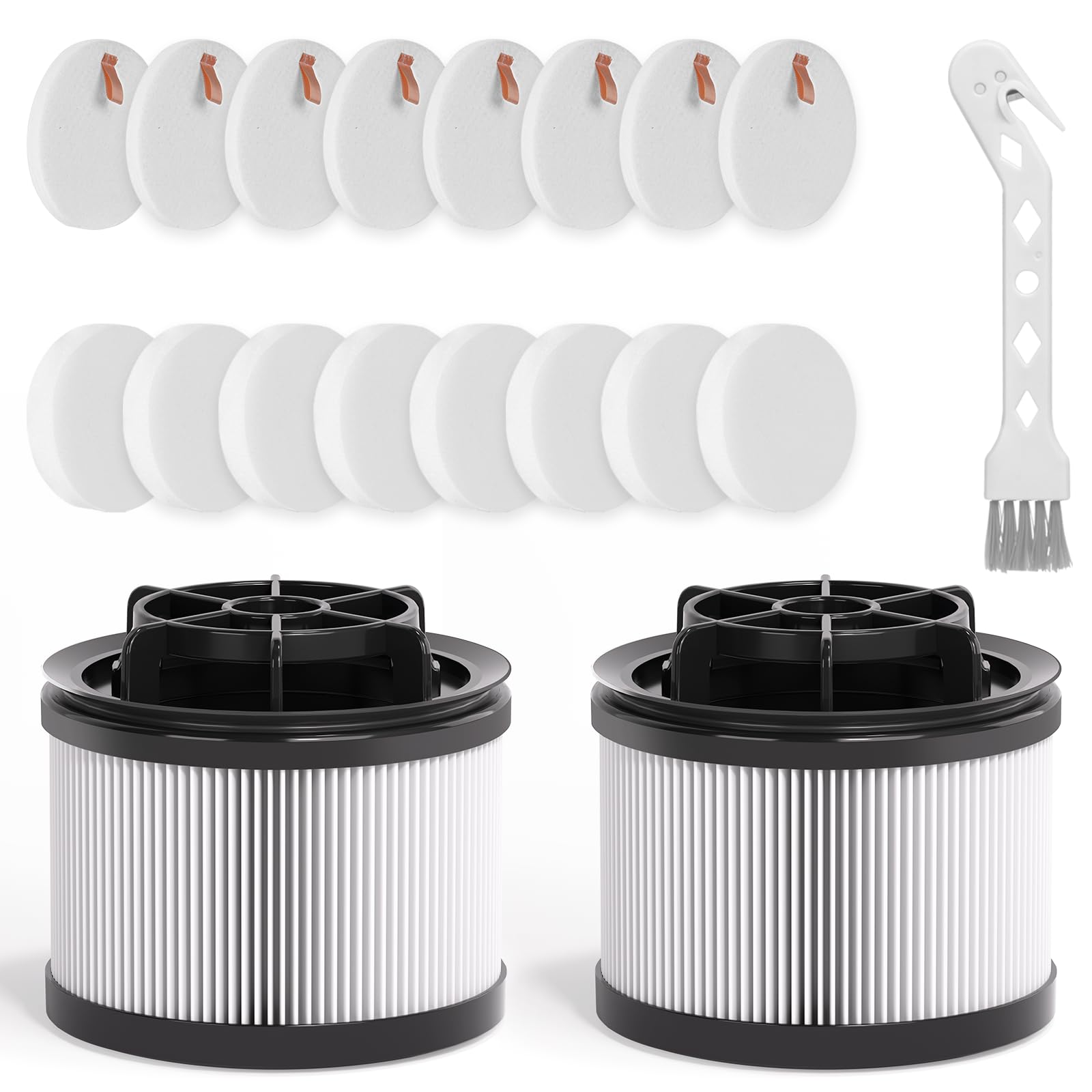
18 PCS LVAC-300 / LVAC-200 MAX Vacuum Cleaner Replacement Filter, Compatible with Levoit Cordless St
- High-quality product
- Customer favorite
- Best value option
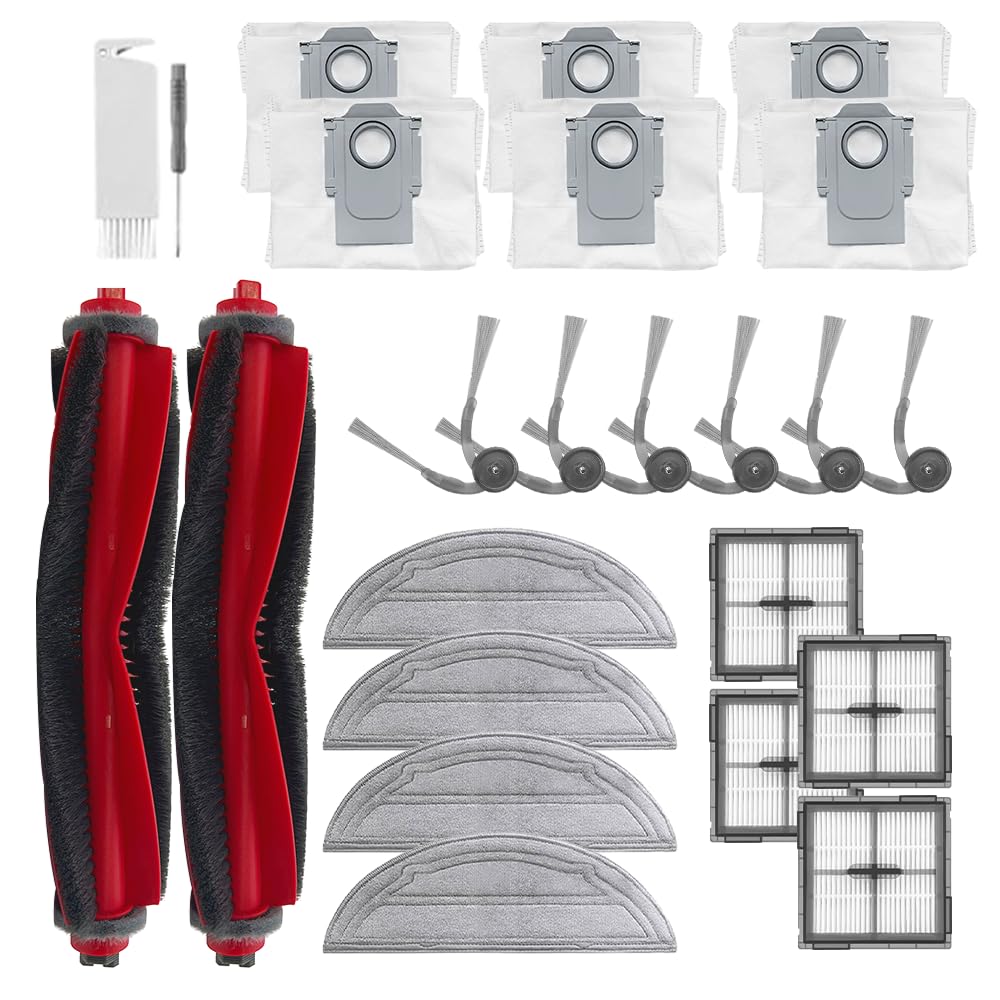
24Pcs Q10 S5+ Accessories Kit Replacement Compatible with Roborock Q10 S5+ /Q10 S5/Q10 x5 /Q10 x5+ R
- High-quality product
- Customer favorite
- Best value option
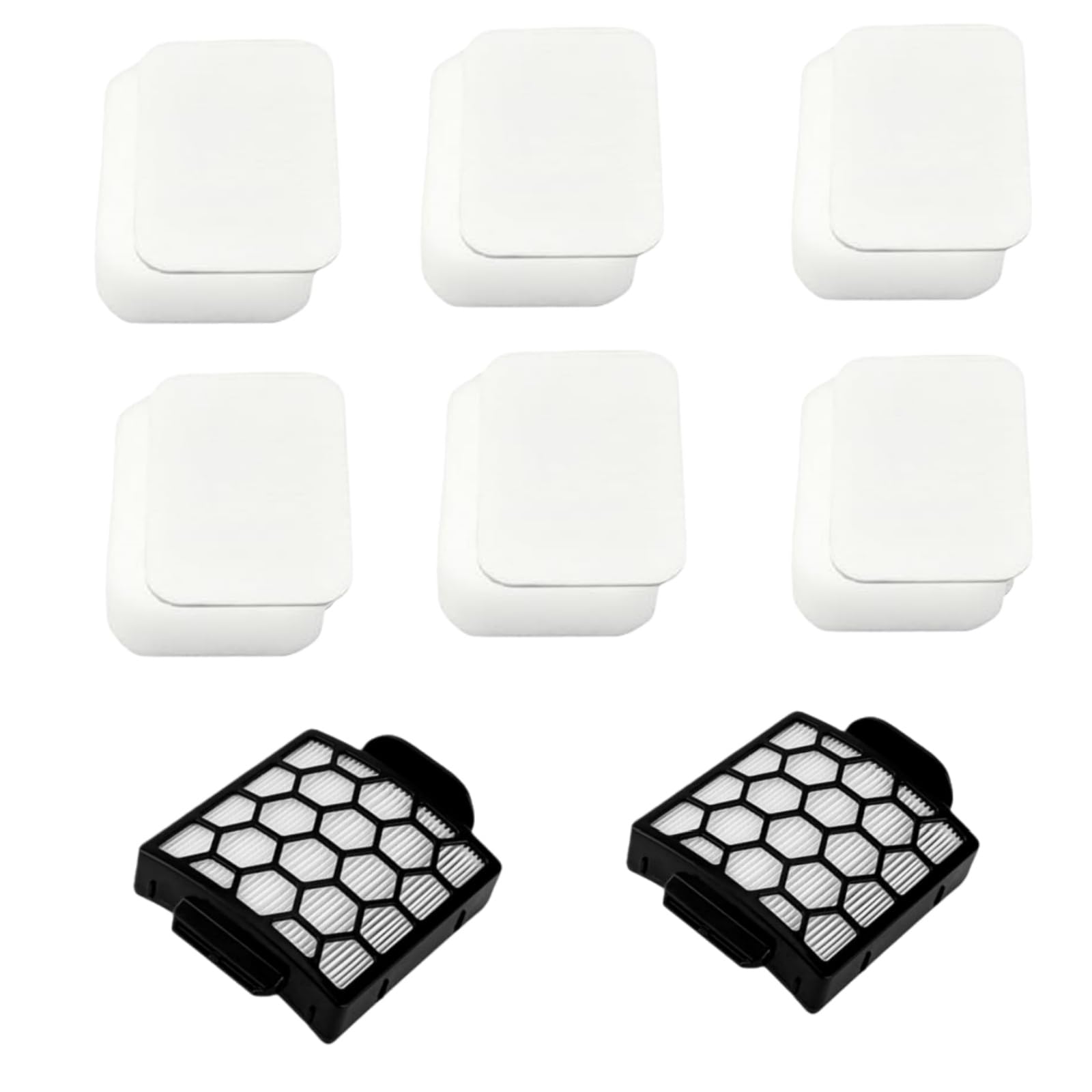
6 Foam Filter + 2 HEPA Filter Replacement for Shark ZU62 ZU60 NV255 NV150 NV251 NV151 Navigator Rota
- High-quality product
- Customer favorite
- Best value option
Expert Hacks & Maintenance
Maintaining your vacuum's filtration system is not a "set it and forget it" task. To keep your machine running at peak efficiency, follow these professional-grade hacks:
1. The 24-Hour Rule
Never, under any circumstances, put a foam or felt filter back into a vacuum if it is even slightly damp. A damp filter will instantly trap dust and turn it into a concrete-like sludge that chokes the motor. Furthermore, moisture inside a vacuum will lead to mold growth in the bin and motor housing. Wait a full 24 to 48 hours for air drying.
2. The Sun Cure
After washing foam filters, let them dry in direct sunlight. UV rays act as a natural disinfectant, killing any bacterial spores that survived the rinse.
3. The "Tap and Vacuum" Method
For HEPA filters (which you cannot wash), use a different vacuum (or a handheld) to gently suck the loose dust out of the pleats. Alternatively, take the filter outside and tap it against a hard surface to dislodge the heavy particulate. If the white pleats have turned grey or black, it is time for a replacement.
4. Seal Maintenance
Check the rubber gaskets surrounding your filters. Over time, these can dry out and crack. A tiny smear of silicone grease on the gasket can ensure an airtight seal, forcing 100% of the air through the filter rather than allowing it to leak around the edges.
Mega FAQ
1. Can I wash my HEPA filter if it says "washable"?
Some manufacturers label filters as "Washable HEPA." While technically possible, proceed with caution. Frequent washing degrades the electrostatic charge and the fiber density. I recommend washing no more than twice before replacing.
2. How often should I replace foam vs. HEPA filters?
Foam filters should be washed every 3 months and replaced every 12 months. HEPA filters should be replaced every 6 to 12 months depending on usage and whether you have pets.
3. Why does my vacuum smell like dog even after I clean the filters?
The smell is often trapped in the plastic of the dust bin or the hose itself. Wash the bin with vinegar and water, and check if your felt filter has absorbed oils from pet dander—if it has, it must be replaced.
4. What is the difference between "True HEPA" and "HEPA-type"?
"True HEPA" is a certified standard (99.97% at 0.3 microns). "HEPA-type" or "HEPA-like" are marketing terms for filters that are dense but have never been tested to meet the official standard. Always look for "True HEPA."
5. Can a dirty filter cause my vacuum to shut off?
Yes. Most modern vacuums have a thermal cut-off switch. If a filter is clogged, the motor works harder and generates more heat. Once it reaches a certain temperature, the vacuum will shut down to prevent a fire.
6. Is it okay to use generic replacement filters?
For foam and felt, generic replacements are usually fine. For HEPA filters, I recommend OEM (Original Equipment Manufacturer) or high-quality certified brands, as the tolerances for HEPA are much tighter.
7. Does a higher-rated filter reduce suction?
Technically, yes. A denser filter provides more "Static Pressure." However, modern vacuum motors are designed to compensate for this. A clean HEPA filter will always provide better performance than a clogged foam filter.
8. What is a "pre-motor" vs. "post-motor" filter?
Pre-motor filters (foam/felt) sit before the motor to protect it from debris. Post-motor filters (HEPA) sit at the exhaust to ensure the air returned to your room is clean.
9. Can I use essential oils on my foam filter?
No. Oils attract dust and can cause the foam to break down chemically. They can also gum up the microscopic pores of the HEPA filter further down the line.
10. How do I know if my felt filter is worn out?
If the felt appears "pilled" or fuzzy, or if it has become thin in certain spots, the fibers have shifted. This allows "channels" for dust to pass through. Replace it immediately.
11. Why is my HEPA filter turning black?
This is usually carbon dust from the vacuum’s own motor brushes. It’s a sign the filter is doing its job, but if it’s completely black, the airflow is likely restricted.
12. Does vacuuming without a filter damage the machine?
Yes, it is catastrophic. Large debris will hit the high-speed fan blades, potentially shattering them or burning out the motor within minutes.
Closing Thoughts
The complexity of vacuum filter types reflects the evolution of our understanding of indoor health. We no longer live in an era where "visible dirt" is the only metric of cleanliness. By mastering the relationship between HEPA filters vs foam, you are taking control of your home’s air quality.
Remember: the foam filter protects the motor, the felt filter protects the HEPA, and the HEPA filter protects your lungs. Neglect one, and the entire system collapses. Invest in high-quality replacements, adhere to a strict maintenance schedule, and your vacuum will not only last longer but will also serve as a powerful air purifier for your family. A clean home starts at the micron level—make sure your filters are up to the task.