
Navigating the Maze of Vacuum Warranty Coverage
You just spent $500 on a high-end cordless stick vacuum or a heavy-duty upright. You feel secure because the box boasts a "5-Year Limited Warranty." You assume that for the next half-decade, your investment is bulletproof. Then, fourteen months later, the suction dies, or the battery stops holding a charge. You call the manufacturer, expecting a free replacement, only to be told that the specific part that failed is considered a "consumable" or that the failure is due to "normal wear and tear." Suddenly, that 5-year promise feels like a marketing gimmick rather than a consumer protection tool.
Understanding vacuum warranty coverage is the difference between a seamless repair experience and a frustrating financial loss. Most consumers view a warranty as a blanket insurance policy, but in the floorcare industry, a warranty is a highly specific legal contract. It differentiates between what the manufacturer did wrong (defects) and what you did wrong (maintenance or usage). To truly master your vacuum warranty info, you must look past the bold numbers on the packaging and dive into the fine print that dictates the life cycle of your appliance.
The reality is that a vacuum is a mechanical device operating in a hostile environment—sucking up grit, hair, and debris at high velocities. Because of this, manufacturers are incredibly protective of their profit margins. They know that certain parts will fail, and they have spent decades refining the language of their "limited" warranties to exclude those very parts. This guide is designed to strip away the marketing jargon and provide an authoritative breakdown of what is actually covered, what isn't, and how you can ensure you never get stuck with a $200 repair bill for a $400 machine. We aren't just looking at the "what"; we are analyzing the "why" and the "how" of modern vacuum protection.
The Critical Problem: The "Wear and Tear" Trap
The single biggest obstacle in the world of vacuum maintenance is the "Normal Wear and Tear" clause. This is the ultimate "get out of jail free" card for manufacturers. In any expert analysis of vacuum warranty info, this clause stands out as the primary reason claims are denied. But what constitutes "normal"?
From a technical standpoint, a vacuum is composed of three distinct categories of components: the structural housing, the electronic powertrain, and the high-friction contact points. Manufacturers generally cover the first two but almost never the third. The problem arises when a failure in a contact point (like a brush roll bearing) leads to a failure in the powertrain (the motor). In many cases, the manufacturer will argue that because the initial failure was a "wear item," the resulting damage is not covered under the vacuum warranty coverage.
Furthermore, there is the issue of "User Negligence." If you pick up a penny and it shatters a fan blade in your motor, that is not a manufacturer defect; it is accidental damage. Most standard warranties do not cover accidents. Similarly, if you fail to wash your HEPA filters and the motor overheats and burns out, the manufacturer can—and often will—deny the claim based on a lack of proper maintenance. They can detect this by looking for fine dust bypass inside the motor housing during a forensic inspection at the repair center.
Another burgeoning problem is the shift toward cordless technology. In the era of corded uprights, a motor could easily last 15 years. Today’s cordless vacuums rely on Lithium-Ion batteries, which are chemically destined to degrade. Most manufacturers categorize batteries differently than the rest of the machine, often offering only a 1-year warranty on the battery even if the vacuum itself has a 2-year or 5-year sticker on the box. This "split warranty" system catches thousands of consumers off guard every year, leaving them with a functional vacuum and a dead, $150 battery that isn't covered. This creates a "disposable appliance" cycle that is both expensive for the consumer and terrible for the environment.
Methodology: What Parts Are Actually Covered?
To understand your vacuum warranty coverage, you must categorize the machine into its functional groups. Not all parts are created equal in the eyes of the legal department. Here is the authoritative breakdown of vacuum components and their typical coverage status.
1. The Motor (The "Heart")
The primary suction motor is almost always the centerpiece of a warranty. In high-end brands like Miele or Sebo, you might see 7 to 10 years of coverage on the motor. In "big box" brands like Shark or Hoover, it usually aligns with the standard 1 to 5-year term.
- What’s Covered: Electrical failure, internal mechanical seizure (not caused by debris), and manufacturing defects in the windings or armature.
- What’s Not: Motor burnout caused by clogged filters, water damage (sucking up liquids), or physical impact.
2. The Circuitry and Sensors (The "Brain")
Modern vacuums, especially robot vacuums and "smart" cordless sticks, are packed with PCBs (Printed Circuit Boards), Lidar sensors, and infrared cliff sensors.
- What’s Covered: Component failure, software glitches that brick the unit, and faulty wiring harnesses.
- What’s Not: Corrosion from moisture (common in humid climates or if stored in a garage) and "fried" boards caused by non-certified third-party charging cables.
3. The Battery (The "Fuel")
As mentioned, this is the most contentious area of vacuum warranty info.
- What’s Covered: Total failure within the first 6–12 months (usually). A battery that won't charge at all is typically replaced without much friction.
- What’s Not: Diminished runtime. If your vacuum used to run for 40 minutes and now only runs for 20, most manufacturers consider this "natural chemical degradation" and will not cover a replacement.
4. Consumables (The "Excluded")
This category is almost never covered. If it’s designed to be replaced by the user, it’s not under warranty.
- Excluded Parts: Filters (HEPA, foam, felt), bags, brush roll bristles, belts, and light bulbs.
- The Exception: If these parts are broken inside the box when you first buy the unit, they are covered under "Dead on Arrival" terms.
5. Hoses and Attachments
Hoses are prone to cracking and splitting.
- What’s Covered: Splits at the cuff (where the hose meets the plastic) are often covered as they indicate a poor bond during manufacturing.
- What’s Not: Punctures, clogs, or stretched-out hoses caused by pulling the vacuum along by the hose.

ASURION 2 Year Floorcare Extended Protection Plan ($125 – $149.99)
- High-quality product
- Customer favorite
- Best value option
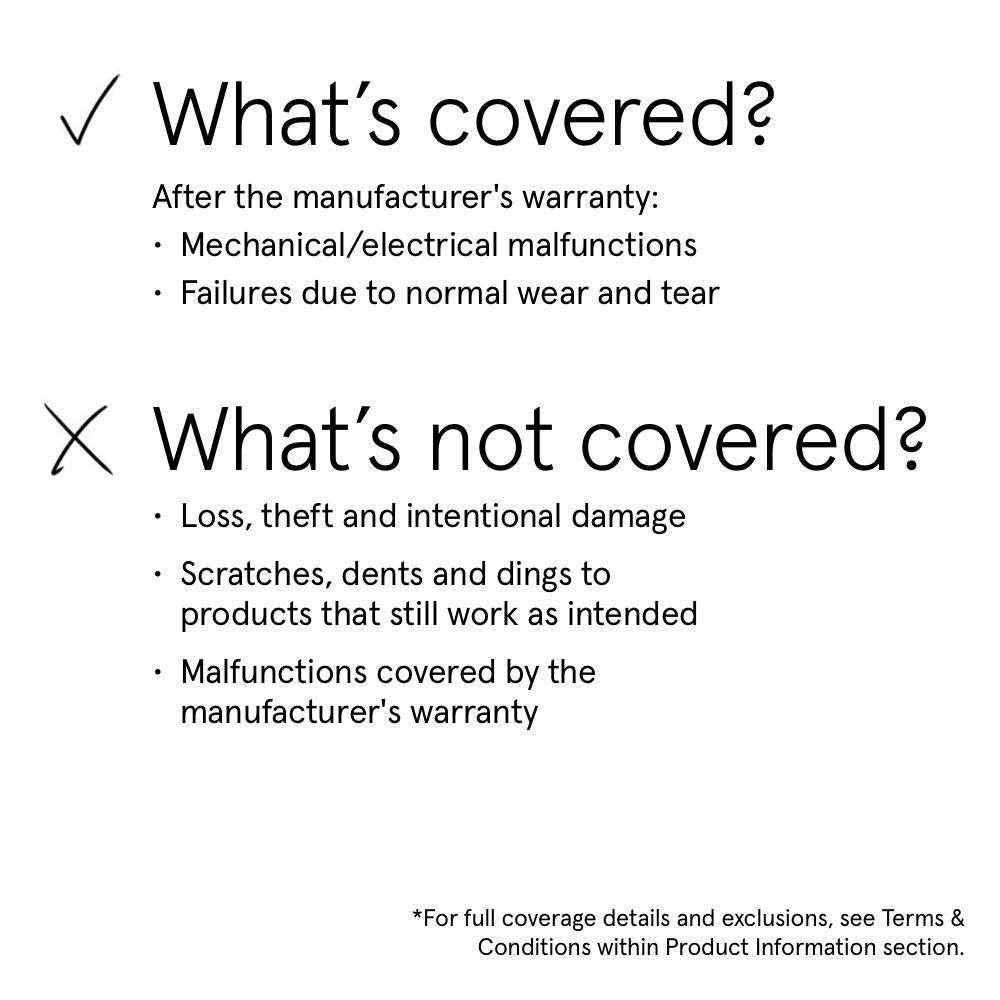
ASURION 3 Year Floorcare Extended Protection Plan ($125 – $149.99)
- High-quality product
- Customer favorite
- Best value option

ASURION 2 Year Floorcare Extended Protection Plan ($250 – $299.99)
- High-quality product
- Customer favorite
- Best value option
Expert Hacks: How to Protect Your Warranty Validity
Most people accidentally void their warranties within the first six months of ownership. To ensure your vacuum warranty coverage stays intact, follow these advanced protocols:
- The "Paper Trail" Protocol: Digital receipts fade, and thermal paper becomes unreadable. Take a photo of your receipt and email it to yourself with the subject line "VACUUM WARRANTY [BRAND] [MODEL]." Manufacturers require proof of purchase from an authorized retailer. Buying from a random eBay seller or an unauthorized Amazon liquidator often voids the warranty immediately.
- Registration is Mandatory: Many brands (like Dyson or Shark) offer "limited" warranties that only become "extended" if you register the product within 30 days of purchase. If you don't register, you may be downgraded from a 5-year to a 1-year warranty automatically.
- The "Genuine Parts" Rule: Using third-party filters or generic bags is the fastest way to lose your coverage. If a motor fails and the technician finds a non-OEM (Original Equipment Manufacturer) filter inside, they can claim the filter's airflow specifications caused the motor to overheat. Always keep your OEM filter receipts during the warranty period.
- Avoid the "Commercial" Kiss of Death: Never mention that you used your vacuum to clean an office, a rental property, or a construction site. Consumer warranties are strictly for "household use." Using a residential vacuum for commercial purposes voids the warranty instantly.
- Document the "Out of Box" State: If the vacuum makes a strange high-pitched noise on day one, record a video. This establishes that the defect existed prior to your usage, making it much harder for the manufacturer to claim "wear and tear."
Mega FAQ: Expert Answers to Vacuum Warranty Info
1. Does vacuum warranty coverage cover accidental drops?
No. Standard manufacturer warranties only cover defects in materials and workmanship. If you drop the vacuum down the stairs and the canister cracks, that is considered accidental damage. For this type of protection, you need an extended protection plan that specifically includes "Accidental Damage from Handling" (ADH).
2. Is the battery covered for the same duration as the motor?
Rarely. Most cordless vacuum manufacturers offer a 1-year or 2-year warranty on the battery, even if the motor is covered for 5 or 10 years. Always check the "Battery Coverage" section of your manual specifically.
3. Will using a 3rd party filter void my warranty?
Legally, under the Magnuson-Moss Warranty Act (in the US), a manufacturer cannot void your warranty solely for using a 3rd party part. However, they can deny a specific claim if they can prove that the 3rd party part caused the failure. It is a gray area that usually results in the consumer losing the argument.
4. Do I need to keep the original box for a warranty claim?
Usually no, but it makes shipping much safer. If you have to mail the vacuum to a service center and it gets damaged in transit because of poor packaging, the manufacturer is not responsible for that damage.
5. What does "Limited" actually mean in a warranty?
It means the warranty is restricted to certain parts, certain types of failures, and often only for the original purchaser. It is not an unconditional guarantee of performance.
6. Is pet hair damage covered?
If pet hair clogs the brush roll and burns out the belt or the motor, it is often classified as "lack of maintenance" rather than a defect. You are expected to clear the brush roll regularly.
7. Does the warranty cover shipping costs?
This is brand-dependent. Premium brands often provide a prepaid shipping label. Budget brands often require you to pay the shipping to their service center, which can cost $40–$60, making the warranty almost useless for cheap machines.
8. Can I transfer my vacuum warranty if I sell the machine?
Most vacuum warranties are "non-transferable." They apply only to the original retail purchaser.
9. What happens if the manufacturer can't fix my vacuum?
Under most warranty terms, if the unit is unrepairable and the part is covered, they will replace it with a "comparable" model. This might be a refurbished unit or the current year's equivalent model.
10. Does the warranty cover "loss of suction"?
Only if the loss of suction is caused by a mechanical failure of the motor or a gasket. If it’s caused by a clog or dirty filters, it is not covered.
11. Are the wheels covered?
Wheels are usually considered wear items. If a wheel falls off due to a snapped axle (defect), it’s covered. If the rubber on the wheel wears down over three years, it is not.
12. How long does a typical warranty repair take?
The industry average is 2 to 4 weeks, depending on part availability and the proximity of the service center.
Closing Thoughts
A vacuum is an investment in your home’s health, but it is a mechanical tool that lives a hard life. Relying solely on a manufacturer's vacuum warranty coverage is often a recipe for disappointment because of the strictly defined exclusions. To truly protect your investment, you must be a proactive owner: register your product immediately, maintain a meticulous cleaning schedule to avoid "negligence" claims, and keep a digital folder of all your vacuum warranty info and receipts.
If you find that your lifestyle—perhaps involving heavy pet hair, children, or a large floor plan—puts extreme stress on your appliance, a standard warranty might not be enough. In those cases, looking into specialized protection plans that cover wear, tear, and accidental damage is the only way to ensure that your vacuum remains a tool for cleaning rather than a source of stress. Knowledge is your best defense against the "fine print" trap. Treat your vacuum well, understand your rights, and you'll never be left standing over a pile of dust with a broken machine and a denied claim.